

Winning the Kentucky Derby is a dream for almost every Thoroughbred owner, trainer, and jockey. Winning the Preakness Stakes two weeks later is an even greater achievement. But winning the Belmont Stakes to complete horse racing’s Triple Crown? That’s something only 13 horses have accomplished in more than a century.
From Sir Barton’s unexpected victories in 1919 to Justify’s undefeated campaign in 2018, these extraordinary horses have shaped American racing history.
Some were dominant from the beginning. Others overcame injuries, difficult temperaments, or rivals who seemed equally talented. One won the Belmont Stakes by an unbelievable 31 lengths, while another completed the Triple Crown without ever losing a race.
There have been 13 American Triple Crown winners, and each has a remarkable story.
Let’s look at every champion in chronological order, discover what made them special, and explore why winning all three races remains one of the most difficult achievements in horse racing.
What Is the Triple Crown in Horse Racing?
The American Triple Crown consists of three prestigious Thoroughbred races: the Kentucky Derby, the Preakness Stakes, and the Belmont Stakes.
To become a Triple Crown winner, a horse must win all three races in the same year.
Each event presents a different challenge.
| Race | Traditional distance | Location |
|---|---|---|
| Kentucky Derby | 1¼ miles | Churchill Downs, Louisville, Kentucky |
| Preakness Stakes | 1 3/16 miles | Pimlico Race Course, Baltimore, Maryland |
| Belmont Stakes | 1½ miles | Belmont Park, Elmont, New York |
These are the traditional Triple Crown distances and venues. Temporary venue and distance changes have occurred, including during the Belmont Park reconstruction period.
The Kentucky Derby tests speed and positioning against a large field. The Preakness demands another strong performance after a short recovery period. Finally, the Belmont traditionally requires exceptional stamina over a mile and a half.
The three races normally take place within approximately five weeks.
That demanding schedule helps explain why so few horses manage to win all three. A champion must stay healthy, recover quickly, handle different tracks, and defeat talented rivals who may arrive fresher for later races.
Complete List of All 13 Triple Crown Winners
Here are the 13 horses that won the American Triple Crown between 1919 and 2018.
| Year | Triple Crown winner | Jockey |
|---|---|---|
| 1919 | Sir Barton | Johnny Loftus |
| 1930 | Gallant Fox | Earl Sande |
| 1935 | Omaha | Willie Saunders |
| 1937 | War Admiral | Charley Kurtsinger |
| 1941 | Whirlaway | Eddie Arcaro |
| 1943 | Count Fleet | Johnny Longden |
| 1946 | Assault | Warren Mehrtens |
| 1948 | Citation | Eddie Arcaro |
| 1973 | Secretariat | Ron Turcotte |
| 1977 | Seattle Slew | Jean Cruguet |
| 1978 | Affirmed | Steve Cauthen |
| 2015 | American Pharoah | Victor Espinoza |
| 2018 | Justify | Mike Smith |
Eight of these champions emerged between 1919 and 1948. Three more won during the 1970s, followed by two modern champions in 2015 and 2018.
Now, let’s meet the horses behind those historic victories.
1. Sir Barton — 1919
The first Triple Crown winner
Sir Barton became America’s first Triple Crown winner in 1919, although nobody called the achievement by that name at the time.
His story is particularly surprising because he entered the Kentucky Derby without having won a single race.
As a two-year-old, Sir Barton had failed to win in six starts. He wasn’t even expected to be his stable’s main contender in the Derby.
Owner J.K.L. Ross and trainer H. Guy Bedwell entered him alongside the more highly regarded Billy Kelly.
But Sir Barton had other plans.
With Johnny Loftus aboard, he seized control of the Kentucky Derby and won by five lengths. Just four days later, he returned to win the Preakness Stakes.
He then captured the Belmont Stakes, completing what would later become recognized as the first American Triple Crown.
What makes Sir Barton’s achievement especially impressive is the demanding racing schedule of his era.
Unlike modern champions, who usually have carefully managed campaigns, Sir Barton competed frequently during his three-year-old season.
He finished his career with 13 victories from 31 starts.
His legacy extends far beyond those numbers. Every Triple Crown champion who followed would be measured against the standard he established.
2. Gallant Fox — 1930
The champion who made the Triple Crown famous
Eleven years passed before another horse matched Sir Barton’s achievement.
That horse was Gallant Fox, a powerful bay colt trained by James “Sunny Jim” Fitzsimmons for Belair Stud.
Ridden by Earl Sande, Gallant Fox became one of the most celebrated racehorses of the early 20th century.
Interestingly, his Triple Crown campaign didn’t follow the familiar modern sequence.
In 1930, the Preakness Stakes took place before the Kentucky Derby.
Gallant Fox won the Preakness, traveled to Louisville to capture the Derby, and then completed his sweep in the Belmont Stakes.
His victory helped popularize the phrase “Triple Crown,” which racing writers increasingly used to describe the accomplishment.
Gallant Fox was admired for his consistency, intelligence, and ability to win under different racing conditions.
He finished his career with 11 victories from 17 starts.
Yet his influence didn’t end when he retired.
Gallant Fox became the only Triple Crown winner to sire another Triple Crown champion.
His son, Omaha, would achieve the same remarkable feat just five years later.
That father-and-son connection remains one of the most unusual accomplishments in American Thoroughbred history.
3. Omaha — 1935
The only Triple Crown winner whose father also won
Omaha entered racing history carrying an extraordinary pedigree.
His father was Gallant Fox, the 1930 Triple Crown champion. His owner was Belair Stud, and his trainer was the same man who had prepared his father: Sunny Jim Fitzsimmons.
But Omaha still had to prove himself on the racetrack.
Ridden by Willie Saunders, the chestnut colt began his Triple Crown campaign with a victory in the Kentucky Derby.
He followed that performance by winning the Preakness Stakes.
His preparation for the Belmont, however, included an unexpected setback.
Omaha finished second in the Withers Stakes, proving that even a future Triple Crown winner could be beaten during a championship campaign.
He rebounded impressively in the Belmont Stakes, defeating his rivals to complete the Triple Crown.
Omaha later traveled to England, where he competed successfully against leading European horses.
He narrowly missed winning the prestigious Ascot Gold Cup in 1936.
Although his overall career record of nine wins from 22 starts may not seem extraordinary compared with some other champions, Omaha accomplished something no other horse has repeated.
He remains part of the only father-and-son pairing to win the American Triple Crown.
4. War Admiral — 1937
Man o’ War’s brilliant son
War Admiral had enormous expectations to meet.
His father was the legendary Man o’ War, widely considered one of the greatest Thoroughbreds in American racing history.
Yet War Admiral wasn’t especially imposing.
He was relatively small compared with his famous sire, but what he lacked in size, he made up for with speed and determination.
Trained by George Conway and ridden by Charley Kurtsinger, War Admiral dominated the 1937 Triple Crown series.
He won the Kentucky Derby and Preakness Stakes before heading to Belmont Park.
There, he faced an unexpected problem.
War Admiral stumbled at the start of the Belmont Stakes and injured his foot. Despite the trouble, he recovered and continued racing brilliantly.
He won the Belmont, completing the Triple Crown and demonstrating remarkable toughness.
War Admiral eventually recorded 21 wins from 26 career starts.
His legacy also includes one of racing’s most famous defeats.
In 1938, he faced Seabiscuit in a highly anticipated match race at Pimlico. Seabiscuit won, creating an unforgettable moment in American sporting history.
Although War Admiral lost that contest, his Triple Crown achievement and exceptional racing record secured his place among the sport’s immortals.
5. Whirlaway — 1941
The unpredictable champion with extraordinary speed
Whirlaway wasn’t always an easy horse to manage.
The chestnut colt was known for his unusual running habits, particularly his tendency to drift toward the outside of the track.
His behavior frustrated trainers and made racing him unpredictable.
But trainer Ben Jones and jockey Eddie Arcaro found a way to channel Whirlaway’s talent.
The result was spectacular.
In the 1941 Kentucky Derby, Whirlaway produced a devastating late charge and won by eight lengths.
He continued his winning form in the Preakness Stakes before completing the Triple Crown in the Belmont.
Whirlaway’s powerful closing speed became his trademark.
Unlike horses that relied on controlling races from the front, he could allow competitors to move ahead before unleashing an extraordinary finishing run.
He also demonstrated exceptional durability.
Over his career, Whirlaway competed 60 times, winning 32 races.
He continued racing successfully beyond his Triple Crown season, earning recognition as Horse of the Year in both 1941 and 1942.
During World War II, his racing appearances also contributed to fundraising efforts for the war.
Whirlaway proved that a horse didn’t need a perfectly obedient personality to become a great champion.
Sometimes, exceptional talent comes with a few unusual habits.
6. Count Fleet — 1943
One of the most dominant Triple Crown champions
Count Fleet’s 1943 Triple Crown campaign was among the most convincing in racing history.
Owned by Fannie Hertz, trained by Don Cameron, and ridden by Johnny Longden, the bay colt entered his three-year-old season with tremendous promise.
He quickly showed that few competitors could match him.
Count Fleet won the Kentucky Derby convincingly, followed by another victory in the Preakness Stakes.
But his most extraordinary performance came at Belmont Park.
In the Belmont Stakes, Count Fleet overwhelmed the opposition, winning by an astonishing 25 lengths.
At the time, that was the largest winning margin in the history of the race.
He completed his three-year-old season undefeated and was named Horse of the Year.
What makes Count Fleet’s achievements even more remarkable is that injuries ended his racing career prematurely.
He retired with 16 victories from only 21 starts.
His influence continued at stud, where he became a successful sire and an important figure in Thoroughbred breeding.
Count Fleet remains one of the clearest examples of a horse whose career was relatively short but whose talent was impossible to question.
7. Assault — 1946
The “Club-Footed Comet” who overcame injury
Assault might be the most unlikely Triple Crown champion on this list.
As a young horse growing up at King Ranch in Texas, he suffered a serious injury to his right front hoof after stepping on a sharp object.
The injury permanently affected the shape of his foot, leaving him with an unusual gait.
For many horses, such an injury might have ended any hope of a successful racing career.
But Assault recovered and developed into a remarkably competitive Thoroughbred.
Trained by Max Hirsch and ridden by Warren Mehrtens, he entered the 1946 Kentucky Derby as an underdog.
He stunned the racing world by winning the race by eight lengths.
Assault followed with victories in the Preakness Stakes and Belmont Stakes, becoming the seventh Triple Crown winner.
His success earned him the memorable nickname “The Club-Footed Comet.”
Despite his physical limitations, Assault possessed exceptional determination and the ability to compete under pressure.
He finished his career with 18 victories from 42 starts.
His story remains an inspiring example of athletic resilience.
More importantly, it reminds us that exceptional racehorses aren’t always physically perfect. Sometimes their greatest qualities are difficult to see until they’re tested.
8. Citation — 1948
The champion who seemed almost unbeatable
Citation was one of the most extraordinary racehorses ever produced by Calumet Farm.
Trained by Jimmy Jones, with Ben Jones officially listed as trainer for the Kentucky Derby, Citation entered the 1948 season as a formidable competitor.
With legendary jockey Eddie Arcaro aboard, he dominated the Triple Crown series.
Citation won the Kentucky Derby, Preakness Stakes, and Belmont Stakes with the confidence of a horse who appeared capable of defeating almost anyone.
But his accomplishments extended well beyond those three victories.
During his three-year-old season, Citation won 19 of his 20 starts.
He also defeated older horses, an achievement that demonstrated his exceptional quality.
Citation eventually became the first Thoroughbred to earn more than $1 million in career prize money.
He retired with 32 wins from 45 starts.
His Triple Crown victory also marked the beginning of a long drought.
After Citation’s success in 1948, horse racing would wait 25 years for another champion to win all three races.
When that next winner finally arrived, he would become one of the most famous horses in history.
9. Secretariat — 1973
The legendary champion who shattered records
Of all the Triple Crown winners, Secretariat is arguably the most famous.
The magnificent chestnut colt, nicknamed “Big Red,” combined tremendous athletic ability with performances that seemed almost impossible.
Owned by Meadow Stable and trained by Lucien Laurin, Secretariat entered the 1973 Kentucky Derby with jockey Ron Turcotte.
He delivered an extraordinary performance, winning in 1:59⅖.
That remains the Kentucky Derby record for 1¼ miles.
In the Preakness Stakes, Secretariat produced another remarkable victory. His officially recognized time of 1:53 also stands as the race record at its traditional distance.
Then came the Belmont Stakes.
On June 9, 1973, Secretariat delivered what many consider the greatest performance in American horse racing history.
He took command of the race, rapidly separated himself from his rivals, and continued accelerating.
By the finish, he had won by an astonishing 31 lengths.
His time of 2:24 for 1½ miles remains the American dirt-track record at that distance.
The victory ended the 25-year Triple Crown drought and made Secretariat a national sporting icon.
He finished his career with 16 wins from 21 starts.
Nearly half a century later, his Belmont performance remains one of racing’s most unforgettable moments.
Secretariat didn’t merely win the Triple Crown. He redefined what people believed a Thoroughbred could achieve.
10. Seattle Slew — 1977
The first undefeated Triple Crown winner
Before Seattle Slew, every Triple Crown champion had experienced at least one defeat before completing the three-race series.
Seattle Slew changed that.
Purchased as a yearling for $17,500, the dark bay colt developed into one of the greatest bargains in racing history.
Trained by Billy Turner and ridden by Jean Cruguet, he entered the 1977 Kentucky Derby undefeated.
His Derby victory was particularly impressive because he overcame a troubled beginning and fought his way into contention.
He then captured the Preakness Stakes.
At Belmont Park, Seattle Slew completed the Triple Crown while preserving his perfect record.
He became the first horse to win all three races without previously losing.
His record stood at nine victories from nine starts immediately after the Belmont.
Although he eventually suffered defeats later in his career, he remained an exceptional competitor.
He retired with 14 wins from 17 starts.
Seattle Slew also became an influential breeding stallion, passing his speed and ability to future generations.
His legacy is especially important because he proved that a horse could arrive at the Kentucky Derby undefeated and maintain that perfection through the entire Triple Crown.
It would take another 41 years for a second horse to accomplish the same feat.
11. Affirmed — 1978
The champion defined by an unforgettable rivalry
Affirmed’s Triple Crown story cannot be told without mentioning Alydar.
The two talented colts developed one of the most famous rivalries in horse racing history.
Affirmed was trained by Laz Barrera and ridden by teenage jockey Steve Cauthen.
Alydar was his formidable opponent, a powerful colt who repeatedly challenged him.
Their battles during the 1978 Triple Crown became legendary.
In the Kentucky Derby, Affirmed defeated Alydar.
Two weeks later, he beat him again in the Preakness Stakes.
Everything came down to the Belmont.
During the final stages of the race, Alydar moved alongside Affirmed, and the two horses fought an extraordinary duel.
Stride after stride, neither appeared willing to surrender.
Affirmed eventually prevailed by a head, completing the Triple Crown.
Alydar finished second in all three races, an extraordinary achievement in its own right.
At just 18 years old, Cauthen became the youngest jockey to ride a Triple Crown winner.
Affirmed went on to win 22 of his 29 career starts and became the first racehorse to surpass $2 million in career earnings.
His narrow Belmont victory remains one of the most thrilling moments in Triple Crown history.
Affirmed’s achievement also began another lengthy drought.
No horse would complete the Triple Crown again for 37 years.
12. American Pharoah — 2015
The champion who ended a 37-year drought
By 2015, horse racing fans had become accustomed to disappointment.
Numerous talented horses had won the Kentucky Derby and Preakness Stakes, only to fall short in the Belmont.
Then came American Pharoah.
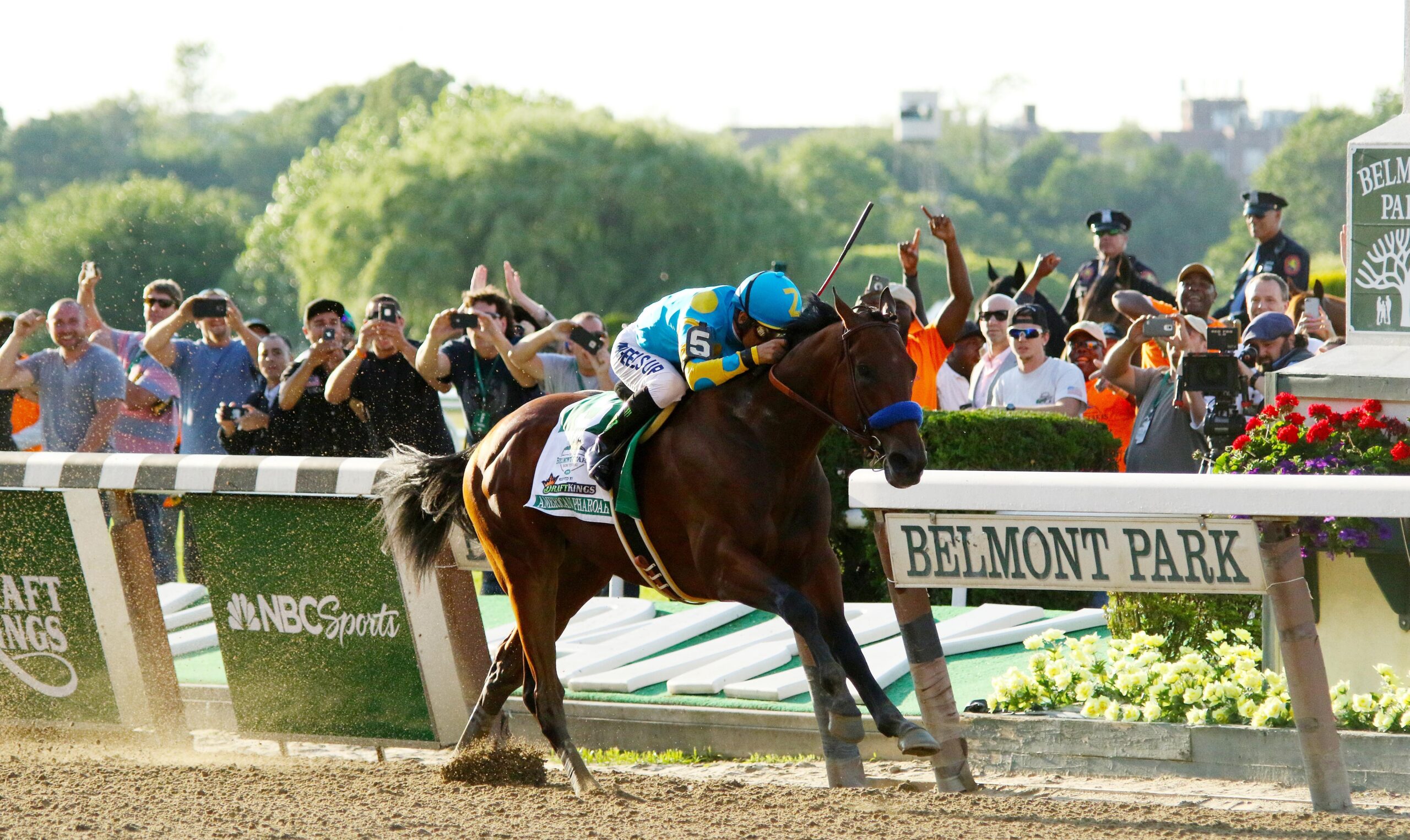
The bay colt, trained by Bob Baffert and ridden by Victor Espinoza, had already demonstrated exceptional talent as a two-year-old.
His 2015 Kentucky Derby victory came after a competitive performance that required determination and stamina.
He followed with a dominant victory in the Preakness Stakes, racing through extremely wet conditions.
That brought him to Belmont Park with history on the line.
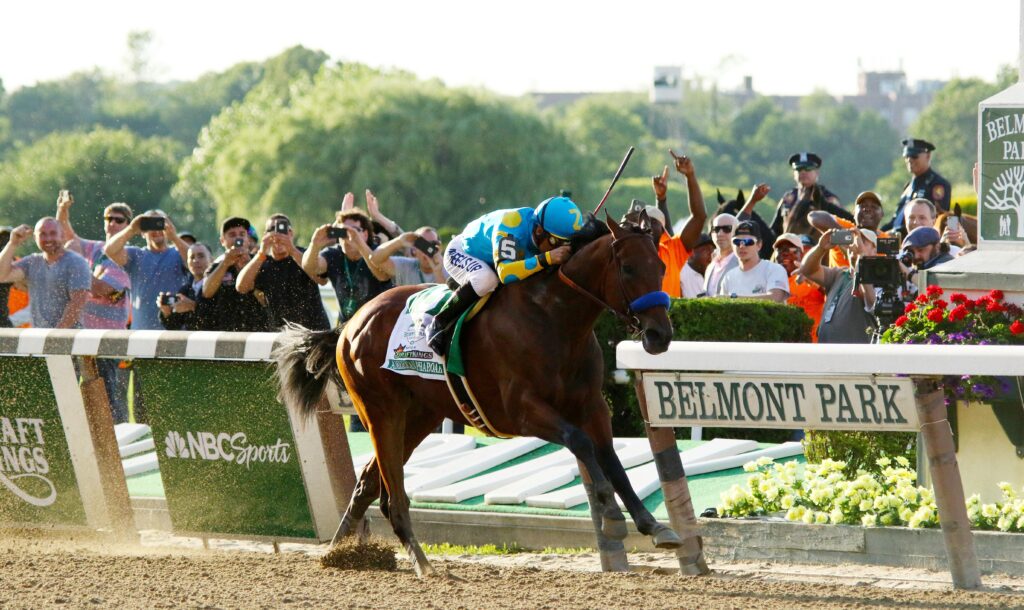
American Pharoah took the lead and maintained control throughout the Belmont Stakes.
As he entered the final stretch, the crowd realized that the decades-long wait was finally coming to an end.
He crossed the finish line 5½ lengths ahead of his nearest rival, completing the Triple Crown.
His victory was particularly emotional for racing fans who had watched champion after champion fail at the final hurdle.
American Pharoah wasn’t finished.
Later that year, he won the Breeders’ Cup Classic, becoming the first horse to complete what is sometimes called the Grand Slam of Thoroughbred racing: the Triple Crown plus the Classic in the same season.
He retired with nine victories from 11 career starts.
After 37 years, American Pharoah had finally brought the Triple Crown back.
13. Justify — 2018
The undefeated champion who rewrote the rules
Justify’s racing career was remarkably short, but his achievements were extraordinary.
Unlike most Triple Crown winners, Justify didn’t race as a two-year-old.
That made his preparation unusual from the beginning.
Historically, horses that failed to race at two had struggled to win the Kentucky Derby, a pattern commonly referred to as the “Curse of Apollo.”
Justify ended that streak in 2018.
Trained by Bob Baffert and ridden by Mike Smith, the powerful chestnut colt won the Kentucky Derby despite having started his racing career only a few months earlier.
He followed with victory in the Preakness Stakes, navigating difficult, muddy conditions.
Then came the Belmont.
Justify took the lead early and maintained his advantage throughout the race.
He crossed the finish line to become America’s 13th Triple Crown winner.
Even more remarkably, Justify completed his entire racing career undefeated.
He won all six of his starts before retiring later that year.
That made him the second undefeated Triple Crown winner, following Seattle Slew.
Justify also made Bob Baffert the second trainer to prepare two Triple Crown champions, joining Sunny Jim Fitzsimmons.
Although his career was brief, Justify achieved more in six races than most Thoroughbreds accomplish in a lifetime.
As of 2026, he remains the most recent American Triple Crown winner.
Why Is Winning the Triple Crown So Difficult?
Winning one major Thoroughbred race requires speed, stamina, preparation, and an element of luck.
Winning three consecutive championship races against elite competition is an entirely different challenge.
The first obstacle is recovery.
The Kentucky Derby and Preakness Stakes traditionally take place only two weeks apart. That gives horses limited time to recover from the physical demands of their previous race.
The Belmont then presents a demanding final challenge, traditionally over 1½ miles.
Most American Thoroughbreds aren’t accustomed to racing that distance.
Fresh competition also makes the task harder.
Some horses skip the Derby or Preakness specifically to arrive at the Belmont with more time to prepare.
The Triple Crown contender must therefore defeat rivals who may be better rested.
Track conditions add another complication.
A horse might excel on a fast Kentucky Derby surface but struggle if the Preakness takes place in heavy rain.
Travel, crowd noise, pace, racing tactics, and health all influence the outcome.
Even outstanding horses can lose because of poor positioning or an unlucky start.
That’s why winning the Triple Crown requires far more than raw speed.
It demands consistency, adaptability, durability, and exceptional athletic ability.
The Longest Triple Crown Droughts
Horse racing history includes several lengthy periods without a Triple Crown champion.
The first significant drought lasted 25 years, separating Citation’s victory in 1948 from Secretariat’s success in 1973.
The second was even longer.
After Affirmed completed the Triple Crown in 1978, racing fans waited 37 years before American Pharoah succeeded in 2015.
During that period, several outstanding horses came painfully close.
Spectacular Bid won the Kentucky Derby and Preakness in 1979 before finishing third in the Belmont.
Real Quiet narrowly missed the Triple Crown in 1998 when Victory Gallop defeated him by a nose.
In 2004, Smarty Jones looked poised to win the Belmont before Birdstone passed him late in the race.
California Chrome also generated tremendous excitement in 2014 but couldn’t complete the sweep.
These disappointments demonstrate how unpredictable the final race can be.
Even a horse that looks unbeatable in May may face an entirely different challenge in June.
Which Triple Crown Winner Was the Greatest?
Comparing champions from different generations isn’t straightforward.
Racing surfaces, training techniques, competition, and campaign schedules have changed considerably over the past century.
Still, several horses stand out.
Secretariat is often considered the greatest because of his record-breaking times and extraordinary 31-length Belmont victory.
Citation demonstrated remarkable consistency and durability, winning 19 of 20 races during his three-year-old season.
Seattle Slew became the first undefeated Triple Crown winner and later proved himself against top-level competition.
Affirmed earned legendary status through his battles with Alydar.
American Pharoah ended the longest Triple Crown drought and added the Breeders’ Cup Classic to his achievements.
And Justify completed an undefeated career in only six starts.
Each represents a different version of greatness.
If the question is which horse delivered the most extraordinary single performance, Secretariat’s Belmont Stakes victory is difficult to surpass.
But if you’re judging consistency, toughness, or overall career achievements, other champions have equally compelling claims.
Frequently Asked Questions About Triple Crown Winners
How Many Horses Have Won the Triple Crown?
Thirteen horses have won the American Thoroughbred Triple Crown, beginning with Sir Barton in 1919 and ending with Justify in 2018.
Who Was the First Triple Crown Winner?
Sir Barton became the first winner in 1919 after capturing the Kentucky Derby, Preakness Stakes, and Belmont Stakes.
Who Was the Last Triple Crown Winner?
Justify is the most recent winner, having completed the Triple Crown in 2018 with jockey Mike Smith and trainer Bob Baffert.
Has Any Horse Won the Triple Crown Twice?
No. The American Triple Crown races are restricted to three-year-old Thoroughbreds, meaning an individual horse has only one opportunity to complete the series.
Has a Female Horse Ever Won the Triple Crown?
No filly has won the American Triple Crown. However, fillies have won individual races in the series, including the Kentucky Derby, Preakness Stakes, and Belmont Stakes.
Which Triple Crown Winner Had the Fastest Belmont?
Secretariat holds the record with his 1973 Belmont Stakes time of 2:24 for 1½ miles.
Which Jockey Has Won the Triple Crown Twice?
Eddie Arcaro rode two Triple Crown winners: Whirlaway in 1941 and Citation in 1948.
Which Trainers Have Won Two Triple Crowns?
James “Sunny Jim” Fitzsimmons trained Gallant Fox in 1930 and Omaha in 1935. Bob Baffert trained American Pharoah in 2015 and Justify in 2018.
Were Any Triple Crown Winners Undefeated?
Yes. Seattle Slew entered and completed the 1977 Triple Crown undefeated. Justify went further by retiring with a perfect six-for-six career record.
Why Didn’t Man o’ War Win the Triple Crown?
Man o’ War never competed in the Kentucky Derby. His owner chose not to enter him, so he couldn’t complete the three-race series. He did win the Preakness and Belmont Stakes in 1920.
Final Thoughts
From Sir Barton’s unexpected breakthrough in 1919 to Justify’s undefeated campaign in 2018, the 13 Triple Crown winners represent some of the greatest achievements in American horse racing.
Each champion brought something different to the sport.
Assault overcame a serious hoof injury. Seattle Slew remained undefeated through all three races. Affirmed battled one of racing’s greatest rivals. American Pharoah ended a 37-year drought.
And Secretariat delivered a Belmont Stakes performance that still seems almost impossible.
Together, these horses remind us why the Triple Crown holds such a special place in equestrian history.
Winning one major race can create a champion. Winning all three creates a legend.