


Seeing a horse repeat the same strange behavior can leave you wondering what is wrong. Some habits are harmless, while others may point to stress, poor management, or health concerns.
Cribbing deserves attention because it can become hard to stop once established.
This guide looks at why horses crib, the problems linked to it, and the steps owners can take to manage the behavior.
Horse Cribbing: Key Takeaway
Cribbing is a repeated behavior that can be linked to stress, diet, confinement, genetics, and other factors. Once it becomes a habit, it can be hard to stop. Good management focuses on reducing triggers, protecting health, and improving the horse’s daily routine.
What is Horse Cribbing?
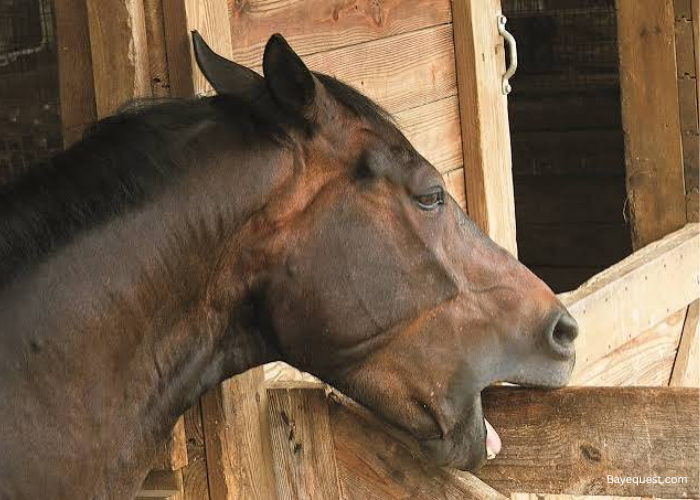
Horse cribbing is a repeated behavior in which a horse grabs a solid object with its front teeth.
This may be a fence rail, stall door, or feed trough. The horse then pulls back, arches its neck, and makes a grunting sound.
Cribbing is known as a stereotypic behavior. This means the horse repeats the same action again and again. It may start because of stress, boredom, feeding habits, or long periods in a stall. Once it becomes a habit, it can be hard to stop.
Cribbing and wood chewing are different behaviors. A horse that chews wood actually bites off or gnaws pieces of wood. A cribbing horse usually grips a hard surface with its front teeth, then pulls back and arches its neck. The horse is not trying to eat the object.
You may also hear cribbing called crib-biting. It is often linked to windsucking. However, a horse can windsuck without holding onto an object.
Some horses crib more than others. Diet, turnout, stress, and even genetics may play a role. Cribbing isn’t always an emergency, but it shouldn’t be ignored.
Over time, it can wear down teeth, damage fences, and be linked to digestive problems. A vet can help rule out health issues and suggest ways to reduce the behavior.
What Causes Cribbing in Horses?
There is no single cause of cribbing in horses. In most cases, several factors may play a role. These factors include:
Stress and Confinement
Stress may increase the risk of cribbing, especially when a horse spends long periods in a stall. Horses naturally spend much of their day moving, grazing, and interacting with other horses.
Stall confinement limits these normal behaviors. Changes in routine, travel, training, or a new stable can also cause stress.
Some horses may start cribbing to cope with this pressure. Once the behavior becomes a habit, it may continue even when the source of stress is gone.
More turnout, exercise, and a steady daily routine may help lower stress and reduce the urge to crib.
Diet and Feeding Practices
A horse’s diet may also play a role in cribbing. Horses are built to eat small amounts of forage throughout the day.
Long gaps between meals can leave them without anything to chew and may affect their digestive system. Diets that contain large amounts of grain or other concentrates may also be linked with a higher risk of cribbing.
Nicol et al. (2002) compared 19 young horses that had recently started crib-biting with 16 non-cribbing horses. Endoscopic exams showed that the crib-biting foals had significantly more gastric inflammation and ulceration at the beginning of the study.
The researchers also found that an antacid diet improved stomach condition, while cribbing tended to decline more in horses receiving that diet.
Lack of Social Interaction
Horses are social animals that naturally live and interact in groups. When a horse has little contact with other horses, it may become stressed or frustrated.
This can happen when a horse is kept alone or spends most of its day inside a stall. Limited social contact may contribute to cribbing in some horses.
However, this does not mean every horse kept alone will develop the behavior. Giving horses safe chances to interact may help support their well-being.
This could include group turnout or keeping horses where they can safely see, hear, and touch other horses throughout the day.
Boredom and Lack of Stimulation
Horses naturally spend many hours each day grazing, walking, exploring, and interacting with other horses. When these activities are limited, a horse may have little physical or mental stimulation. This can happen when it spends long periods alone in a stall with little to do.
Over time, this lack of activity can cause boredom and frustration. The horse may then develop repeated behaviors to occupy itself or cope with its environment.
Cribbing can become one of these behaviors. The repeated act may provide stimulation when the horse has few other activities available.
If cribbing continues for a long time, it can become an established habit that persists even when boredom is no longer the main trigger.
Genetics and Individual Predisposition
Genetics may make some horses more likely to develop cribbing than others. This may explain why one horse starts cribbing while another, kept under similar conditions, does not.
A 2014 study on crib-biting in Finnhorses looked at 111 crib-biting horses and 285 non-cribbing horses. The researchers estimated the heritability of crib-biting at 0.68. This suggests that some horses may inherit a greater risk of developing the behavior.
Breed differences also support this idea. A 2009 study on crib-biting in U.S. horses found that Thoroughbreds had a higher prevalence of crib-biting than several other breeds. The authors suggested that genetic predisposition may partly explain these differences.
However, genetics do not act alone. A 2021 study of 2,098 Chilean horses found that both genetic and environmental factors contributed to crib-biting.
This means a horse may inherit a greater susceptibility to cribbing, but environmental conditions may still help trigger the behavior.
How to Stop or Reduce Cribbing in Horses
Once cribbing becomes established, it can be difficult to stop completely. Instead of only preventing cribbing, management should focus on factors that may trigger or increase the behavior.
The following steps may help reduce how often a horse cribs.
Increase Turnout
Increasing turnout gives a horse more time to move, graze, and explore. These are normal behaviors that can be limited when a horse spends many hours in a stall.
Since confinement and stress are linked with cribbing, more turnout may reduce some of these triggers.
Pasture turnout also keeps the horse occupied for longer periods. When possible, horses should have enough space to move freely and spend time grazing.
However, turnout alone may not stop an established cribbing habit. A horse that has cribbed for a long time may continue the behavior even after its living conditions improve.
Provide Plenty of Forage
Horses naturally eat small amounts of forage throughout much of the day. When forage is limited, long periods may pass between meals.
These feeding gaps may contribute to cribbing, especially in horses already prone to the behavior.
Providing regular access to suitable forage can increase feeding time and allow the horse to express its natural grazing behavior. Hay can be especially important when pasture is limited.
The goal is to avoid long periods when the horse has nothing appropriate to eat. Any increase in forage should still match the horse’s health, body condition, and nutritional needs.
Review the Horse’s Diet
Diet should also be reviewed when managing a horse that cribs. Feeding practices, including diets high in concentrates, increase the risk of cribbing.
Owners can review how much grain or concentrate the horse receives and whether meals are spaced well throughout the day. Changes should be based on the horse’s workload, weight, age, and health, not simply removing feed.
A veterinarian or qualified equine nutritionist can help determine whether the diet needs adjusting. Make any major dietary change gradually to reduce the risk of digestive problems.
Increase Social Contact
Because horses are social animals, spending long periods alone can be stressful for some. Providing more contact with other horses may help reduce isolation and allow the horse to perform normal social behaviors.
Social contact does not always require keeping several horses together. Depending on the horse, safe group turnout may be suitable.
In other cases, simply being able to see, hear, and interact safely with nearby horses may help.
Increasing social contact is unlikely to make an established cribbing habit disappear overnight. However, it can address one possible source of stress that may encourage the behavior.
Provide Environmental Enrichment
Environmental enrichment gives a horse more opportunities to move, forage, explore, and stay occupied. This can be useful for horses that spend a lot of time in stalls or other restricted areas.
For example, you can provide forage in several safe locations to encourage movement. Slow feeders may extend feeding time, while safe toys or other enrichment items can provide extra stimulation. Exercise and changes in daily activities can also keep the horse engaged.
Enrichment should support natural horse behavior rather than simply distract the horse from cribbing. Reducing long periods of inactivity may reduce boredom and frustration that can contribute to repetitive behaviors.
Investigate Possible Medical Problems
A horse that cribs should also be checked for possible health problems, especially if the behavior starts suddenly or becomes more frequent. Researchers have found an association between crib-biting and gastric inflammation or ulcers in some horses.
For example, a study of crib-biting and gastric inflammation in young horses found more gastric inflammation and ulceration in crib-biting foals than in non-cribbing foals.
This does not prove that stomach problems cause every case of cribbing. However, it shows why possible pain or digestive discomfort should not be overlooked.
A veterinarian can examine the horse and decide whether further testing or treatment is needed.
Can Horses Learn Cribbing From Other Horses?
No. There is little proof that horses start cribbing just because they see another horse doing it.
This is a common worry for horse owners. However, cribbing is more often linked to things like stress, diet, stall time, and genetics.
If two horses in the same barn both crib, it does not always mean one copied the other. They may share the same routine, feed, turnout, or living space.
These shared conditions may raise the risk of cribbing in horses that are already more likely to develop it.
A horse may watch or copy another horse for a short time. But this is not the same as forming a long-term cribbing habit.
For this reason, keeping a cribbing horse away from other horses may not stop the problem. In fact, less social contact could add more stress.
It is better to look at the horse’s diet, routine, turnout, and overall care when trying to understand why cribbing started.
Is Cribbing Bad for Horses?
Yes, cribbing is bad for horses. However, the level of harm can vary from one horse to another.
One common problem is tooth wear. A horse that often grips hard surfaces may slowly wear down its front teeth.
This can become a concern over time. Cribbing can also damage stall doors, fences, feeders, and other surfaces.
Some cribbing horses may also have trouble keeping a healthy weight. This may happen if they spend a lot of time cribbing instead of eating.
Cribbing has also been linked with a higher risk of some types of colic. However, this does not mean cribbing will always cause colic.
The behavior may also point to stress or problems with the horse’s care or health. For these reasons, frequent cribbing should not be ignored.
Can Cribbing Cause Colic?
Yes, cribbing has been linked with a higher risk of certain types of colic. However, this does not mean that every horse that cribs will develop colic.
One concern is epiploic foramen entrapment (EFE). This is a serious form of colic in which part of the small intestine becomes trapped inside an opening in the abdomen. Research has found that horses that crib are more likely to develop EFE than horses that do not crib.
However, researchers have not proved that cribbing directly causes the intestine to become trapped.
This difference is important. Cribbing may increase the risk, but other factors can also play a role.
If a cribbing horse shows signs such as pawing, rolling, looking at its side, sweating, or refusing food, contact a veterinarian as soon as possible. Colic can become serious quickly.
Can Cribbing Be Cured?
No, there is no guaranteed cure for cribbing once the behavior is well established. However, owners may be able to reduce how often a horse does it.
Cribbing can become a strong habit over time. Even when the original trigger is removed, the horse may continue to crib.
This is why simply moving the horse to a new stall or changing its routine may not make the behavior disappear.
The best approach is to look for factors that may increase cribbing. These can include stress, long periods in a stall, limited forage, little social contact, or health problems. Improving these areas may reduce the horse’s urge to crib.
Cribbing collars and other devices may stop the physical action while in use. However, they do not address why the horse wants to crib.
The main goal, therefore, should not always be to eliminate cribbing. Instead, focus on reducing possible triggers and supporting the horse’s health and welfare.
Should You Use Cribbing Straps, Muzzles, or Other Deterrents?
Cribbing straps, collars, muzzles, and other deterrents can reduce cribbing, but you must use them with care.
These tools mainly prevent the horse from carrying out the behavior. They do not fix the reason the horse wants to crib.
A cribbing strap or collar fits around the horse’s neck and makes the cribbing movement harder. A muzzle may prevent the horse from gripping objects with its teeth.
Some owners also cover common cribbing surfaces or use unpleasant-tasting coatings.
The problem is that stopping the action may leave the cause untouched. If stress, lack of forage, confinement, or another issue is driving the behavior, the horse may still feel the urge to crib.
Restrictive devices can also cause discomfort if they do not fit or are used poorly. Before using one, talk with a veterinarian or equine behavior expert.
The main focus should be finding possible triggers and improving the horse’s care and environment.
Do Cribbing Collars Work?
Yes, cribbing collars can reduce or stop cribbing while a horse is wearing them. However, they do not cure the behavior or remove the urge to crib.
Most cribbing collars fit around the horse’s throat or upper neck. When the horse tries to arch its neck and crib, the collar puts pressure on this area.
This makes it harder to complete. Once the collar is removed, the horse may start cribbing again.
This is the main limit of cribbing collars. They control the action, not the reason behind it. If stress, confinement, feeding habits, or another issue is linked to the horse’s cribbing, the collar does not fix that problem.
Fit is also important. A collar that is too tight or used incorrectly may cause rubbing, sores, or discomfort.
For this reason, a cribbing collar should not be the only management strategy.
Should You Buy a Horse That Cribs?
Yes, you can buy a horse that cribs, but you should understand the extra care it may need.
Cribbing does not always affect riding or performance, but it can wear down teeth, damage stalls, and may be linked with some types of colic.
Ask how often the horse cribs and whether your boarding stable allows it.
A pre-purchase vet exam is also a good idea. This can help you check the horse’s teeth, body condition, and overall health before you decide.
FAQs
Does cribbing mean a horse is stressed?
Cribbing can be linked to stress, but it does not always mean a horse is stressed at that moment. Stress, stall time, diet, and lack of social contact may help start the behavior. Once cribbing becomes a habit, it may continue even after stress drops.
Can cribbing damage a horse’s teeth?
Yes. Cribbing can damage a horse’s teeth over time. The horse grips hard surfaces with its front teeth each time it cribs. Frequent cribbing may cause excess wear to these teeth. A vet or equine dentist should check the horse’s teeth often.
Does cribbing make horses lose weight?
Cribbing may contribute to weight loss in some horses, but it does not always cause it. A horse that spends a lot of time cribbing may spend less time eating. You should also check diet, dental problems, illness, and other causes of weight loss.
Is cribbing the same as windsucking?
No. Cribbing and windsucking are similar, but they are not the same. A cribbing horse grips a solid object with its front teeth before arching its neck. A windsucking horse makes a similar neck and throat movement without gripping an object first.
Horse Cribbing: Conclusion
Horse cribbing can be hard to stop once it becomes a habit. However, understanding its possible causes can help you manage it better.
Focus on your horse’s diet, turnout, social contact, and overall health. If cribbing starts suddenly or gets worse, speak with your vet to rule out health problems.