



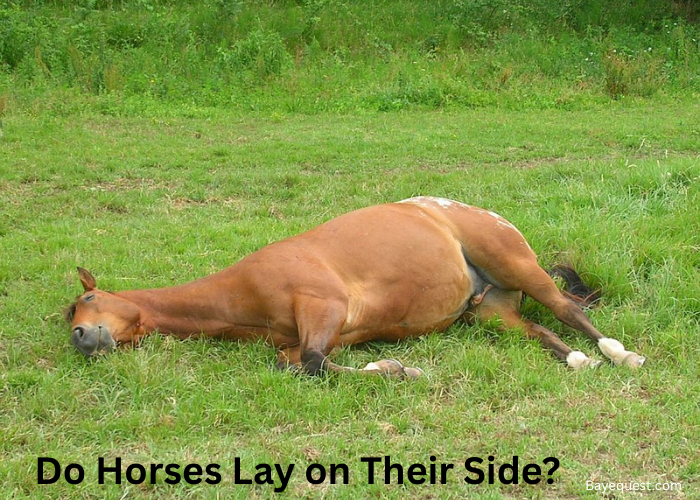
As a horse owner, you’ve probably seen your horse lying down and wondered if it’s normal or a cause for concern.
Knowing why horses lie down and when it might be a problem is important for good care. Most of the time, lying down is normal, but some patterns can be a signal that something’s wrong.
This guide explains why horses lie down, what it means if they rest for a long time, and how you can help your horse stay safe and healthy all year round.
Do Horses Lay on Their Side? Key Takeaway
Yes, it’s normal for horses to lie on their side when they rest. This position lets them get the deep sleep they need to stay healthy. By learning what normal rest looks like, you can spot when something might be wrong.
Understanding How Horses Sleep
Horses have a unique sleep pattern compared to most animals. Because they’re prey animals, they’ve evolved to sleep lightly and often while standing. Their legs have tendons and ligaments that lock their joints so they can doze without falling.
Even though horses can nap standing up, they still need short periods of deep sleep. This can only happen when they lie down.
This deep sleep, called REM sleep, usually adds up to about 30 to 40 minutes each day, split into a few short naps.
Most healthy adult horses rest for two to three hours each day, switching between standing naps and lying down. Some lie on their chest, while others stretch out on their side if they feel safe and calm.
Why Horses Lie Down (and Sometimes on Their Side)
Horses lying down is a normal, healthy behavior when they feel safe in their surroundings.
Deep Sleep
Horses need to lie down for deep sleep, called REM sleep. During REM, their muscles and brain rest, and they may twitch or dream.
Most horses need about 30 to 40 minutes of REM sleep per day. Without this, they can become cranky or tired.
Comfort and Relaxation
Lying down provides comfort and relaxation after exercise or activity. Horses often rest in this position to ease muscle tension, recover, and enjoy warmth. They are more likely to lie down fully when they feel secure.
Temperature Regulation
On cool days, lying down helps a horse conserve body heat by reducing surface area exposed to wind.
On mild days, the ground can absorb and radiate warmth, providing gentle heat that soothes muscles and promotes relaxation.
Horses may also roll down, coating themselves in dust to create a natural barrier against insects or moisture as they rest.
Bonding and Trust
Horses also lie on their side as a sign of trust and bonding with their herd. In the wild, some horses lie down while others stand guard, so everyone gets a chance to rest safely.
If your horse lies flat when you’re around, it means it feels safe and trusts you. Lying on their side is a vulnerable position, so they only do it when they feel comfortable.
Habit and Routine
Some horses like to lie on their side at certain times, such as after eating or being outside. They often pick favorite spots or times to rest, such as a sunny patch or a soft bed.
These routines help them feel calm and reduce stress.
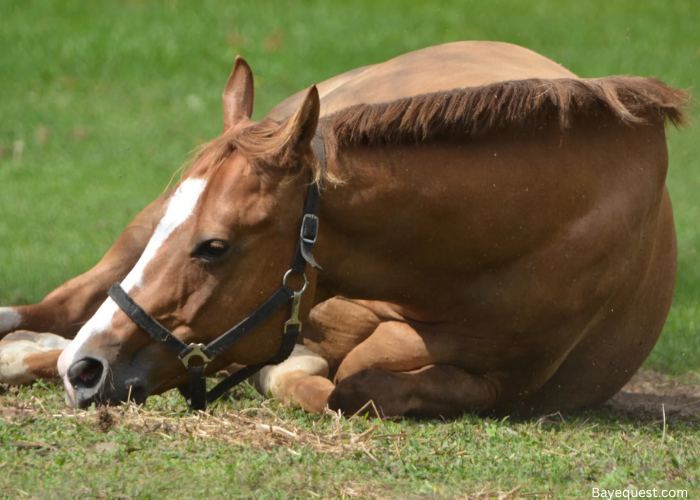
When Side-Lying Is a Sign of Something Wrong
Short periods of recumbency are normal, but prolonged lying should be monitored.
Colic
Colic is one of the most common causes of prolonged or restless lying. Digestive pain from gas, impaction, or twisted intestines may cause your horse to roll repeatedly or paw at the ground.
This behavior signals discomfort and requires immediate veterinary attention.
Injury or Weakness
If your horse struggles to rise or stays down longer than an hour, it may be suffering from injury, muscle strain, or joint pain.
Conditions like laminitis or arthritis can make standing extremely painful. Additionally, exhaustion after strenuous activity may also cause temporary weakness.
Respiratory or Heat Stress
Heavy breathing, sweating, or glazed eyes can signal heat stress or breathing difficulty. Horses with respiratory problems may struggle to breathe when lying flat.
Watch for distress, difficulty rising, labored breathing, or inability to change position, as these are urgent signs of risk. Prolonged recumbency can cause circulatory impairment and serious pressure injuries.
Benefits of Horses Lying on Their Side
Lying on their side is important for a horse’s healthy rest and recovery, and brings several benefits.
Physical Benefits
When a horse lies flat, its muscles can fully relax and let go of tension from standing, grazing, or working.
Unlike standing, lying on their side lets the whole body rest. This helps with blood flow, eases pressure on joints, and supports muscle recovery after exercise.
Short rest periods also help digestion, as the gut continues to move gently. Young horses and those in training especially benefit from deep rest because it helps their bodies repair and grow.
Psychological Benefits
When your horse lies on its side, it’s showing it feels safe and comfortable. Horses are naturally careful, and lying with their belly exposed is a sign of trust in you and their surroundings.
In groups, they often take turns lying down while others stand watch, which helps build strong bonds. Horses that rest this way are usually calmer and less stressed.
Risks and Concerns for Horses Lying Down
When rest turns into prolonged recumbency, it can lead to serious health problems, such as:
Circulation Challenges
When a horse stays down too long, the weight of its body restricts blood flow to the side pressed against the ground. This limited circulation can lead to swelling, numbness, or nerve damage.
In severe cases, the lack of oxygen to the tissues may trigger compartment syndrome. This is a painful and life-threatening condition where tissues begin to deteriorate.
Once circulation is compromised, a horse can become weak or unable to rise without assistance.
Breathing Difficulty
The chest and abdomen bear significant pressure when a horse lies flat on hard surfaces. That weight can compress the lungs, limiting their full expansion. This causes shallow breathing and reduced oxygen intake.
Over time, oxygen deprivation further weakens the horse, making it harder to stand. Horses with respiratory conditions, such as heaves or pneumonia, are especially vulnerable.
Digestive System Issues
A horse’s digestive system depends on near-constant movement to keep gas and food traveling through the intestines. When movement stops, digestion slows dramatically.
This stagnation can cause gas buildup, bloating, and colic. Pain and discomfort make the horse reluctant to rise, worsening the situation.
Stiffening Muscles and Joints
Even a healthy horse can become sore or stiff if it remains down for hours. Prolonged immobility compresses muscles and joints, causing pain and weakness.
Once fatigue sets in, the horse may panic or injure itself trying to get up. What started as normal rest can become an emergency if not addressed promptly.
Colic
Another serious risk is colic. Gas or impaction colic may cause a horse to lie down and roll repeatedly, worsening the condition.
Horses with respiratory illness may also have difficulty breathing when lying on their side.
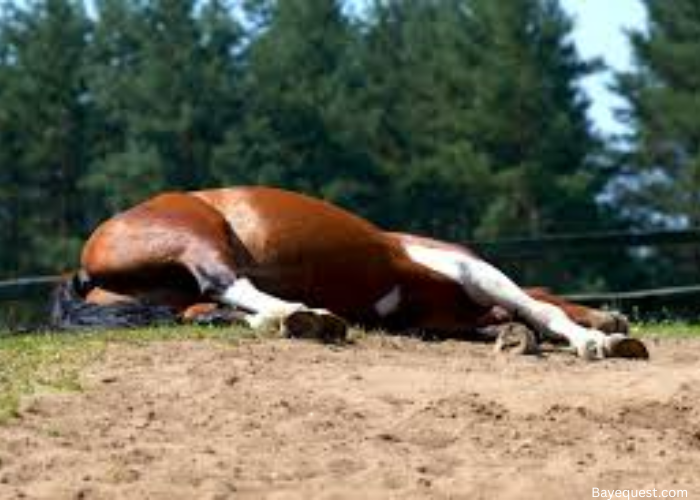
How to Tell If Your Horse Is Resting Safely
A healthy horse that’s simply resting will look peaceful. Breathing is slow and steady; the legs may twitch slightly, and the ears relax to the side.
Horses usually stay down for 20–40 minutes before standing, shaking off dust, and stretching.
The environment plays a big role. Horses need dry, secure ground with enough space to rise easily. If your horse avoids lying down, it could mean the stall is too small or uncomfortable.
Observe the rhythm: resting horses lie down in cycles, not all day. During group turnout, one or two may lie down while others stand watch. That’s normal herd behavior.
If your horse lies flat for longer than an hour, struggles to get up, seems disoriented after rising, or refuses food or water, these are key risk signs that need closer attention.
When to Call a Vet
Call your vet if your horse lies down for long stretches, rolls frequently, struggles to stand, shows labored breathing, or demonstrates pain or distress. These are clear signs of potential emergencies requiring attention.
Other red flags include labored breathing, visible swelling, trembling, or unresponsiveness. Even if your horse eventually rises, note how long it was down and if it seemed weak or stiff afterward.
If you’re unsure, a quick phone consultation is better than waiting. Early evaluation prevents more serious complications.
Common Myths About Horses Lying on Their Side
Many long-held beliefs about horses lying down stem from a misunderstanding of their natural behavior. Clearing up these myths helps you separate harmless rest from genuine warning signs.
Myth 1: Horses can’t lie down or they’ll die
This is one of the most widespread myths, but it’s false. Horses must lie down occasionally to enter deep REM sleep, a vital stage for brain and body recovery.
Lying down only becomes dangerous when a horse stays down for several hours or can’t rise, which is rare in healthy animals.
Myth 2: A horse lying down is always sick
Seeing a horse stretched out may look alarming, but it often means comfort, not illness. Many horses enjoy lying on soft bedding or in the sun, especially when they feel safe.
They often take turns resting in herds while others stand watch. As long as your horse rises easily and acts normal afterward, there’s no cause for worry.
Myth 3: They sleep standing all the time
Horses can doze on their feet thanks to their stay apparatus, but deep, restorative sleep only happens when they lie down. Even the most alert horse needs to lie flat for short periods each day.
Myth 4: They shouldn’t lie down after eating
Moderate rest after a meal is fine. The digestive system continues to function whether the horse is standing or lying down.
Problems arise only if a horse shows signs of pain, bloating, or refusal to rise.
Tips for Supporting Healthy Rest in Horses
Helping your horse get proper rest is one of the simplest and most important parts of good care. Here’s how you can create the right conditions for healthy, natural rest.
Provide Plenty of Space
Space is essential for both physical comfort and safety. In stalls, aim for at least 12×12 feet so your horse can comfortably lie down, stretch, or roll without risk of injury.
For outdoor paddocks, make sure the ground is level, clean, and large enough to allow free movement. Crowded or confined spaces make horses anxious, discouraging them from lying down.
Offer Soft, Clean Bedding
Good bedding encourages rest by cushioning pressure points and keeping the horse dry. Materials like straw, shavings, or specialized bedding pellets work well as long as they’re kept clean and dry.
Wet or compacted bedding can lead to skin irritation and make your horse reluctant to rest. Regular cleaning supports hygiene and invites your horse to use the space comfortably.
Maintain a Predictable Routine
Horses are creatures of habit. They rest best when they know what to expect each day. Keeping consistent feeding, turnout, and quiet hours helps your horse feel secure.
Sudden changes in schedule or environment increase anxiety, leading to restless behavior and poor sleep.
Promote Safety and Companionship
Horses naturally rest more deeply when they trust their surroundings. If your horse lives alone, ensure it has visual contact with other horses for reassurance.
In herds, resting horses rely on companions to stand guard, a social instinct that encourages relaxation.
Observe Without Disturbing
Finally, take time to quietly observe your horse’s rest habits. Every horse has its own rhythm and preferred times to lie down. Watch from a distance without startling them.
Over time, you’ll learn what’s normal, and when something changes, such as unusual restlessness or reluctance to lie down, you’ll spot it early.
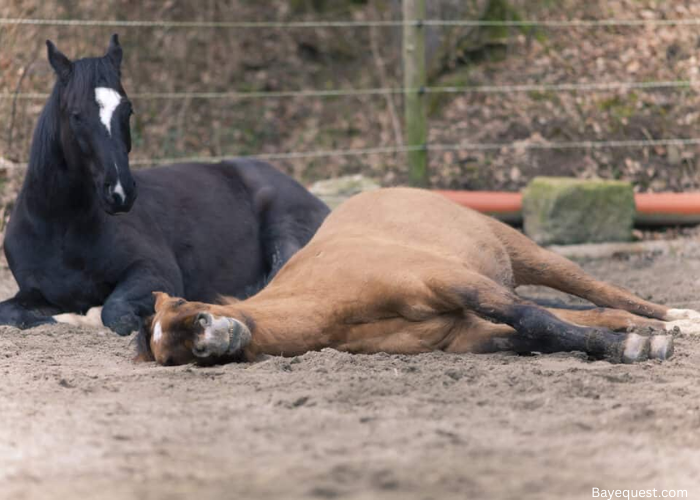
How Long Can a Horse Lay Down Before It Dies?
A healthy horse can safely lie down for short periods, usually up to an hour at a time. Problems occur when a horse remains down for several hours without rising.
The weight of its body compresses muscles and lungs, restricting circulation and breathing.
If a horse is unable to get up, tissue damage can begin within 3–4 hours. Beyond that, organ stress increases rapidly, sometimes leading to collapse or death if left unassisted.
That’s why monitoring is vital. If your horse stays flat for more than 90 minutes, struggles to rise, or appears weak, call a vet immediately.
Most horses that lie on their sides for normal naps are fine; the danger lies only in prolonged or unresponsive lying down.
Read more on common reasons a horse stays down too long in this article.
FAQs
How long can a horse lay down on its side?
Most horses lie down for about 20–40 minutes at a time to get deep sleep. Some may rest longer, especially if they feel safe and relaxed. Lying down for more than two hours can restrict blood flow, cause stiffness, or lead to complications. If your horse stays down too long, always check on them promptly.
Why are horses not supposed to lay down?
Horses can lie down safely for short periods; it’s part of their normal rest cycle. The concern arises when they remain down too long. Extended lying can compress internal organs, restrict circulation, and cause breathing problems. Occasional naps are fine, but if your horse struggles to rise or lies flat for hours, something may be wrong.
Do horses sleep on their side while sleeping?
Yes. Horses experience deep REM sleep only when lying flat on their side. While they can doze standing up thanks to their unique stay apparatus, true restorative rest requires lying down. You’ll often see them in this position for short, quiet stretches, especially in safe, familiar environments.
What happens if horses lay down for too long?
When a horse lies down for too long, circulation, digestion, and breathing can all be affected. Pressure builds on muscles and organs, sometimes leading to nerve damage, colic, or respiratory distress. If your horse seems weak, distressed, or unable to rise, seek veterinary help immediately. Prompt action can prevent permanent injury or life-threatening complications.
Conclusion
Seeing your horse lying down doesn’t always mean something’s wrong. It’s often a sign they feel relaxed and secure.
Understanding the balance between healthy rest and risky behavior is crucial. By providing a safe, comfortable space and watching for changes in normal patterns, you’ll protect your horse’s health and peace of mind.
Remember: short naps are natural; long immobility isn’t. When in doubt, always check with a professional. Early attention can make all the difference in keeping your horse safe and sound.