



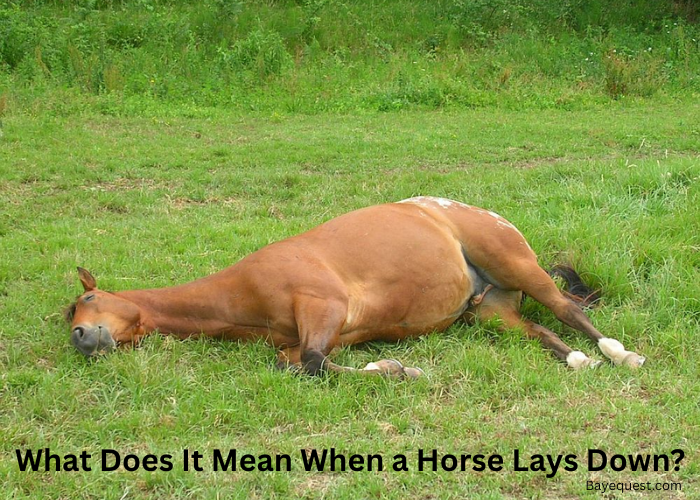
Seeing your horse lying down can be totally normal… or the first warning sign before a real emergency.
The difference comes down to time, body language, and the “getting up” moment. A relaxed nap is short, quiet, and your horse pops up easily. Trouble looks like repeated rolling, sweating, heavy breathing, or a horse that stays down and won’t rise.
In this guide, you’ll learn why horses lay down, what’s normal sleep vs danger, how long is too long, and exactly when to stop watching and call the vet.
What Does It Mean When a Horse Lays Down? Key Takeaway
Horses often lie down for simple reasons, like feeling comfortable, sleeping deeply, or relaxing where they feel safe. But if your horse stays down for a long time, looks upset, or has trouble getting up, you should pay attention. These often signal discomfort or distress.
Why Do Horses Lay Down?
To get a clearer picture, here are some specific reasons why horses might lie down:
Normal Resting Behavior
Lying down is part of a horse’s normal rest cycle. While horses can doze standing thanks to their stay apparatus, they still need to lie down for deeper rest.
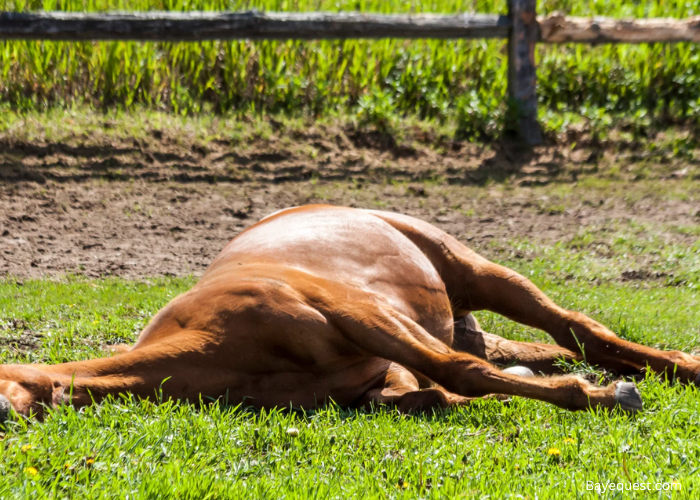
Typically, they lie on their sides for short periods during the day, often in the sun or on soft bedding.
Most horses rest for 15 to 45 minutes total within 24 hours. This is usually a quiet, calm time when they shift occasionally, stretch, and get up easily when approached.
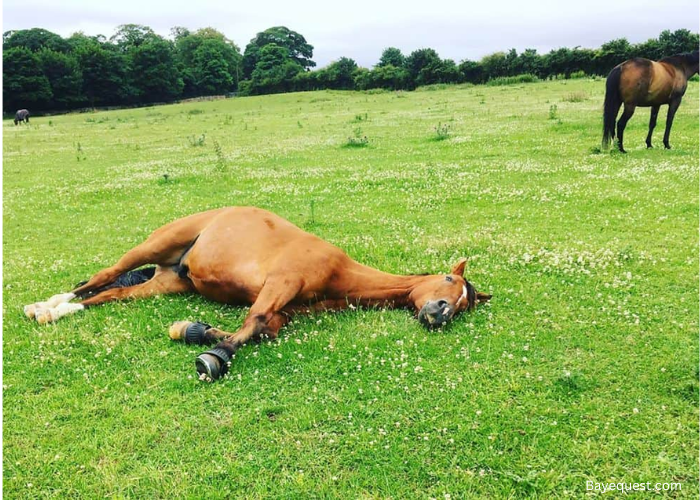
A relaxed horse lying quietly, with its legs tucked or extended, feels safe in its surroundings. In groups, horses take turns resting while others stand watch.
Lying down is not unusual, but a sign of security and contentment.
Comfort and Environmental Factors
Horses lie down when they feel comfortable. Soft bedding, pleasant temperatures, and quiet surroundings all contribute to this. On warm days, a horse might sprawl in the sun or settle in a clean stall after eating.
When horses feel safe, they’re more likely to rest on the ground. Nervous or unsettled equines avoid lying down.
Seeing your equine companion rest calmly is a good sign that its environment is meeting its needs.
REM Sleep
Horses, like people, need deep sleep to stay healthy. They can only get this kind of rest when lying down. Without enough deep sleep, a horse can get tired, cranky, and even stumble from exhaustion.
Most healthy horses get their deep sleep in short periods, usually about 30 minutes each day. They pick quiet, safe spots to rest. Providing your horse with a spacious, secure area helps it sleep naturally.
Training or Learned Behavior
Trainers sometimes teach horses to lie down on command to build trust or help them get used to new things.
Horses may even choose to lie down on their own if they associate it with good experiences, such as being groomed or receiving treats.
While this behavior isn’t harmful, it’s important to distinguish it from unplanned or excessive lying down.
If your horse rests this way after activity or while waiting for attention, it’s likely harmless. Still, observe how long the horse stays down and how easily it gets up to rule out stiffness or pain.

How Long Can Horses Lay Down?
Horses usually lie down for a short time each day. Quick naps are normal, but if a horse stays down for hours, that’s not typical.
Extended recumbency can restrict blood flow, strain organs, and cause muscle stiffness.
On average, a healthy horse lies down for no more than 30 to 45 minutes in 24 hours. Anything longer can be a red flag, especially in older horses.
The best way to keep your horse healthy is to watch its habits. Notice how often and how long it lies down. If you see changes in its routine or it lies down more than usual, it could be a sign of pain, injury, or illness.
A horse that’s resting normally will look relaxed, breathe evenly, and get up without trouble. If you notice groaning, sweating, or your horse taking a long time to stand, call your vet.
Health-Related Reasons for Horses Laying Down
If your horse lies down often or for a long time, it could mean there’s a health issue. Acting quickly can help keep your horse safe.
Colic
Colic may force a horse to lie down for long periods. This painful digestive condition causes horses to roll, thrash, or remain stretched out on the ground in discomfort.
You might notice restlessness, pawing, or repeated attempts to lie down and get up. Some horses even refuse to rise at all.
Because colic can get worse quickly, it’s important to call your vet right away. Early signs, such as reduced appetite, lack of manure, or dullness, should never be ignored.
Injury or Weakness
Injuries can also explain why a horse avoids standing. Fractures, severe lameness, or muscle strains make movement painful, and lying down is the only relief.
Laminitis and arthritis are especially problematic, causing intense hoof and joint pain. The horse may lie down to take weight off its legs or seem reluctant to move once standing.
Watch for uneven weight distribution, stiffness, or hesitation to walk. These are often early signs of injury-related distress that call for rest and care.
Illness or Disease
Systemic illnesses can weaken a horse so much that it prefers or is unable to rise. Neurological disorders, such as equine protozoal myeloencephalitis, as well as infections like West Nile virus, can impact balance, muscle control, and coordination.
Affected horses may seem disoriented, stumble when trying to stand, or collapse suddenly. Respiratory infections or heat stress can also drain energy, leading to excessive lying down.
If your horse appears weak, trembles, or struggles to get up, seek veterinary evaluation immediately.
Foaling Complications
For mares, lying down is a normal part of the foaling process. If a mare remains down too long after giving birth, it may signal complications.
Retained placenta, internal bleeding, or exhaustion can prevent her from standing. These conditions can escalate quickly and endanger both mare and foal.
Always monitor postpartum mares closely and contact a vet if recovery is delayed or labored.
Exhaustion or Stress
Fatigue or stress can explain the need for extended rest. After intense exercise, transportation, or exposure to heat, horses may lie down for a longer period to recover.
Normal recovery should be brief. If your horse continues to stay down or shows signs of distress, weakness, or unresponsiveness, there may be an underlying medical issue.
How to Tell If Your Horse Laying Down Is Normal or Not
Horses do lie down from time to time, but the key is knowing how long is normal and which signs suggest distress.
How Long Is Too Long?
Healthy horses typically lie down for 20 to 40 minutes at a time. Anything longer than an hour deserves closer attention. If your horse remains down for more than two hours, consider it a serious concern.
Extended time on the ground can restrict blood flow and put pressure on the lungs and muscles, making it harder for the horse to rise. Elderly or injured horses are especially vulnerable, as prolonged lying can become dangerous.
Read the Body Language
A relaxed horse lying comfortably might shift occasionally, rest its head upright, or roll lightly in the dirt. A horse in trouble often looks stiff, stretched flat, or holds its head awkwardly.
Repeated pawing, rolling, or failed attempts to get up are warning signs. A horse that lies completely still and unresponsive is cause for immediate concern.
Check Breathing and Sweating
Normal resting horses breathe quietly and evenly. Heavy breathing, flared nostrils, or rapid panting indicate colic, overheating, or pain.
Excessive sweating while lying down is another significant concern, especially if it occurs without recent physical activity. These symptoms suggest distress, not rest.
Observe Behavior Changes
Most horses respond quickly to your approach or the sound of feed being prepared. A horse that ignores food, shows no interest in herd mates, or fails to react to your presence might be unwell.
Weakness or disorientation when trying to rise also signals that something is wrong.
Look for Physical Signs
Physical evidence can reveal how long your horse has been down. Dirt patches on one side, stiffness, or swelling in the legs may indicate that it has been lying too long.
Abrasions or pressure sores are more serious signs that the horse has been struggling or thrashing.
Know When to Step In
If in doubt, always err on the side of caution. Early intervention can be lifesaving.
Track time down, watch for signs of distress, and call your vet if your horse’s lying down seems unusual.
Do Horses Sleep Standing?
You may wonder about horses’ unique ability to sleep while standing. Here’s how and why they do this:
The Stay Apparatus Explained
Horses can sleep standing up thanks to a unique system of tendons and ligaments called the stay apparatus. This mechanism locks major joints in place, allowing the horse to relax its muscles without collapsing.
It’s an efficient way to rest lightly while staying ready to move. However, this system only supports short naps or light dozing, not deep sleep.
Why Horses Still Need to Lie Down
Even though horses can nap upright, they can’t achieve REM sleep while standing. Individuals must lie down for brief periods each day to facilitate this stage of sleep.
A horse deprived of this deep rest will eventually show fatigue, irritability, or clumsiness. Most healthy horses lie down for 30 to 60 minutes in 24 hours to reach deeper sleep.
When Standing Sleep Becomes a Problem
If your horse is standing constantly and refuses to lie down, it may be experiencing discomfort or pain. Horses in pain often resist lying down because getting up is a difficult task.
Chronic avoidance of rest can lead to exhaustion and collapse. Monitoring your horse’s routine helps you recognize when normal behavior turns into a warning sign.
Balancing Both Types of Rest
Ideally, horses should alternate between periods of light standing and brief periods of lying down. Safe footing, a quiet environment, and comfortable bedding encourage natural rest patterns.
Observing your horse’s sleep habits helps keep it healthy and allows you to spot early signs of stress or illness.
Read also: Do Horses Lay on Their Side?
When to Seek Veterinary Help
Prompt communication with your vet ensures your horse receives the right care.
Recognizing Emergencies
Some situations demand immediate veterinary attention. If your horse refuses to rise after several attempts, treat it as an emergency. Persistent sweating or rapid breathing can signal severe pain or shock.
Swelling, visible wounds, or abnormal limb angles indicate fractures or soft tissue damage. In these moments, don’t try to force your horse up. Instead, keep the area calm and safe, remove obstacles, and prevent further struggle.
Leaving a horse down too long can lead to muscle compression, nerve damage, or poor circulation.
Consulting a Veterinarian
When you contact your veterinarian, clear information helps speed up the diagnosis. Note how long the horse has been lying down, and any recent changes in feed, exercise, or behavior.
Note signs such as rolling, pawing, groaning, or sweating. These details help the vet determine urgency.
During the examination, the vet checks heart rate, temperature, and limb movement. They may also run blood tests or perform an ultrasound if internal issues are suspected.
Cooperate closely and ask questions about treatment options, recovery timelines, and preventive care.
After the visit, follow all instructions precisely. Provide fresh water, a clean, comfortable surface, and restrict movement if advised. Monitor your horse for recurring symptoms.
FAQs
When should I worry about my horse lying down?
If your horse has been lying down for more than an hour or has trouble getting up, pay close attention. Lying down for too long can be a sign of colic, laminitis, or other pain-related problems. Watch for sweating, restlessness, or refusal to eat. These are early warning signs that require prompt attention from your veterinarian.
How long can a horse lay down before it dies?
Horses are not built to stay down for long. After several hours, blood circulation to major muscles and organs becomes compromised. This can cause pressure injuries, respiratory distress, or even organ failure. If your horse remains recumbent for more than two hours, treat it as a medical emergency.
What does a horse laying down mean?
Lying down is often a sign of comfort and safety. Horses rest or bask in the sun when they feel secure in their surroundings. It also allows them to enter deeper phases of sleep that standing doesn’t permit. As long as your horse rises easily and seems relaxed, there’s no cause for concern.
What does it mean when a horse lays down and won’t get up?
A horse that won’t rise is always cause for alarm. It may be suffering from severe colic, exhaustion, neurological problems, or an injury. Avoid forcing it to stand. Keep the area quiet, remove any obstacles, and contact your veterinarian immediately for an emergency assessment.
What does it mean when a horse lays down and rolls?
Occasional rolling is a normal part of equine behavior. It helps horses scratch, groom, or realign their skin after a ride. Repeated, violent rolling accompanied by grunting or sweating signals abdominal pain or colic. If your horse doesn’t stand after rolling or seems agitated, contact your vet at once.
Conclusion
When a horse lies down, it can mean peaceful rest or a sign of distress. Normal naps are short, calm, and the horse gets up easily.
If your horse struggles to rise, sweats, or stays down too long, that’s a clear warning sign. Careful observation and timely veterinary attention help prevent small issues from becoming serious.
Learning your horse’s normal patterns and responding to changes helps safeguard its health. This also strengthens the trust that defines a true horse-owner bond.