




Lying down is a normal and healthy part of a horse’s daily routine. Although they do most of their resting while standing, they still need to lie down for short periods of deep sleep.
In moderation, this behavior is nothing to worry about.
However, when a horse stays down for too long, serious problems can arise. Extended periods of lying down may interfere with circulation, breathing, and digestion, putting the animal’s health at risk. In extreme cases, it can even lead to death.
This guide explores this topic in detail so you know when to relax and when to take action if your horse spends extra time on the ground.
How Long Can a Horse Lay Down Before it Dies? Key Takeaway
It’s normal for horses to lie down for short naps (often 20–40 minutes at a time, totalling a few hours a day). However, if a horse remains down continuously for two hours or more, there’s a risk of serious complications. Left down for several hours, these complications can even become life-threatening.
Can Horses Lay Down Normally?
Many new horse owners are surprised to see their horse lying flat on the ground, but this is actually a perfectly natural behavior. Horses spend the majority of their rest time standing, but lying down plays an important role in their overall health and well-being.
Unlike people, horses can “lock” their legs in place using a special system of tendons and ligaments called the stay apparatus. This allows them to snooze lightly while standing, conserving energy and keeping them ready to flee from danger if needed.
But when it comes to deep, restorative sleep, what’s known as REM sleep, horses must lie down. Without this type of sleep, they can become sleep-deprived, leading to behavioral issues and even physical health problems.
Read more here – Do Horses Ever Lay Down?
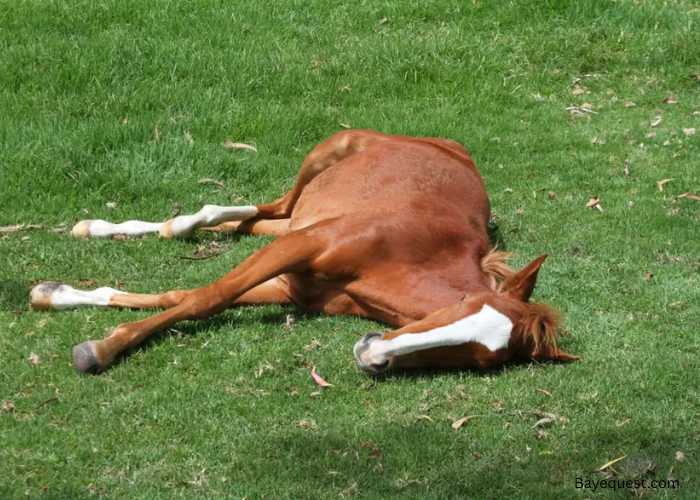
How Long Can a Horse Safely Lay Down?
Horses can safely lie down for short periods of rest – generally 20 minutes up to 2 hours in a 24-hour cycle.
This time is usually broken into smaller naps rather than one long stretch, since horses are naturally designed to stay alert and mobile. A healthy adult horse may lie down for a brief snooze in the afternoon or during the night, then quickly return to its feet.
The exact amount of time that’s safe depends on several factors, particularly age, the environment, and weather conditions.
Common Reasons a Horse Stays Down Too Long
When a horse spends more time on the ground than usual, it’s rarely just a nap. There are several medical or physical reasons why a horse may refuse to get up, and recognizing them can help you act quickly.
Here are some of the most common causes:
Colic
Colic is one of the leading reasons horses lie down for prolonged periods. The abdominal pain caused by gas, impaction, or twisted intestines often makes a horse roll, thrash, or remain stretched out on the ground, not wanting to rise.
Injury or weakness
Horses suffering from injuries such as fractures, muscle strains, or severe lameness may avoid standing because it’s too painful. Laminitis and arthritis, in particular, can cause such intense pain that the horse prefers to stay down rather than bear weight on its legs.
Illness or disease
Certain illnesses, especially those that affect the nervous system, can leave a horse unsteady or unable to rise. For instance, neurological conditions like equine protozoal myeloencephalitis (EPM) or infections such as West Nile virus may impair coordination, making the horse reluctant or unable to get up.
Foaling complications
While lying down is natural during delivery, occasionally, the mare may struggle to get up afterward. Retained placenta, exhaustion, or internal complications are common culprits, requiring immediate veterinary assistance.
Exhaustion or stress
Extreme fatigue, such as after long transport, heavy work, or stressful conditions, can cause a horse to stay down longer than usual. But it should rise easily once it has recovered some energy. If it does not, there may be a deeper issue at play.
The Dangers: What Happens if a Horse Lays Down Too Long?
Horses are large and heavy, and their bodies aren’t designed to handle extended periods of pressure. Therefore, lying down for too long can quickly lead to serious health complications, including;
Circulation challenges
When a horse is down too long, blood flow to the muscles and nerves on the side it’s lying on becomes restricted. This pressure can cause swelling, numbness, or even permanent nerve damage.
In severe cases, it can develop into compartment syndrome, where tissues become starved of oxygen and begin to die.
Breathing difficulty
The weight of the chest against the ground can compress the lungs, reducing their capacity to expand fully. Horses may start to breathe shallowly, which lowers oxygen levels in the blood.
Over time, this can weaken the entire body, making it even harder for the horse to rise.
Digestive system issues
Horses rely on constant movement to keep food and gas moving through their intestines. If they are down for too long, the risk of colic or bloating increases.
Gas buildup can cause severe pain and, in some cases, create a dangerous cycle where discomfort prevents the horse from getting up.
Stiffening muscles and joints
Even if the horse isn’t injured initially, staying down for hours can leave it weak, sore, and unable to get back on its feet without help.
What started as normal rest can escalate into a life-threatening condition if not addressed promptly.
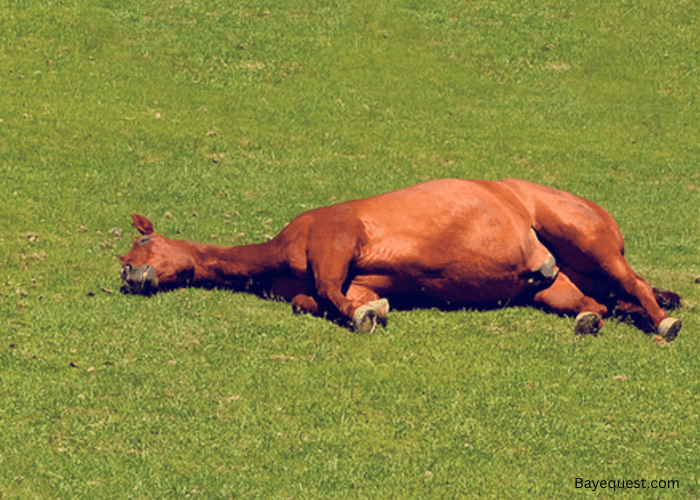
How to Tell if Your Horse Has Been Lying Down Too Long
Catching the difference between a normal nap and a dangerous situation often comes down to observation. Here’s how you can tell if your horse has been down too long.
Watch the clock
Normal lying periods are typically short, usually lasting 20 to 40 minutes at a time. If your horse has been on the ground for more than an hour without getting up, it’s time to pay closer attention.
Anything over two hours should be treated as a red flag.
Pay attention to body language
A relaxed horse lying down will often shift positions, roll lightly, or rest with its head up. Meanwhile, a horse in trouble may stay completely still, stretch out flat, or hold its head awkwardly.
Look for signs of discomfort, such as pawing, rolling, or unsuccessful attempts to rise.
Interesting read: How to Read a Horse Body Language.
Check breathing and sweating
Normal resting horses breathe quietly and steadily. If your horse is panting, flaring its nostrils, or sweating profusely while lying down, it may be experiencing pain, colic, or respiratory distress.
Notice behavior changes
Horses that lie down normally usually pop back up when approached, especially if food or herd mates are nearby. If your horse ignores feed, doesn’t respond to your presence, or appears too weak to stand, something is wrong.
Look for physical signs
Dirt patches from excessive rolling, swelling in the legs, or stiffness when the horse tries to rise are all signs it has been down longer than is safe. In severe cases, you may see abrasions from thrashing or pressure sores beginning to form.
What To Do if Your Horse Won’t Get Up: A Step-by-Step Action Plan
Step 1: Keep people and other horses safe
- Clear the area of bystanders and remove curious horses so the downed horse has space.
- Don’t stand directly in front of, behind, or under a horse that may thrash while trying to rise.
Step 2: Observe from a safe distance
- Note how long the horse has been down and its posture (is it on its side, rolling?).
- Watch out for heavy breathing, sweating, visible injuries, or failed attempts to get up.
Step 3: Call your veterinarian right away
- Call the vet immediately if the horse has been down longer than two hours, is showing colic signs, can’t breathe normally, has an obvious fracture, is foaling, or is in severe distress.
- When you call, please provide the following information to the vet: your location, the duration of the horse’s downtime, its current behavior (sweating/rolling), any known equine vital signs, age/weight/pregnancy status, and a recent history of any issues (such as colic, laminitis, or medication use).
Step 4: Take quick vitals (only if it’s safe to approach)
- Check the heart rate: The normal rate for a resting adult is 28-44 bpm. Count beats for 15 sec ×4.
- Note the respiratory rate: Normal rate is 8-20 breaths/min. Watch the flank or nostrils for 30 seconds × 2.
- Check the temperature: Use a rectal thermometer (normal horse temperature ≈ 99-101.5°F / 37.2-38.6°C).
- Measure the capillary refill time (CRT): Press the gum and release – less than 2-second refill time is normal.
Record these for the vet.
Step 5: Keep the horse calm and comfortable
- If the horse is calm, keep the halter/lead on (loosely). If it is thrashing or rolling, remove the halter to avoid entanglement.
- Offer water if the horse is alert and can reach it; do not force-feed or water.
- Create a softer surface under the horse (using deep shavings, straw, or sand) if possible and safe. Do not reposition a fractured horse.
Step 6: Don’t attempt to drag or force the horse up alone
- Do not tie lines to the legs or attempt to drag the horse; this can cause catastrophic injury.
- Lifting, rolling, or hoisting a large horse requires a veterinarian and trained crew with slings or specialized equipment. Only proceed under vet direction.
Step 7: Prevent pressure damage (under vet guidance)
- If the vet instructs and trained help is available, horses can be gently repositioned every few hours to reduce pressure on one side. Never roll a heavy horse without professional oversight.
Step 8: Prepare for the vet’s arrival
- Have a clear, accessible route for the vet or trailer. Turn on the lights if it’s dark, gather the patient’s medical history, vaccination records, and any medications, and arrange for assistance.
Step 9: Follow the vet’s treatment plan
- The vet may recommend sedation, analgesia, sling/hoist, diagnostics, or, in severe cases, discuss humane options. After the horse is up, watch for signs of muscle soreness, myopathy, or laminitis, and follow the aftercare instructions closely.
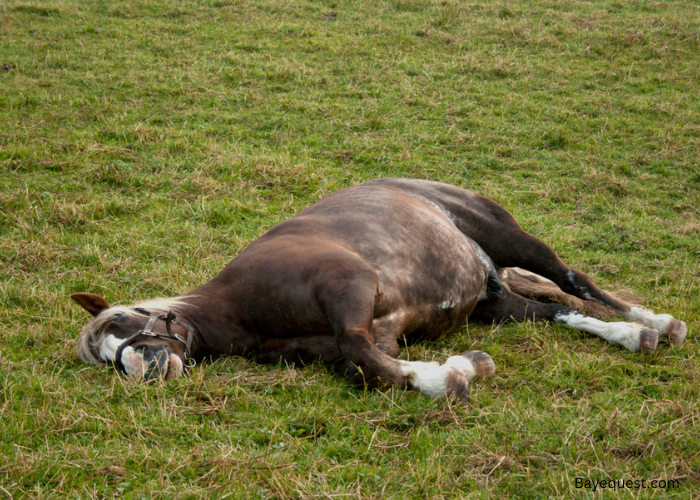
Preventing Problems With Horses Lying Down
The best way to protect your horse from the dangers of lying down too long is through good management. Follow the tips below;
Provide comfortable bedding and a safe space
Deep bedding, such as straw or shavings, cushions the body, reduces pressure points, and facilitates easier rising. Wide, uncluttered stalls and safe turnout areas also help prevent injuries if the horse rolls or struggles to get up.
Encourage regular exercise
Daily turnout and consistent riding or groundwork help prevent stiffness, colic, and other issues that might keep a horse down longer than necessary. It boosts circulation and digestion, and keeps muscles working properly.
Maintain good nutrition and hydration
A balanced diet and constant access to fresh water lower the risk of colic and weakness. Additionally, horses that are well-fed and hydrated are less likely to collapse or remain down due to preventable digestive or metabolic issues.
Monitor high-risk horses closely
Older horses, pregnant mares, or animals recovering from illness or injury may need more supervision. Checking on them frequently ensures you’ll notice early in case they stay down too long.
Stay on top of veterinary care
Regular checkups, vaccinations, and dental care all contribute to overall health. Similarly, early diagnosis of conditions like arthritis, laminitis, or metabolic disorders can prevent your horses from progressing to the point where lying down becomes a serious problem.
FAQs
Can a horse sleep standing up?
Yes, horses can rest while standing thanks to the “stay apparatus” in their legs, which locks their joints in place. This allows them to snooze lightly while remaining ready to flee if danger arises. However, for deep REM sleep, they must lie down.
How often do horses need to lie down?
Most horses lie down for short periods several times a day, adding up to around 2-4 hours in total every 24 hours. These naps are usually spread out in brief sessions rather than one long stretch.
Can a horse die from lying down too long?
Yes. If a horse remains down for several hours, circulation, breathing, and digestion can all be compromised. Without quick intervention, the complications can become life-threatening.
Do horses lay down at night?
Yes, many horses take their deepest naps at night when their environment is quiet and safe. It’s common to find horses stretched out in their stalls or fields during the night or early morning hours.
Conclusion
Seeing a horse lying down can stir concern, but the truth is that short naps on the ground are completely normal. Horses need to lie down for restorative sleep, and most will rise without any trouble.
The real danger comes when a horse remains down for too long, as this can quickly lead to circulation problems, breathing difficulties, digestive issues, and even life-threatening complications. In this case, quick action makes all the difference.