


Ever heard someone say a horse has a “great dam line” and wondered what that means? You’re not alone. Many enthusiasts and new horse owners are confused by the term when reading pedigrees or talking to breeders.
In this guide, we’ll break down everything you need to know. You’ll learn what the term “dam” means, how it differs from “mare” and “sire,” and why the dam’s influence lasts long after her foal is born.
By the end, you’ll see that behind every remarkable horse, there’s often an equally remarkable dam.
Dam Horse Meaning: Key Takeaway
A dam horse is the female parent of a foal. The term is used in pedigrees and breeding records to identify the maternal line. A dam plays a vital role in the foal’s development, providing both genetic traits and early nurturing. Her health, temperament, and bloodline determine the quality of her offspring.
What Does ‘Dam’ Mean in Horses?
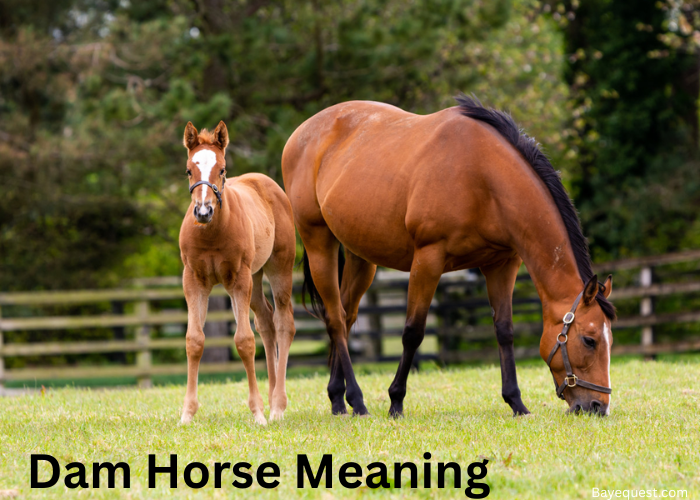
In horse terms, the dam is simply the female parent; the mother of a horse. When a foal is born, its dam is the mare that carried and gave birth to it.
The term comes from traditional breeding language and has been used for centuries to describe a horse’s maternal line.
You’ll often see the word “dam” in pedigree charts, registration papers, and breeding records. It’s the official way to identify which mare gave birth to a particular horse.
For example, if a pedigree says “Foal by Thunderbolt, out of Starshine,” the phrase “out of Starshine” means that Starshine is the dam.
While “mare” refers to any adult female horse, “dam” is a more specific breeding term used only after a mare has produced a foal. So, once a mare gives birth, she officially becomes a dam in the records.

The Role of the Dam in Horse Breeding
The dam is at the heart of every horse breeding program. She doesn’t just give birth but also shapes the foal’s health, character, and potential from the very beginning.
Her influence starts long before the foal takes its first breath and continues throughout its life.
She contributes half of a foal’s genetic makeup, passing on key traits like size, conformation, and temperament. But her role goes beyond genetics.
During pregnancy, the dam’s nutrition, health, and stress levels directly affect how well the foal develops. A healthy, well-cared-for dam often produces a stronger, calmer, and more capable offspring.
That’s why breeders pay close attention to a mare’s maternal line, often called her “dam line.” This is the family line that traces back through generations of mares.
A strong dam line can produce multiple generations of successful horses, whether in racing, dressage, jumping, or general riding.
Some breeders even say, “The sire gives speed, but the dam gives heart,” highlighting how much influence the mother can have.
In addition to genetics, the dam also plays a vital role in a foal’s early learning and behavior.
Foals pick up social cues, calmness, and even curiosity from their mothers. A gentle, confident dam often raises a well-adjusted foal that’s easier to train and handle.
Because of this, experienced breeders don’t just focus on the stallion when planning a match. They study the dam’s traits, her foaling history, and the quality of her previous offspring.
A good dam can elevate the value and success of an entire breeding line, making her one of the most important horses in any stud program.
Dam Horse Vs Mare: What’s the Difference?
People often use the words mare and dam interchangeably. But they don’t mean exactly the same thing.
A mare is an adult female horse, usually four years or older. The term describes her gender and age, nothing more. Any female horse can be called a mare, whether she’s ever had a foal or not.
A dam, on the other hand, is a mare that has given birth. Once a mare produces her first foal, she officially becomes a dam in breeding records.
From then on, her name will appear as the dam on her foal’s registration or pedigree chart.
Here’s an easy way to remember it:
- Every dam is a mare,
- But not every mare is a dam.
So, when breeders talk about “selecting a good dam,” they mean choosing a mare with a proven record of healthy, high-quality foals.
Interesting read: Common Horse Terms and Definitions.
Dam Horse Vs Sire: Understanding Both Parents
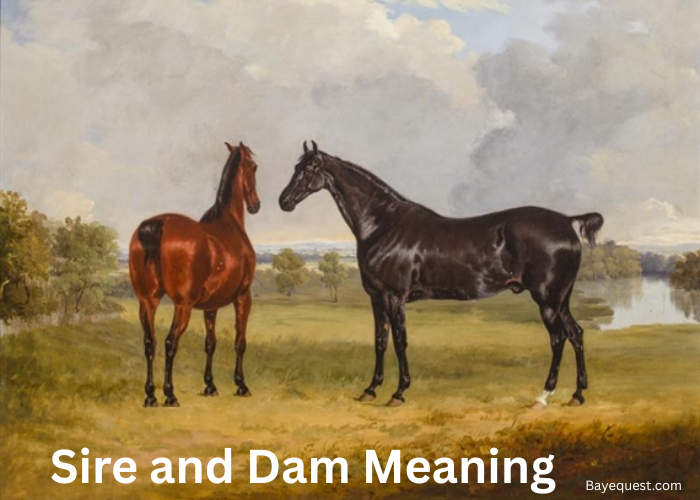
Every horse has two parents: a dam and a sire. The dam is the mother, and the sire is the father. Together, they shape everything about the foal, from its looks and behavior to its ability and temperament.
The sire contributes half of the foal’s genes, just like the dam. However, their roles in breeding are very different.
A stallion, or sire, can father many foals in a single breeding season. A dam, on the other hand, can only carry one foal per year. That means her care, health, and fertility are far more limited and precious.
While the sire’s influence is often highlighted for traits like speed, strength, or agility, the dam’s role is deeper and more personal.
She not only provides half the genetics but also nurtures the foal before and after birth. Her diet, mood, and well-being during pregnancy all help shape the foal’s growth.
So, both parents matter equally, but many experienced horse people say the dam’s influence is more profound.

How the Dam Horse Influence a Foal’s Traits
From genetics to behavior, a dam’s influence is evident in almost every facet of her foal’s life.
Starting with genetics, the dam passes down half of her genes to the foal. These genes help shape traits such as size, build, coat color, and even how fast or agile the foal might be.
A strong, well-built dam often produces foals with similar conformation and balance.
But her impact goes beyond genetics. During pregnancy, the dam’s nutrition, health, and stress levels directly affect how the foal develops.
A mare that receives proper care, a balanced diet, and a calm environment will likely have a healthier, more robust foal. This early development lays the foundation for a horse’s strength, soundness, and performance later in life.
After birth, the dam continues to shape the foal’s temperament and behavior. Foals learn by watching their mothers interact with people, respond to them, and stay calm in new situations.
A gentle, confident dam often raises a friendly and trusting foal. In contrast, a nervous or aggressive dam may pass on that behavior through early influence.
Some breeders even talk about maternal instinct and emotional imprinting. A foal’s bond with its dam teaches it how to connect and communicate with humans and other horses.
That’s why breeders put so much value on mares with good mothering instincts.
In short, the dam gives more than just life. She shapes her foal’s body, mind, and spirit, ultimately determining how successful that horse becomes in the future.
How to Identify a Horse’s Dam in Pedigree Records
If you’ve ever looked at a horse’s registration papers or pedigree chart, you’ve probably seen names listed in pairs; one on top, one on the bottom.
The top line shows the sire (the father), while the bottom line lists the dam (the mother). That’s how you identify who the horse’s dam is.
In written pedigrees, the format usually reads like this: “By [Sire’s Name], out of [Dam’s Name].”
For example, if a record says “By Thunderbolt, out of Starshine,” it means Thunderbolt is the sire, and Starshine is the dam.
You can find this information in breed registries, stud books, and online databases. The records typically include the dam’s name, registration number, and, sometimes, her breeding history or performance record.
If you’re buying a horse or researching its lineage, it’s important to verify the dam’s details. Make sure the name matches official registration documents, and check that her foals are properly recorded.
You may even find photos, DNA verification, and foaling records to confirm the dam’s identity. Being able to read and confirm this information can help you learn more about your horse’s background.
Dam Horse Selection: Choosing the Right Dam for Horse Breeding
Selecting the right dam is one of the most important stages in horse breeding. A good dam lays the foundation for strong, healthy, and capable foals.
Her genetics, health, and temperament all play a vital role in shaping the next generation.
Therefore, when breeders choose a mare to become a dam, they look for several key qualities. These include
- Good conformation: A mare should have a balanced body, straight legs, and a strong back. Physical flaws can easily pass on to foals, so selecting a well-built mare helps ensure better offspring.
- Temperament: A calm, patient mare often produces foals that are easier to handle and train. Since foals learn by watching their mothers, a gentle dam sets a positive example from day one.
- Health and fertility: Before breeding, veterinarians check that the mare is sound, free from genetic defects, and capable of carrying a foal safely. Breeders often review a mare’s previous foaling history, if available, to see how she performed as a mother in the past.
- Pedigree and performance: Breeders prefer mares with proven bloodlines or success in their discipline, such as racing, dressage, or show jumping. A mare that has already produced strong, athletic, or well-tempered foals is even more valuable.
Choosing the right dam takes time, research, and careful planning. But when done well, it sets the stage for producing foals that not only look great but also carry the qualities needed to excel in any field.

Care and Management of a Broodmare (Future Dam Horse)
How the mare is managed before and during pregnancy affects both her well-being and her foal’s future. But experienced breeders know exactly what to do.
Optimal nutrition
A broodmare needs a balanced diet rich in protein, vitamins, and minerals. High-quality hay, clean water, and carefully chosen supplements help her stay strong and energetic.
Otherwise, the malnourished mare may produce a weak or underdeveloped foal.
Regular exercise
Regular movement keeps her muscles strong and promotes healthy circulation. Meanwhile, gentle activity helps maintain her fitness without adding stress.
Most mares also do well with light turnout in a safe pasture.
Veterinary care
Mares need up-to-date vaccinations, deworming, and routine checkups. A vet will also perform pregnancy scans to monitor foal development and ensure the mare remains in good health throughout gestation.
As foaling time approaches, the mare should have a quiet, clean, and secure environment. Many breeders prepare a large foaling stall or grassy paddock where she can relax and deliver safely.
After birth, both mare and foal should be checked by a vet to ensure everything went smoothly.
What is a Dam Horse? FAQs
At what age can a mare become a dam?
Most mares can safely become dams at around 4 or 5 years old. By that age, their bodies are fully developed and ready for the demands of pregnancy. Some mares conceive earlier, but breeding too young can cause health and growth problems for both the mare and the foal.
How many foals can a dam have in her lifetime?
Most mares can have 8 to 10 foals during their breeding years, though some may produce more with proper care. Fertility and health play a big role. Mares that stay healthy and are well managed can safely foal into their late teens or early twenties.
Do foals always resemble their dams?
Not always. Foals inherit genes from both parents. So, the resemblance depends on which traits are dominant. Some foals take after their dams in looks and temperament, while others look more like their sires. Still, the dam’s influence often shows in subtle ways, such as behavior, movement, and personality.
What happens if the dam dies after foaling?
If a dam dies after giving birth, caretakers step in to help the orphaned foal survive. The foal can be bottle-fed with special milk replacers or fostered by another mare known as a nurse mare. With proper care and attention, most orphaned foals can still grow into healthy adult horses.
What are the most famous dams in horse history?
Some of the most famous dam horses in history are Urban Sea, the dam of legendary racehorses Galileo and Sea the Stars, and Hasili, known for producing multiple Group 1 winners. These mares became legends not just for their own achievements, but for the remarkable champions they produced.
What is a Dam in Horse Terms? Summary
A dam horse is the mother of a foal or a mare that has given birth. She carries, protects, and nurtures her foal for nearly a year, shaping its early life and temperament.
So, whenever you see the term “dam” in a horse’s pedigree, remember that it’s more than just a title. It’s a mark of motherhood, legacy, and the vital bond that begins every new equine generation.