


It is. And it’s not just random fluff. Those long muzzle whiskers are sensory tools—and on certain breeds, they grow so thick they look like a full-on handlebar.
In this guide, you’ll learn which horses get mustaches most, what those whiskers actually do, and the grooming mistake that can make a horse less confident in tight spaces and low light. (Yes—some competitions even ban removing sensory hairs.)
Can Horses Grow Mustaches? Key Takeaway
Certain breeds, such as the Gypsy Vanner and Shire, grow long whiskers, known as vibrissae, around the muzzle. These mustaches, called vibrissae, help horses sense their environment, especially while grazing. Genetics, breed, and climate influence both whisker thickness and curliness. These features are adaptations to colder living conditions.
Understanding Horse Hair
Beyond texture and thickness, a horse’s hair color and pattern also contribute to survival. Darker coats absorb more warmth in cold regions, while lighter coats reflect sunlight in warmer climates.
Some breeds even grow seasonal color variations that blend with their surroundings, offering mild camouflage.
These traits show that the equine coat serves not just for appearance, but also as part of the horse’s overall biological toolkit for comfort, temperature regulation, and environmental adaptation.
The Structure and Purpose of Horse Hair
Horse hair serves important functions beyond looks. It provides insulation, protection, and sensory enhancement. Short hair helps retain body heat, while long manes and tails shield from insects and rain.
Horses have sensitive whiskers, called vibrissae, near the eyes, nose, and lips, which help them explore, find food, and avoid hazards. Their wide-set eyes create blind spots, making whiskers important for daily safety.
Hair thickness and texture depend on breed, climate, and diet. Horses in colder places grow thicker, longer coats, while those in warmer areas have lighter, smoother hair.
Types of Hair in Horses
A horse’s coat has body hair for warmth, manes and tails for protection, and muzzle whiskers for sensing. Some breeds’ whiskers are long or thick, resembling mustaches.
Vibrissae grow deep in the skin and connect to nerves that transmit information. When grazing, these hairs help a horse judge nose-to-ground distance or spot obstacles in low light.
Other factors, such as nutrition, grooming practices, and living conditions, also shape hair growth in horses. A diet rich in biotin, zinc, and amino acids supports healthy hair follicles.
Environmental factors, such as cold weather, promote hair growth. So horses kept outdoors have more robust whiskers than those indoors. Over generations, these factors have shaped unique hair traits in different breeds.
See also: Horse Mane Styles.

Genetics and Hair Growth in Horses
Understanding how genetics influence a horse’s coat helps explain why some develop distinctive mustaches while others remain nearly hairless around the muzzle.
The Genetic Basis of Hair Variation
Genetics mainly influence hair growth. Some horses grow more hair due to their genes. Every strand, from mane to muzzle, shows inherited traits such as texture, color, and thickness.
Selective breeding has enhanced these traits. Draft horses bred in cold Europe needed thick coats for warmth and protection against moisture, resulting in dense leg hair and extended whiskers.
We don’t know exactly which genes cause horse mustaches, but some breeds are more likely to grow extra facial hair. These traits helped horses survive in wet, cold places.
Hormones affect hair growth. Stallions often have thicker manes, tails, and whiskers due to testosterone.
Still, mares from the same lines can also develop large mustaches. Genetics are the main determinant for nasal whiskers.
Breeds Known for Unique Hair Traits
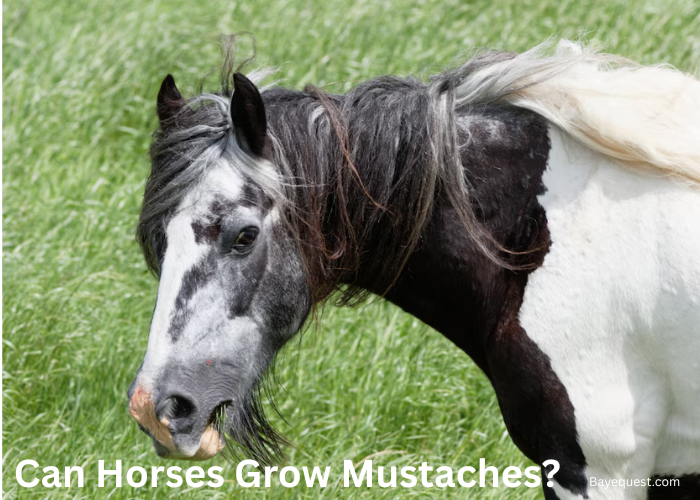
The Gypsy Vanner is known for its thick coat, decorative hair, and unique facial hair. Bred by the Romani people to pull caravans, this breed grows distinctive mustaches that help protect against rain and cold.
Shire and Friesian horses, known for their thick leg hair and manes, may also have thick facial hair. While not every horse shows a mustache, genetics and environment can make some stand out.
Even lighter breeds like Welsh Cobs and Highland ponies sometimes grow small mustaches. Welsh Cobs are known for occasional tufts of longer muzzle whiskers.
Highland ponies, native to Scotland, might display softer, less obvious facial hair. Their mustaches are shorter than those in heavy breeds, revealing genetic variation among horses.
Do Horses Actually Have Mustaches?
Let’s examine whether horse mustaches exist, how they appear, and their significance to horses.
Natural Facial Hair in Horses
Some horses seem to have mustaches, although these differ from human facial hair. These are natural whiskers that grow longer and thicker, creating a mustache-like look.
Whiskers are important for horses. They help explore surroundings and compensate for limited forward vision.
Horses use their whiskers to find where to bite grass or spot objects without bumping their noses.
Some horses have just a few whiskers, while others grow a thick fringe over their muzzle. Genetics is the main reason, with age, diet, and breed also playing a role.
The “Horse Mustache” Phenomenon
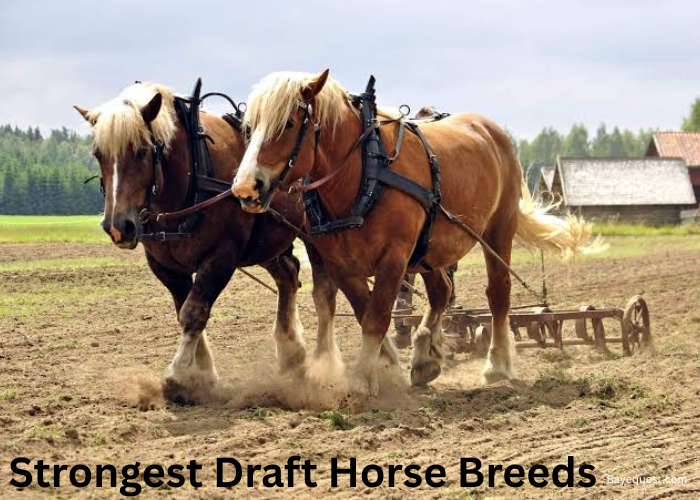
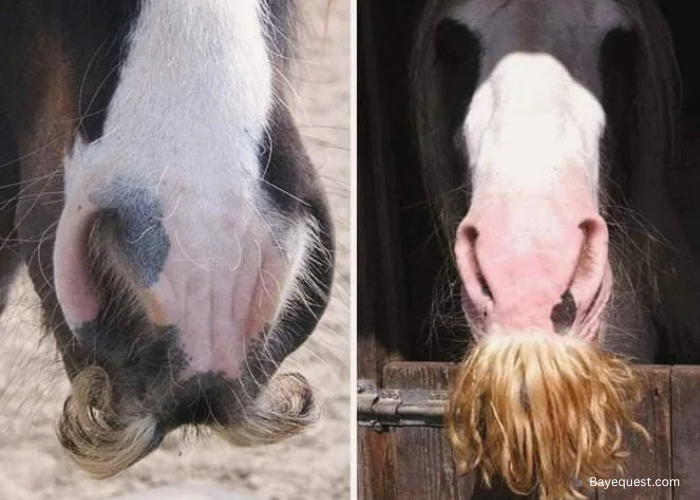
Draft horses are famous for their thick hair, and their whiskers can get so long that they hang down like a fringe.
Both mares and stallions can grow these mustaches, but males often have fuller ones. These mustaches help horses sense their surroundings, just like shorter whiskers do.
A horse’s mustache usually matches its coat in color and texture. The mustache can grow evenly or unevenly, adding to the horse’s unique look.

What Causes Horses to Have Mustaches?
What leads some horses to develop noticeable mustaches? Here’s a focused look at the causes.
Genetics and Breed Traits
Shire and Clydesdale horses have thick coats, abundant leg hair, and prominent manes. This hairiness can extend to the muzzle, creating a noticeable mustache.
Genetics determine whether a horse has a mustache. Breeds from cool, damp places grew thicker coats and more facial hair to stay warm and dry. Subsequently, these traits are inherited from parent to offspring.
Variation exists even within breeds. For example, one Gypsy Vanner might have long, curling whiskers, while another has only a slight fuzz. This range in mustache growth visually reflects minor genetic differences.
Seasonal Shifts
Seasons also affect how a horse’s hair grows. As it gets colder, horses grow thicker coats and shed them in spring.
These changes are controlled by daylight and hormones, not just temperature. In winter, some horses grow longer, more noticeable whiskers to help them handle the cold.
A horse’s mustache may become thicker and curlier in winter, then thinner in summer. This pattern reflects adaptations to seasonal changes.
Management practices also influence hair growth. Horses kept indoors under artificial lighting may shed hair less readily than those exposed to natural light. So they’re likely to keep their facial hair longer throughout the year.
Breeds with Prominent Facial Hair
Here are common horse breeds that boast prominent muzzle whiskers;
Gypsy Vanners and Cobs
Horses like the Gypsy Vanner, which were bred to pull wagons in tough weather, often have thick facial hair.
The Gypsy Vanner stands out for its long whiskers, heavy leg hair, full mane, and noticeable mustache.
These features not only give the breed its unique look but also help protect it from harsh weather. Many people see these traits as part of the Vanner’s strong and friendly appearance.
Other Breeds with Notable Muzzle Hair
Shires, Clydesdales, and other large draft breeds develop dense manes and pronounced mustaches.
For example, Shires are known for their thick facial hair, and Clydesdales share these traits, often growing mustache-like whiskers. These features highlight adaptations to regional climates.
Friesians are usually sleek, but they can sometimes grow thicker whiskers. How much facial hair a horse has depends on its breed, the climate where it lives, and how it is groomed.
In all these breeds, a mustache is a harmless, natural trait that adds to the horse’s character.
Common Misconceptions About Horse Mustaches
Here are some common misconceptions surrounding horse mustaches;
Mustache vs Normal Facial Hair
A lot of people believe horse mustaches are a special type of hair, but they are really just longer whiskers, called vibrissae.
Some horses naturally grow more noticeable whiskers, which help them sense their surroundings and are linked to nerves under the skin.
Horse owners often use the word ‘mustache’ informally, but there’s no real difference between a mustache and regular whiskers. The main difference lies in their prominence.
Grooming Myths and Anthropomorphism
Another common myth is that trimming or shaving a horse’s whiskers will make them grow back thicker, much like the myth about human facial hair. In fact, cutting these whiskers can actually harm the horse.
Whiskers are sensory organs, and removing them deprives the animal of important touch feedback. That’s why many countries and horse organizations advise against trimming muzzle whiskers.
People sometimes see horse mustaches as decorative, like human facial hair. But for horses, these whiskers influence how horses interact with the world.
Care and Grooming Considerations For Horse Mustaches
A horse’s mustache may stand out, but it needs the same care as all other hair. Modern welfare guidelines stress the importance of whisker preservation.
In 2021, the FEI prohibited trimming sensory hairs on competition horses, recognizing their value.
Owners should let whiskers grow naturally. Regular grooming keeps them clean without harming the hair. When cleaning the muzzle, use a soft sponge and gentle products to protect the skin and hair.
If a horse’s mustache becomes tangled or dirty, especially during winter, clean it gently with a damp cloth or a soft brush.
Avoid using scissors or clippers to trim a horse’s mustache. Allowing whiskers to grow naturally helps horses feel secure and confident, as they can use them to sense their way in low light or tight spots.
Interesting read: Horse Breeds With Hairy Feet.
FAQs
What breed of horse has a mustache?
Several breeds, like the Gypsy Vanner, Shire, and Clydesdale, are well-known for their mustaches. These unique facial features are made of coarse hair and typically grow on the horse’s upper lip, much like a human mustache. Draft horses, bred in colder climates, often sport prominent whiskers compared to their counterparts bred in warmer regions.
What causes a horse to have a mustache?
Genetics and environmental factors influence mustache growth in horses. The same genes responsible for thick hair, mane, and tail on draft horses can cause them to develop long vibrissae. Mustaches are less common in other horse breeds, especially those bred in warmer climates.
Why do horses raise their upper lip?
Horses and other ungulates raise their upper lip as part of a behavior known as the flehmen response. This behaviour transfers strong scents to the vomeronasal region above the roof of the mouth, often to detect pheromones. Any horse can raise their upper lip when encountering a new scent, so it’s not a cause for concern.
Should you trim a horse’s whiskers?
No, avoid trimming a horse’s whiskers because they’re vital sensory organs. While many horses may tolerate the trimming, it impairs their ability to navigate and detect objects in their blind spots. Major organizations, such as the FEI, have banned this action due to welfare concerns. Affected equines often suffer confusion, stress, and increased injury risks.
Do horse whiskers serve a purpose?
Whiskers enable horses to detect nearby objects, including walls, food, and other animals. They’re sensory organs that compensate for the wide-set eyes that create a blind spot. Whiskers can sense physical contact and subtle vibrations, allowing horses to judge distances and avoid obstacles in dim light or unfamiliar settings.
Conclusion
Horses can grow mustaches, and in some breeds, these features really stand out. Observing a horse with a mustache is more than a curiosity.
It’s a glimpse into nature’s ability to adapt. Each strand of hair tells a story of survival, genetics, and environmental adjustment
Whether it’s a Gypsy Vanner’s curled fringe or a Shire’s soft whiskers, these features remind us that beauty in horses often serves a deeper biological purpose.
Appreciating these details helps owners care for their horses more attentively, respecting traits that evolution shaped for their comfort and awareness.