



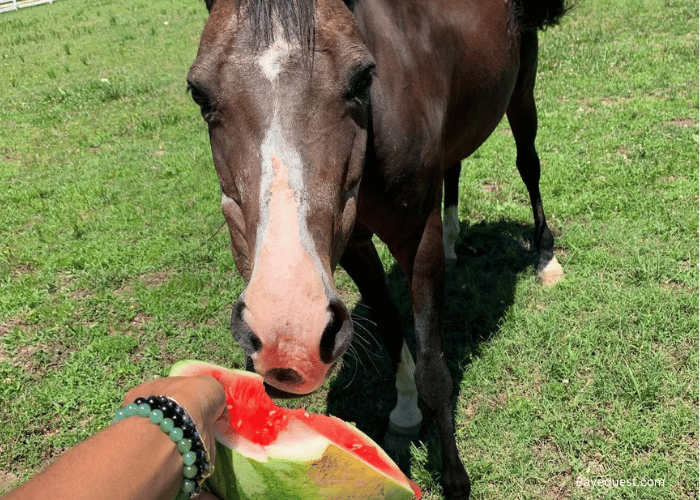
Did you know that watermelon, a summer favorite for many of us, could be a surprising and beneficial treat for horses? As a seasoned equine nutritionist, I’ve often been asked about the safety of feeding horses various fruits.
Many horse owners are curious but cautious about introducing new foods. This article seeks to answer the question, “Can horses have watermelon?”
We’ll also look into its nutritional benefits, the best ways to serve it, and potential risks to be aware of. Discover how to make watermelon a delightful and safe part of your horse’s diet.
Can Horses Eat Watermelon? Key Takeaway
Yes, horses can have watermelon. Both the flesh and rind of watermelon are safe and nutritious for horses. Always serve watermelon in small, manageable pieces to prevent choking. As a hydrating treat, it provides vitamins A and C, making it an excellent occasional snack for your horse.
Is Watermelon Good for Horses?
Yes, watermelon is good for horses when fed in moderation. The fruit is mostly water, which makes it a refreshing treat on hot days.
It also contains natural sugars, vitamin A, vitamin C, and electrolytes like potassium that support hydration. Horses can safely eat the flesh, rind, and a few seeds, but too much can cause loose stools or mild digestive upset.
Watermelon should be an occasional snack, not a daily feed replacement.
How Much Watermelon Can a Horse Eat?
A horse can safely eat about 1–2 slices of watermelon at a time, roughly equal to a few cups of chopped fruit. Because watermelon is high in natural sugar and water, feeding too much may cause loose stools or mild colic in sensitive horses.
As a rule of thumb, treats like watermelon should make up no more than 10% of the horse’s daily diet. Always introduce it slowly, remove most seeds, and keep portions small to avoid digestive upset.

Can Horses Have Watermelon Rind?
Yes, horses can eat the skin of watermelon. Let’s discuss what’s in it and why it’s great for your horse.
Fiber: Good for the Gut
The rind of a watermelon is packed with fiber, which is important for horses because it keeps their digestive systems running smoothly.
It helps with regular bowel movements and prevents common tummy troubles like colic. Eating the rind also means horses chew more, which is good for their teeth and helps make more saliva. This helps their digestion right from the start.
Citrulline: For Muscles and Blood Flow
There’s something else in the rind called citrulline. This amino acid does something pretty cool: it changes into another amino acid that helps relax and widen blood vessels.
Why is this good?
It means blood can flow better around the horse’s body. After a workout, this helps muscles recover faster by getting them the nutrients they need and carrying away waste.
It’s like making sure the highway is clear for all the delivery trucks and garbage trucks in the body.
So, when you’re slicing up watermelon for yourself, don’t toss that rind. Cut it up into small pieces and share it with your horse. It’s a tasty treat that’s also packed with benefits.
Can a Horse Eat Watermelon Seeds?
Yes, horses can eat watermelon seeds, but only in small amounts. The seeds are not toxic, yet they can be tough to digest if a horse eats too many at once.
Feeding large quantities may cause digestive upset or even mild colic in sensitive horses. If you give your horse watermelon, it’s safest to remove most of the seeds and offer the fruit in moderation as a refreshing treat.
Nutritional Benefits of Watermelon for Horses
| Nutrient | Benefit |
|---|---|
| Water | High water content (~90%) aids in hydration, digestion, and temperature regulation. |
| Vitamin A | Supports vision, immune function, and skin health. |
| Vitamin C | Acts as an antioxidant, aiding in cell repair, boosting immunity, and supporting older or stressed horses. |
| Magnesium | Supports muscle function, nerve transmission, and can have a calming effect. |
| Phosphorus | Essential for strong bones and teeth. |
| Citrulline | An amino acid found in the rind that improves blood flow and aids in muscle recovery. |
| Fiber | Found in the rind, supports digestive health and regular bowel movements. |
| Natural Sugars | Provides a quick source of energy. |
How to Feed Watermelon to Horses
Here’s how to feed your horses watermelon safely and ensure it enjoys every bite!
Choosing the Right Watermelon
Before you even get to washing and cutting, picking the right watermelon is crucial. You want a ripe, sweet, and juicy one for your horse to enjoy. Here’s how to choose the best watermelon:
- Look for a uniform shape: Whether round or oval, the watermelon should be consistent. Irregularities might indicate uneven ripening or poor growth conditions.
- Check the field spot: This is the area where the watermelon rests on the ground. A creamy yellow or light brown spot indicates ripeness, while a white or green spot suggests it’s underripe.
- Give it a tap: A ripe watermelon will have a deep, hollow sound when you tap it. If it sounds dull, it might not be ready to eat.
- Feel the weight: A ripe watermelon will feel heavy for its size, indicating a good water content, which is what you want for hydration.
Preparing the Watermelon
After picking the perfect watermelon, follow these steps to prepare it for your horse safely and effectively.
Step 1: Washing the Watermelon
- Why It’s Important: Washing removes potential pesticides, dirt, and bacteria from the rind. Even though you won’t feed the outermost layer, cutting through an unwashed melon can drag these substances into the flesh.
- How to Do It: Use cool running water and a clean brush for food use. Gently scrub the entire surface of the watermelon to ensure it’s clean.
Step 2: Cutting the Watermelon
- Safety First: Knife safety is paramount, so this task is for adults. Use a sharp knife and a stable cutting surface to avoid accidents.
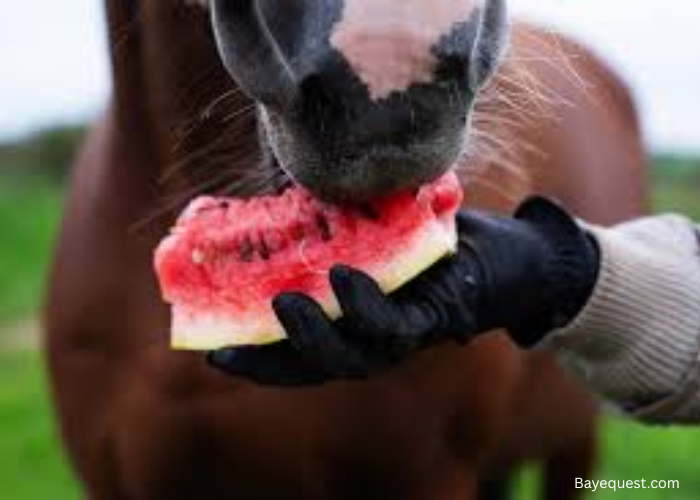
- Size and Shape: Cut the watermelon into slices or chunks that are manageable for your horse. If you’re including the rind, ensure the pieces are small enough to prevent choking but large enough to be chewed properly.
Step 3: Feeding
The Right Amount: Treats should make up a small portion of your horse’s diet. As a guideline, a couple of chunks or slices per day is plenty. This keeps their diet balanced and prevents overindulgence.
Frequency: Offering watermelon as a treat a few times a week during the summer is a good practice. It adds variety to the horse’s diet without disrupting their nutritional balance.
Creative Feeding Ideas for Watermelon
Offering watermelon to horses can go beyond simple slices. Here are some inventive ways to incorporate this hydrating treat into your horse’s diet.
Watermelon Chunks
- What It Is: Small, bite-sized pieces of juicy watermelon flesh.
- Best For: Quick rewards during training or a cool snack on warm days.
- Tips for Success: Cut into sizes that are safe and easy for your horse to eat. Make sure to remove seeds to prevent any digestive issues. This method provides a burst of hydration and a healthy dose of natural sugars for energy.
Chopped and Frozen Watermelon
- What It Is: Refreshing, frozen watermelon pieces.
- Best For: Offering a chilled treat to help your horse beat the heat.
- Tips for Success: Dice watermelon into small, manageable pieces and freeze. Serve as a standalone snack or mixed with other fruits for variety. This approach not only cools your horse down but also adds important vitamins to their diet.
Frozen Watermelon Blocks
- What It Is: Ice blocks infused with watermelon for a lasting treat.
- Best For: Encouraging hydration and play on hot days.
- Tips for Success: Freeze watermelon chunks in water-filled buckets. Watch as your horse enjoys licking and chewing on the ice, ensuring they stay hydrated and get nutrients.
Bran Mash Mixtures
- What It Is: A warm bran mash with the added sweetness of watermelon.
- Best For: A heartwarming treat in cooler weather or simply to pamper your horse.
- Tips for Success: Stir fresh watermelon chunks into your usual bran mash recipe before serving. This not only warms your horse but also provides a fiber-rich meal with the added benefits of watermelon’s vitamins.
Concerns with Overfeeding Watermelon to Horses
Treating your horse to watermelon should be done with care to avoid any health hiccups. Here’s what to watch out for when it comes to overfeeding.
The Sugar Situation
Watermelon is sweet and refreshing, but it’s the natural sugars in it that we need to think about. Compared to other treats, watermelon is pretty light on sugar, but it’s not sugar-free. A slice of watermelon has less sugar than, say, an apple or a banana, but those sugars can add up if you’re not careful. Too much sugar isn’t good for horses, just like it isn’t for us.
Overfeeding and Health
- Colic and Laminitis: These are two big concerns. Colic, a digestive upset, can happen if a horse eats too much of anything, not just watermelon. Laminitis, a painful hoof condition, can flare up if a horse’s diet has too much sugar. It’s all about balance.
- HYPP and Insulin Resistance: Some horses have special dietary needs. HYPP, a genetic condition, means they need low potassium foods. Watermelon’s okay in small amounts, but not in big servings. For horses with insulin resistance, watching the sugar intake is crucial, making watermelon something to give sparingly.

Special Considerations for Different Horse Populations
Senior Horses: Older horses might have more dietary sensitivities or health issues like dental problems or a slower metabolism. While watermelon can be a hydrating treat, it’s essential to match the portion to their overall diet and health status.
Horses with HYPP or Insulin Resistance: For these horses, every bit of food counts. Watermelon has potassium and sugars, so it’s best to consult with a vet to figure out if it fits into their diet.
Can You Feed Horses Watermelon? FAQs
Can eating too much watermelon make your horse unwell?
Yes, eating too much watermelon can make a horse unwell. While watermelon is safe in moderation, overconsumption can lead to digestive upset, such as colic, or contribute to conditions like laminitis due to its sugar content. It’s important to feed watermelon as a treat, not a staple of the diet, and always in moderation to avoid health issues.
Does watermelon cause colic in horses?
Watermelon itself does not typically cause colic in horses when fed in appropriate, moderate amounts. However, overfeeding any treat, including watermelon, can lead to digestive upset or colic, especially if the horse is not used to the treat. It’s important to introduce any new food slowly into their diet and keep treats to a minimal portion of their overall intake to prevent colic.
Is it okay to feed watermelon to a horse I don’t own?
No, it’s not advisable to feed watermelon or any treat to a horse you don’t own without the owner’s explicit permission. Different horses have unique dietary needs and restrictions, and what seems like a harmless treat could inadvertently cause health issues. Always ask for and respect the owner’s guidance when it comes to feeding their animals.
Which horses should not eat watermelon?
Horses with hyperkalemic periodic paralysis (HYPP) or insulin resistance should not eat watermelon. HYPP-affected horses can have episodes triggered by potassium, which watermelon contains. For horses with insulin resistance, watermelon’s sugar content poses a risk, as it can exacerbate their condition. Therefore, it’s best to avoid feeding watermelon to these horses to maintain their health.
Can Horses Have Watermelon? Conclusion
When it comes to giving your horse watermelon, think “less is more.” A little bit here and there makes for a perfect treat, especially when it’s hot out. But, watch out for giving them too much.
Too many sweets can upset their stomach, and big chunks can be a choking hazard. Just cut the watermelon into small, easy-to-bite pieces.
This way, your horse can enjoy a slice of summer, just like we do, without any trouble. Remember, the secret is to keep it simple and not overdo it.