

Top 17 Most Popular Horse Breeds in North America
Seventeen breeds. One continent. A horse culture so deep it helped build nations, win wars, and define an entire way of life.
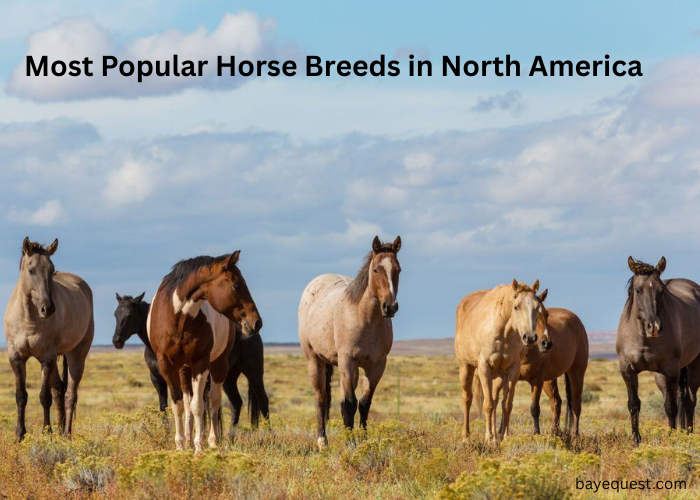
From the show rings of Kentucky to the open ranges of Nevada, North America’s most popular horse breeds span every discipline, every temperament, and every corner of the continent. These are the breeds that dominate — and this is how they ranked.
Most Popular Horse Breeds in North America: Key Takeaway
- Paso Fino
- Missouri Fox Trotter
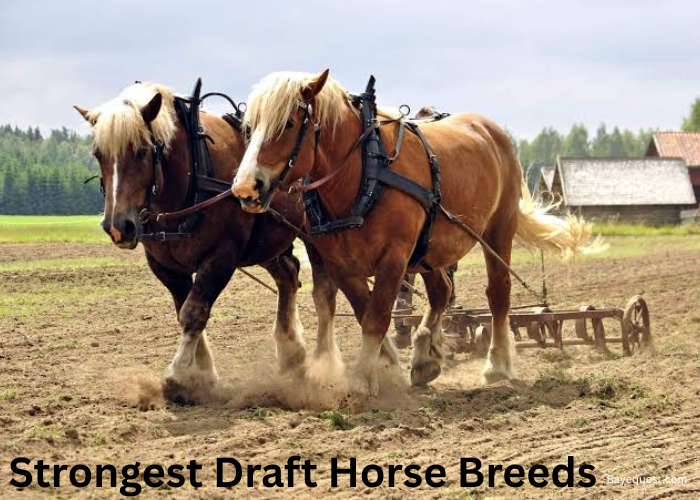
- Percheron
- Clydesdale
- Friesian
- American Saddlebred
- Warmbloods
- American Miniature Horse
- Mustang
- Morgan
- Appaloosa
- Standardbred
- Tennessee Walking Horse
- Arabian
- American Paint Horse
- Thoroughbred
- American Quarter Horse
Most Common Horse Breeds in North America
#17 — Paso Fino
The Paso Fino has been doing something most horse breeds in North America can’t claim. It’s been growing — quietly, steadily, one smooth ride at a time.
The Paso Fino Horse Association was founded in 1972 with a handful of horses and a dozen shows. Today, the registry covers over 60,000 horses across 24 regions. That growth didn’t happen through aggressive marketing campaigns or headline-grabbing moments. It happened because riders who discovered this breed rarely left.
The signature is the gait. It’s a natural, four-beat lateral movement — inherited, not trained in. It produces almost no vertical bounce for the rider. The Classic Fino is the most collected form, performed at a rapid footfall but a deliberately slow forward speed. Watch a well-trained Paso Fino in full collection, and you’ll understand why riders who find this gait call it the most addictive ride in the horse world.
The breed traces back to Spanish horses brought to the Caribbean by Columbus and later colonial settlers. Its bloodlines include Andalusian, Barb, and the now-extinct Spanish Jennet.
That heritage moved through five centuries of selective breeding in Puerto Rico and Colombia before reaching North America.
Paso Finos are intelligent, willing, and responsive. They form strong bonds with riders and adapt well to many environments.
That makes them excellent for trail riding, endurance, show classes, and pleasure riding. Their smooth gait also makes them popular with riders who deal with back problems or joint pain.
And that gait is not trained into them. It is inherited. Foals can perform it within hours of birth.
#16 — Missouri Fox Trotter
The Missouri Fox Trotter does not get mentioned as often as the Quarter Horse or the Arabian. But in North America, it has earned its place among the most useful riding breeds.
The Missouri Fox Trotting Horse Breed Association was founded in 1948. Since then, the registry has grown to around 100,000 horses.
That growth came mostly through word of mouth. Riders discovered how comfortable the breed was over long hours in the saddle. Then they told other riders. For more than seventy years, that has been the breed’s strongest marketing.
The fox trot is the breed’s signature gait. It is a broken diagonal gait, where the horse walks with the front feet and trots with the back feet.
The result is a smooth, shuffling rhythm that can be held for hours. It is not as flashy as the running walk. It does not have the drama of the rack. But for trail riders covering real distance, smooth and steady matters more than show.
The breed was developed in the Ozark Mountains. Settlers needed a horse that could handle steep, rough country without tiring quickly. The Missouri Fox Trotter gave them that.
It was named the official state horse of Missouri in 2002. Today, registrations span all fifty states.
Calm, honest, and easy to handle, the Missouri Fox Trotter is one of the most beginner-friendly gaited breeds on this list.
The U.S. Forest Service recognized its value early. Fox Trotters were used for backcountry patrol work across some of the toughest terrain in the country.
#15 — Percheron
In 1930, Percherons made up 70 percent of the draft horse population in the United States.
Not 70 percent of Percherons. Seventy percent of all draft horses in the country.
Then came the tractor.
In one generation, the most dominant working horse in America nearly disappeared.
By 1954, annual registrations had fallen to just 85
The Percheron Horse Association of America was founded in 1876. It was the first purebred livestock association ever formed in the United States.
At one point, it managed the world’s largest draft horse registry. But after tractors replaced many working horses, the association had to fight to keep the breed alive.
The recovery has been steady. Today, the association lists more than 34,000 registered horses, with about 2,500 new horses added each year.
Percherons survived because they offered more than size. They were powerful, but also intelligent, willing, and surprisingly light on their feet. That lightness traces back to early Arabian crosses introduced in France.
They are docile, energetic, and often easier to handle than their size suggests. That has taken them far beyond farm work.
Today, Percherons are used in competitive hitches, trail riding, combined driving, and crossbreeding programs for sport horse production across North America.
The association’s 1876 founding remains a major part of the breed’s history. No other horse registry in the United States can claim that same first-place record.
#14 — Clydesdale
If any breed on this list has a Super Bowl legacy, it is the Clydesdale.
The Budweiser Clydesdales first appeared in public in 1933. They were a gift to August Anheuser Busch Sr. to mark the end of Prohibition.
Since then, the hitches have become part of American culture.
Millions of people recognize this breed even if they have never stepped inside a barn.
The standards for a Budweiser hitch horse are strict: bay coat with a blaze, four white stockings, black mane and tail, and a minimum weight of 1,800 pounds. Each hitch travels with eight horses plus four alternates. Anheuser-Busch runs its own breeding farms to meet that standard — a program that has done more for Clydesdale awareness than any breed association campaign ever could.
The breed comes from Scotland, developed in Lanarkshire in the eighteenth century. Imports to North America began in the 1840s. They stand between 16.2 and 18 hands and can weigh up to 2,200 pounds. The heavy feathering on the lower legs creates a silhouette no other draft breed replicates.
Beyond commercials and parades, Clydesdales compete in hitches, show at agricultural exhibitions, and attract recreational riders drawn to their calm temperaments and striking presence.
Despite standing up to 18 hands and weighing as much as 2,200 pounds, they are genuinely gentle. This is the kind of horse that earns the ‘gentle giant’ label and actually deserves it.
A single Budweiser hitch travels approximately 100,000 miles per year for public appearances. That number says everything about both the breed’s stamina and its cultural reach.
#13 — Friesian
The Friesian nearly went extinct twice. At its lowest point in the early twentieth century, only three registered stallions remained in the Netherlands. A small group of breeders refused to let the breed disappear — and what they saved became one of the most recognizable horses in the world.
The Friesian’s rise among popular horse breeds in North America over the last thirty years has been remarkable. It was originally seen as a niche European breed. It built its following through dressage, combined driving, and film. Whenever a production needs a horse that looks like it belongs next to a medieval castle, they call a Friesian breeder. That Hollywood presence created a wave of interest that translated directly into North American registrations.
The breed stands between 15 and 16 hands. It is technically a warmblood, but its heavier build gives it a presence closer to a light draft in the saddle. Black is overwhelmingly the preferred color in the main registry. That gives the breed a visual identity no other warmblood can match.
The Friesian is also one of the oldest European breeds still in existence. It served as a war horse in the Middle Ages, prized for its ability to carry armored knights. That same combination—power, presence, and trainability—is why it dominates the arena today.
The Friesian Horse Association of North America manages the breed registry on this continent. Willing, energetic, and strongly people-oriented, Friesians form deep bonds with their handlers. Those qualities made them exceptional war horses. They make them exceptional dressage and driving horses now.
The breed has also quietly influenced others over the centuries, including the Morgan and the Fell Pony.
#12 — American Saddlebred
The American Saddlebred was called “the Horse America Made,” and the title fits.
The breed developed in Kentucky from Thoroughbred, Morgan, and Narragansett Pacer bloodlines.
During the Civil War, officers on both sides rode Saddlebreds through major campaigns. Their stamina, smooth movement, and presence made them valuable on long rides through difficult terrain.
The breed competes in two main forms.
Three-gaited Saddlebreds perform the walk, trot, and canter. Five-gaited Saddlebreds add two more movements: the slow gait and the rack.
The rack is fast, high-stepping, and dramatic. Each foot hits the ground separately, creating a flashy rhythm that stands out in the show ring. Once you see it at full speed, it is hard to forget.
The center of Saddlebred culture is the World’s Championship Horse Show. It is held every year at the Kentucky State Fair in Louisville.
The show dates back to 1902, making it the longest-running horse show in the United States. Winning the five-gaited stake class is one of the biggest honors in the breed.
The American Saddlebred Horse and Breeders Association keeps records for nearly 250,000 horses. Around 1,300 new horses are registered each year.
Saddlebreds are animated, intelligent, and willing. They have the energy and presence needed to command a show ring.
Those qualities also attracted famous owners, including U.S. Presidents Ulysses S. Grant and Warren G. Harding, who both kept Saddlebreds during their time in office.
#11 — Warmbloods
Warmbloods are a group of sport horses.
The group includes Hanoverians, Dutch Warmbloods, Oldenburgs, Holsteiners, Trakehners, and others.
Their purpose is clear: elite performance.
Dutch Warmbloods, Hanoverians, and Holsteiners appear often in top-level show jumping. Hanoverians and Oldenburgs are common in grand prix dressage.
When the United States sends an Olympic equestrian team, it often travels on warmblood hooves.
Warmblood registries use open studbooks and strict selection rules. Horses are judged for conformation, movement, and performance before being approved for breeding.
That system has created one of the most carefully performance-bred groups of horses in the world.
The Hanoverian Society began in Germany’s Lower Saxony region. Today, WBFSH world rankings regard it as one of the most successful sport horse breeding programs in history.
Warmbloods are athletic, trainable, and sensitive. They are bred to respond quickly and move with control.
That is why they perform so well in grand prix dressage, show jumping, and other elite competitions.
Those breeding programs have been running for over 300 years. That makes them among the oldest systematic horse breeding efforts in the Western world.
#10 — American Miniature Horse
At 34 inches or shorter, the American Miniature Horse is one of the smallest recognized equine breeds in the world.
The measurement is taken at the last hairs of the mane, not at the withers.
And despite its size, this breed is more popular than many full-sized horses on this list.
In the 2015 USDA equine census, Miniature Horses made up 5.1 percent of the total U.S. horse population.
That put them ahead of Arabians, Tennessee Walking Horses, and Appaloosas in raw numbers.
The American Miniature Horse Association is also the largest miniature horse registry in North America.
Uses span driving competitions, halter showing, therapy programs, and companion roles. Some trained Miniatures serve as certified guide animals — a role no other equine breed has developed to the same degree. They have been placed in hospitals, schools, and care homes across the continent with documented positive results.
The Miniature Horse is emphatically not a small pony. That distinction matters deeply in the breed community. Breeders focus on proportion, movement, and conformation that mirror a full-sized horse in miniature form. That standard shapes breeding decisions and show criteria across the industry.
Miniature Horses are gentle, intelligent, and very social. They are not just show animals. They also work as companions, therapy animals, driving horses, and service animals.
The Americans with Disabilities Act recognizes trained Miniature Horses as service animals, alongside dogs.
That gives the breed a level of practical recognition no other equine breed has reached.
#9 — Mustang
The Mustang earned its place on any list of popular horse breeds in North America without a registry. No studbook. No breed association keeping score. Just centuries of survival on the open range.
As of 2026, the Bureau of Land Management estimates 85,466 wild horses and burros on public lands in the western United States.
Nevada alone holds around 30,000. That is the largest single-state concentration on the continent.
Mustangs descend from horses brought by Spanish settlers in the early sixteenth century.
Over time, natural selection shaped them into tough, durable horses. Weakness did not last long on the open range.
The Mustang is protected under the Wild Free-Roaming Horses and Burros Act of 1971.
That law requires the Bureau of Land Management to manage wild horse and burro populations on public land. Because of that, Mustang management remains one of the most debated wildlife issues in the American West.
The Mustang Heritage Foundation has helped place more than 20,000 trained wild horses into private care since 2007.
Those horses have gone on to compete in barrel racing, endurance riding, dressage, and reining. That range says a lot about the breed.
Mustangs were not bred for one sport. They were shaped by survival. Yet once trained, they can compete across many disciplines.
They are resilient, intelligent, and independent. Once gentled, they often form strong bonds with their handlers.
The Foundation’s Extreme Mustang Makeover competition has shown that trainability to audiences across North America since 2007.
#8 — Morgan
Every Morgan alive today traces to one horse. His name was Figure, later called Justin Morgan, after the Vermont schoolteacher who owned him. He was a small bay colt acquired in 1789. He stood around 14 hands and weighed under a thousand pounds. He reportedly outpulled and outran horses twice his size.
Nobody knows exactly what he was. But his offspring inherited his compact build, thick neck, energy efficiency, and temperament — and the line held. Today, approximately 90,000 living Morgans are registered with the American Morgan Horse Association. Every single one descends from that one unrecorded colt. The full registry holds records for over 175,000 purebred Morgans.
The Morgan served as a cavalry mount in the Civil War. It powered New England’s stagecoach routes. It contributed foundational genetics to both the Standardbred and the Tennessee Walking Horse. No other American breed fed so many other registries from a single ancestor.
In 1907, the U.S. government established the Morgan Horse Farm in Middlebury, Vermont. It is the oldest continuously operating government horse-breeding facility in the country.
The University of Vermont has managed the farm since 1951, and it still operates today. Its purpose remains tied to the same qualities that made Morgan horses valuable to the Union cavalry: strength, stamina, intelligence, and reliability.
Morgans are willing, intelligent, and highly versatile. They bring a strong work ethic to dressage, driving, western riding, endurance, and ranch work.
Vermont recognized the breed’s importance early. The Morgan is the official state animal of Vermont. It is the only U.S. state to give that title to a horse, instead of simply naming an official state horse.
#7 — Appaloosa
The Appaloosa was the horse of the Nez Perce. For generations, the Nez Perce people of the Pacific Northwest bred spotted horses for speed, endurance, and soundness. Early American explorers specifically noted their quality — these were not accidental horses. They were deliberately bred animals of remarkable consistency.
Then came the Nez Perce War of 1877. The U.S Army’s campaign against Chief Joseph’s band resulted in the near-total destruction of the Nez Perce herds. The breed didn’t vanish entirely, but it came close. The Appaloosa Horse Club was founded in 1938 to revive what remained, and has since registered more than 630,000 Appaloosas — placing it among the largest breed registries in North America. Idaho adopted the Appaloosa as its official state horse in 1975.
Registration requires both color pattern and pedigree qualification. Approved crosses include Quarter Horses, Thoroughbreds, and Arabians, with one parent always required to be a registered Appaloosa. The breed kept its spotted coat while growing into a competitor across western, English, and endurance disciplines.
The spotted coat itself comes in several distinct patterns — blanket, leopard, snowflake, and roan among them. No two Appaloosas are marked exactly the same way. That individuality traces directly back to the selective eye of the Nez Perce breeders who created the breed.
Hardy, independent, and intelligent, Appaloosas carry the stamina and adaptability that made them indispensable to the Nez Perce. That same versatility shows up today across western, English, and endurance disciplines alike.
Even the name reflects that origin. It’s believed to derive from the Palouse River, the fertile valley in northeast Oregon where those original herds were bred.
#6 — Standardbred
Every Standardbred traces back to one horse: Messenger.
He was an English Thoroughbred imported to Philadelphia in 1788. Messenger never raced in harness himself.
But one of his descendants changed the breed forever.
Hambletonian 10 was foaled in 1849 in Chester, New York. He sired 1,335 foals. Today, about 99 percent of modern Standardbreds trace back to him.
The breed’s name came from its original registration rule: a horse had to complete a mile within a standardized time to qualify. That benchmark shaped a breed built entirely around a single measurable performance standard — something no other breed on this list can claim.
The breed splits into trotters and pacers. Trotters move in diagonal pairs. Pacers move in lateral pairs and are generally faster, with modern paced miles dropping below 1:47 at the highest level. In the 2015 USDA census, Standardbreds made up 3.7 percent of the U.S horse population, placing them above both Arabians and Tennessee Walking Horses. The U.S Trotting Association manages the registry and regulates North American harness racing.
Off the track, Standardbreds’ calm temperaments and natural soundness make them one of the most successful breeds for second-career placement across riding disciplines. Calm, sensible, and willing, they adapt to new environments and new jobs with minimal fuss. That makes sense for a breed whose entire identity was forged around meeting a measurable standard.
It’s also worth noting that harness racing has a longer North American history than Thoroughbred flat racing. The first organized trotting races in the United States predate the Civil War. The Standardbred was purpose-built to dominate them.
#5 — Tennessee Walking Horse
The Tennessee Walking Horse was built for comfort.
The goal was simple: create a horse that could carry a rider across large areas for hours without the rough bounce of a trot.
By the mid-nineteenth century, farmers and plantation owners in central Tennessee had found the answer. It was the running walk.
The running walk is a smooth, four-beat gait. The back hoof lands well ahead of the front hoofprint. The rider feels very little up-and-down movement.
That is why a well-ridden Tennessee Walking Horse is one of the most comfortable horses for long distances and rough ground.
The breed’s foundation sire was Allan F-1, a black stallion foaled in 1886. He carried Morgan and Hambletonian bloodlines.
When the Tennessee Walking Horse Breeders’ and Exhibitors’ Association was formed in 1935, Allan F-1 was named the foundation sire.
Today, the TWHBEA registry includes more than 400,000 horses in all 50 states and 28 foreign countries.
The Tennessee Walking Horse is also the official state horse of Tennessee.
The show circuit carries a serious welfare controversy.
Soring is the deliberate infliction of pain on a horse’s lower legs to exaggerate the show walk. It remains an issue despite the Horse Protection Act of 1970.
But outside the show ring, the breed has a very different reputation.
Tennessee Walking Horses are gentle, calm, and people-oriented. They are among the easiest gaited breeds to handle.
Their trail riding reputation is one of the strongest in North America.
The running walk is so smooth that a rider can hold a full glass of water without spilling a drop. That single image explains why the breed has more than 400,000 registrations across 50 states and 28 countries.
#4 — Arabian
The Arabian Horse Association holds records for more than one million Arabian, Half-Arabian, and Anglo-Arabian horses.
The original registry began in 1908.
The breed itself is far older. Arabians are believed to have been selectively bred on the Arabian Peninsula for at least 4,500 years.
That makes the Arabian one of the oldest documented horse breeding traditions in the world.
It is also one of the most influential breeds in North America and beyond.
Arabians have 17 ribs, 5 lumbar bones, and 16 tail vertebrae. Most other breeds carry an 18-6-18 structure. That skeletal difference shapes the breed’s high tail carriage, compact back, and characteristic dished profile. It also gives Arabians a weight-to-strength ratio that makes them exceptional over long distances.
The breed’s genetic reach is immeasurable. Every Thoroughbred alive traces through the Byerly Turk, the Darley Arabian, and the Godolphin Arabian — all imported to England before 1730. Standardbred, Morgan, and American Saddlebred lines all carry Arabian blood. The Arabian is arguably the most genetically significant horse in history.
In endurance riding, Arabians don’t simply compete—they dominate. The Tevis Cup covers 100 miles of the Sierra Nevada trail from Lake Tahoe to Auburn, California. It’s the toughest single-day endurance ride in the United States. Arabians have won it in the vast majority of its runnings since 1955. At the highest levels of international endurance competition, no other breed comes close.
Arabians are intelligent, sensitive, and spirited. They are alert horses with a strong bond to people.
Those traits did not appear by accident. They were shaped over more than 4,000 years of careful breeding.
Long before modern registries existed, Bedouin tribes kept track of Arabian bloodlines through oral tradition. That history helped make the Arabian one of the most trusted and influential horse breeds in the world.
#3 — American Paint Horse
The American Paint Horse Association registers about 50,000 new horses every year. Since it was founded in 1962, the APHA has registered more than 1.1 million horses. That makes it one of the largest breed registries in North America, second only to the Quarter Horse.
But a Paint is not just any horse with color. To qualify, the horse must have the right coat pattern and the right bloodlines. Its pedigree must trace to AQHA, APHA, or Jockey Club stock.
That ancestry matters. Quarter Horse and Thoroughbred blood give the Paint its strong hindquarters, short back, and athletic build. It can compete in stock horse events, barrel racing, reining, hunter-jumper classes, trail riding, and ranch work.
The breed’s roots go back to horses brought by Spanish explorers in the sixteenth century. Over time, tobiano and overo coat patterns spread through the wild herds of the American West. These patterned horses also became important to the Comanche and other Plains tribes.
Today, the Paint stands out for two reasons. It has the performance ability of the Quarter Horse and the bold markings that make it easy to recognize from a distance.
Paints are calm, intelligent, and willing. That makes them suitable for riders of many experience levels.
That mix of color, temperament, and versatility helped drive one of the fastest growth stories in North American breed history. During the 1990s, the American Paint Horse became the fastest-growing breed registry on the continent.
#2 — Thoroughbred
Every Thoroughbred alive today traces back to three foundation stallions: the Byerly Turk, the Darley Arabian, and the Godolphin Arabian. All three were brought to England before 1730.
From those three horses, the modern racing industry was built. Their influence also spread far beyond racing. Thoroughbred blood helped shape Standardbreds, Warmbloods, Quarter Horses, and Paint Horses across North America.
The Jockey Club recorded about 18,000 Thoroughbred foals in North America in 2024. Kentucky remains the center of the industry. Stallions based there account for more than 61 percent of all mares bred in North America.
That level of breeding activity in one state is rare in the livestock world. Top stallions can cover hundreds of mares in one season, with stud fees reaching hundreds of thousands of dollars per breeding.
The Thoroughbred is not only a racehorse.
Off the track, Thoroughbreds have become show jumpers, eventers, dressage horses, and second-career riding partners.
They are fast, sensitive, and athletic. In the right hands, those traits can produce extraordinary performance.
They are not always beginner-friendly. Thoroughbreds often need experienced riders who understand their energy and sensitivity.
But for skilled horsemen, the reward is enormous.
The Off The Track Thoroughbred movement has become a major industry. Retraining programs, adoption networks, and competition divisions now help thousands of ex-racehorses find second careers.
Secretariat showed what the breed could produce at its peak. He is widely considered one of the greatest racehorses of all time. His heart was estimated at 2.5 to 3 times the size of a normal horse, reportedly weighing around 22 pounds.
#1 — American Quarter Horse
The growth of the American Quarter Horse is extraordinary. The breed started with just 20 founding stallions in 1940. In about 80 years, it grew to more than six million registered horses. Today, the AQHA is the largest equine breed registry in the world, and the Quarter Horse is the most popular horse breed in North America by a wide margin.
Its name comes from what it was bred to do best: run a quarter mile faster than almost any other horse. At full speed, a Quarter Horse can reach nearly 55 miles per hour.
But today, speed is only one part of the story.
The breed dominates cutting, reining, barrel racing, ranch horse competitions, and rodeo events.
But it is not only a Western horse.
Quarter Horses also compete in hunter-jumper classes, trail riding, and many other disciplines.
That is what makes the breed so powerful in North America. It is not a specialist. It is one of the closest things the horse world has to an all-purpose breed.
Riders have voted with their registrations.
American Quarter Horses account for about 42.1 percent of horses in the USDA commercial farm census. They are especially common in the West and the South Central United States.
That is not a niche following. That is cultural dominance.
Peter McCue, born in 1895, appears in the pedigrees of virtually every Quarter Horse bred today. His bloodlines set the template: compact, heavily muscled hindquarters, a wide chest, calm intelligence, and explosive short-distance acceleration. That template has held for over a century and shows no sign of changing.
Calm, willing, and remarkably versatile, the Quarter Horse’s even temperament under pressure is as much a part of its identity as its speed. That temperament is what allows it to dominate cutting, reining, barrel racing, ranch work, hunter-jumper, and trail riding simultaneously.
The AQHA is not just the largest horse registry in the world. It is the largest breed registry of any domestic animal, anywhere. That distinction belongs to the American Quarter Horse alone.
How to Choose the Right Horse Breed for You
With seventeen of the most popular horse breeds in North America covered, the question becomes: which one is right for you?
Consider your riding discipline first
If you’re drawn to western events, barrel racing, or ranch work, the Quarter Horse or Paint is the natural starting point. Dressage and show jumping point toward Warmbloods or Thoroughbreds.
Trail riding over long distances? The Tennessee Walking Horse, Missouri Fox Trotter, or Arabian will serve you better than almost anything else.
Match the breed to your experience level
Arabians and Thoroughbreds can reward skilled riders, but they may be too sensitive for beginners. Quarter Horses, Morgans, and Miniature Horses are often easier starting points.
Think about your environment and budget
Draft breeds like the Percheron and Clydesdale require more feed, more space, and more farriery investment than lighter breeds.
A Miniature Horse, by contrast, requires a fraction of the resources of a full-sized horse.
Let temperament guide the final decision
The best match isn’t always the most popular breed or the fastest — it’s the horse whose personality fits yours.
Spend time around the breeds you’re considering before committing. The right horse for someone else may not be the right horse for you.
Conclusion
North America has a horse culture like no other. From Nevada’s wild horses to Kentucky’s show rings, every breed has a story.
Some were shaped for speed. Some were built for strength. Others are loved for smooth gaits, endurance, beauty, or versatility.
Whether you prefer the Paso Fino, Percheron, or Quarter Horse, these popular North American breeds offer something meaningful for every rider, discipline, and horse lover.
They show how deeply horses shaped the continent’s history, work, and sport today.