



Horses are admired for strength and resilience, but their reproductive systems are sensitive. Unlike cattle or goats, which often have twins, mares are designed to carry only one foal.
Occasionally, a horse may become pregnant with twins, posing serious risks to both the mare and foals.
In this article, we’ll explore why twin pregnancies occur in horses and the problems they can cause. You’ll also get tips on how to address these situations to prevent long-term complications.
Can Horses Have Twins?
Horses can have twins, but it is rare and usually leads to complications. Most mares release one egg per cycle, though sometimes two are fertilized. It’s uncommon for both foals to survive birth.
A mare’s uterus is built to support only one foal. If two embryos develop, they must compete for space, oxygen, and nutrients, which significantly increases risks.
Typically, one embryo stops developing, allowing the other to survive. If both keep growing, complications increase.
Understanding Horse Pregnancy
Here’s how foaling occurs in horses;
The Equine Reproductive System
A mare’s reproductive system includes two ovaries, fallopian tubes, a uterus, and a cervix leading to the vagina.
Ovulation occurs when a mature follicle releases an egg, usually every 21 days. Breeding, natural or induced, introduces sperm, allowing fertilization in the fallopian tube.
After fertilization, the embryo travels to the uterus and implants after two weeks. The embryo signals the mare not to return to heat.
Usually, just one embryo attaches, but if two eggs are fertilized, the embryos may attach in different uterine areas, resulting in a twin pregnancy.
Duration and Stages of Pregnancy
The normal gestation period of a horse is approximately 340 days. However, this duration can vary by several weeks depending on the mare’s age, breed, and the season.
The pregnancy unfolds in three major stages:
- Early Gestation (0–3 months): Embryo implantation and organ development occur.
- Mid-Gestation (4–8 months): Rapid fetal growth takes place, with the foal developing recognizable features.
- Late Gestation (9–11 months): The fetus gains most of its weight, and the mare’s body prepares for foaling.
Twin pregnancies often don’t follow the normal timeline. Because foals share space and nutrients, their growth can slow. This raises the risk of birth defects or miscarriage.
Twin Pregnancies in Horses
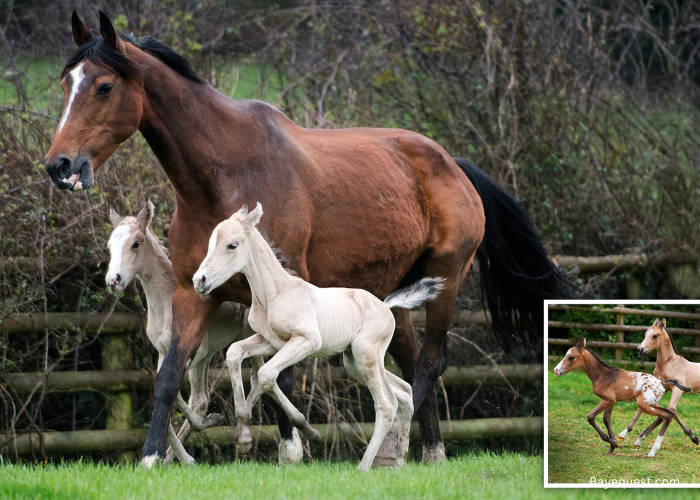
Occasionally, twin pregnancies have been documented in mares. Here’s how they occur;
Definition and occurrence
A twin pregnancy happens when both ovaries release eggs in the same cycle, a condition called double ovulation. Breeds like Thoroughbreds and Warmbloods are more prone to this than draft horses.
While double ovulation is common, the embryos rarely develop beyond the first month.
Why are twins rare in horses?
Horses naturally carry a single foal. Their uterus structure and placenta formation make the presence of multiple fetuses unlikely.
In horses, the placenta forms a thin layer over the uterine wall, preventing two placentas from developing fully without overlap.
A mare’s uterus is only big enough for one foal. With twins, the limited space can squeeze their organs and restrict movement.
This can cause bone problems or underdeveloped lungs, especially if the pregnancy lasts longer. Breeders now monitor mares and try to prevent twins by detecting them early.
The Biology of Twin Gestation in Horses
Here’s how mares can conceive twins despite it being unnatural:
When two eggs are fertilized, both embryos float in the uterus for two weeks before attaching. If they implant on opposite sides, the embryos may survive temporarily.
If the embryos are too close together, one may not get enough blood or nutrients and will stop developing.
By day 17, the embryos settle in the uterus. If the pregnancy goes on, each forms its own placenta and sac. As they grow, the risk rises because the mare’s uterus can’t hold both foals.
Types of twin arrangements
The two types of twin arrangements in pregnant mares include;
Dichorionic twins
Dichorionic twins each have their own placenta and amniotic sac. This gives them separate access to nutrients and slightly better chances of survival.
Monochorionic twins
Monochorionic twins share a single placenta and amniotic sac, which is very risky. When twins share a placenta, nutrients are distributed unequally. The stronger foal receives more blood, while the weaker one may not develop well.
This can cause deformities or even fetal death. Sometimes, both foals are affected, leading to miscarriage or premature labor.
Developmental Challenges in Twin Gestation
Having seen how twins develop in horses, consider the unique challenges they face in the womb.
Birth complications
Twin pregnancies often cause difficult or blocked labor because foals are mispositioned. This endangers the mare and needs immediate veterinary help.
Poor survival rate
Fewer than 10% of twin pregnancies result in two live foals. The twins are often born weak and require extra care. Many pregnancies end in miscarriage before mid-gestation, making healthy survival rare.
Unequal growth
Usually, one twin is smaller and weaker, having trouble nursing, standing, or breathing. Even the stronger foal is often undersized.

Detecting Twin Pregnancies Early
Early detection is key to managing twin pregnancies. Vets use ultrasound between days 14 and 16 after breeding, when embryos are still mobile and can be acted on.
Signs like unusual hormone levels, a bigger belly, or changes in the uterus show up late. Only a vet scan can confirm twins. Catching them early gives the best chance for a healthy result.
Risks and Challenges of Twin Foaling
Below are some common reasons why twin foaling rarely occurs in horses;
Risks for the foals
Twin foals face serious challenges at birth. Sharing a uterus means less space, oxygen, and nutrients, often leading to low birth weight and weak organs.
Most twins are born premature, struggle to stand, and are prone to infections. They also have trouble maintaining body temperature.
Even with intensive care, survival rates are low, and lasting health issues are common. Vets recommend reducing twins early to protect the mare and any viable foal.
Health risks for the mare
Carrying twins is very hard for a mare. Her uterus can’t stretch enough, so both foals get less oxygen and space, making early pregnancy loss or premature birth likely.
Sometimes, the mare’s body senses strain and ends the pregnancy for one or both foals. Even if pregnancy continues, safe delivery is very difficult.
Below are the most common and serious health risks a mare may face during or after a twin pregnancy:
Dystocia (Difficult Labor)
Dystocia refers to any blockage or complication during birth that prevents the mare from delivering foals normally.
In twin foaling, this happens because both foals attempt to enter the birth canal at once. It also occurs when one fetus is positioned backward or upside down. The mare’s uterus can’t contract to expel two foals, making the process painful and prolonged.
Veterinarians need to assist manually or perform a cesarean section, which is surgery to remove the foals through the abdomen, in rare cases.
Dystocia can lead to uterine tears, excessive bleeding, or shock, putting the mare’s life at risk.
Retained placenta
After giving birth, a mare should expel her placenta, which is the tissue that connects the foal to the uterus and provides nutrients, within three hours.
In twin foaling, this process fails because the placenta is abnormally large or torn. Sometimes, the placenta remains attached to the uterine wall.
A retained placenta can lead to metritis, which is inflammation and infection of the uterus that releases toxins into the bloodstream. Without prompt veterinary treatment, this condition can escalate into laminitis.
Laminitis is a painful, sometimes fatal inflammation of the hoof caused by toxins that affect the sensitive tissue inside the foot. It often leads to severe lameness or an inability to walk.
Reduced fertility and reproductive scarring
Even if a mare survives a twin pregnancy, she may have long-term reproductive problems.
Uterine stretching and inflammation during twin gestation damage the uterine lining where embryos attach.
Scarring makes it harder for embryos to implant, causing lower conception rates or repeated losses.
The physical strain and hormonal changes can slow the mare’s recovery. It may take longer before she is ready to breed again.
Veterinary Management of Twin Pregnancies
To prevent long-term complications, veterinarians employ several methods to address twin gestation in mares. They include;
Natural reduction
Sometimes, one embryo stops growing while the other continues to develop. This is more likely if twins are found early and are not too close together in the uterus.
Manual crush or “twin pinch”
In this procedure, a vet gently presses on one embryo while monitoring it with ultrasound. It is done before day 17, when the embryos are still small and can move. If done right, the remaining foal can develop normally.
Transvaginal ultrasound-guided twin puncture
A vet can use a thin needle, guided by ultrasound, to stop one embryo from growing. This method is very precise but needs special tools and training.
It works best between days 25 and 30 of pregnancy.
Manual reduction
If twins are found later in pregnancy, vets may try to reduce one embryo while the mare is sedated. This is riskier, and the mare needs close monitoring afterward.
Craniocervical dislocation
Craniocervical dislocation is a last-resort, humane but very invasive procedure. It is used when the pregnancy is too far along for safer options.
The main goal is to protect the mare and try to save one foal.
Pregnancy termination
If neither foal can be safely reduced and the mare’s life is at risk, ending the pregnancy may be the only option. This is a tough decision for any horse owner, but sometimes it is necessary to protect the mare.
Caring for the Mare After Twin Reduction or Foaling
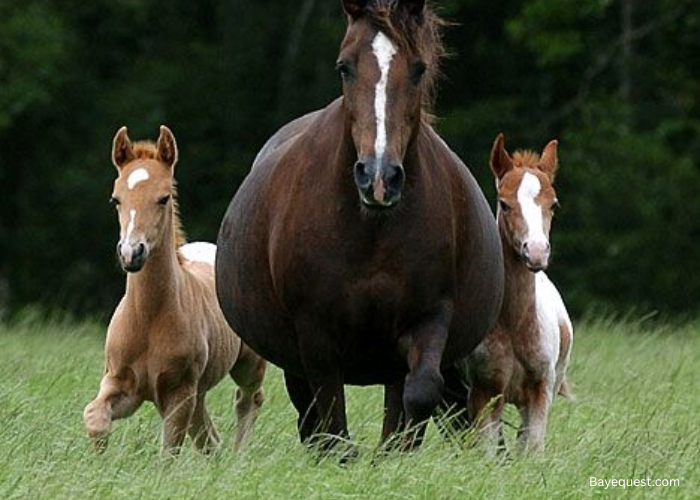
After foaling, the mare needs time to recover. She should get plenty of rest, good nutrition, and be watched closely. Vets often recommend the following:
- Light exercise to promote circulation and prevent colic.
- High-quality forage and mineral supplements to restore nutrients.
- Follow-up ultrasounds to ensure the uterus is healing properly.
If you want to breed the mare again, wait at least one full cycle so her uterus can recover.
How Breeders Prevent Twin Pregnancies
Below are the most common and effective strategies breeders use to reduce the risk of twins:
Ultrasound scanning
Modern reproductive care uses ultrasound imaging before and after breeding. Vets scan the mare’s ovaries before insemination to check for double ovulation.
After breeding, another scan shows if one or more embryos have implanted. Finding twins early allows for timely intervention, which can save the pregnancy.
Hormonal regulation
Hormone-based medications help control when a mare comes into heat and ovulates. Drugs like prostaglandins or progesterone affect when and how many eggs are released.
This lowers the risk of double ovulation and helps breeders plan inseminations.
Avoiding repeated inseminations during the same heat cycle
Some breeders inseminate a mare several times during the same heat cycle to boost the chance of pregnancy.
But this can raise the risk of twins. It’s better to plan one well-timed insemination using ultrasound and hormone checks.
Monitoring at-risk mares
Some mares, like older Thoroughbreds, are more likely to double ovulate. Watch their cycles closely and avoid breeding when they are actively ovulating.
Real-World Examples of Twin Pregnancies in Horses
Below are some rare occasions when mares have carried twin pregnancies to full-term;
Documented twin births
In 2018, a mare named Twilight in the UK made headlines by giving birth to two healthy colts without any problems. In Texas, a Quarter Horse mare also had twin fillies, and both survived thanks to special care.
These cases get a lot of attention, but they are very rare. For every pair of twins that survives, many more pregnancies end in miscarriage. Most twin pregnancies need medical help to keep the mare safe.
Comparison with other livestock
Cattle, sheep, and goats frequently bear twins without issues. Their uterine structure and placentation differ from horses. Their placentas form multiple attachment points, allowing each fetus to receive adequate nutrition.
Horses have evolved to have one healthy foal at a time, which helps them stay fast and strong. Twin pregnancies don’t fit this pattern, so they are rare and risky.
Emotional and Ethical Considerations for Twin Reduction in Horses
Twin pregnancies can be emotionally taxing for breeders and horse owners. Deciding to reduce an embryo or end a pregnancy is never easy. Still, responsible breeding puts the mare’s health and safety first.
Preventing twin pregnancies keeps both the mare and foal safer, and also reduces stress and costs for owners.
FAQs
What happens if a horse has twins?
Since a mare’s uterus is suited to support one fetus, twins can cause dystocia or the birth of underdeveloped foals. Most twin pregnancies end in miscarriage or premature delivery. If the twins reach full term, the birth is usually complicated and requires veterinary intervention. Abortion or embryo reduction is often necessary to prevent these complications.
Do horse twins ever survive?
While it’s rare, both foals can survive, although they’re often smaller and need special care. In most cases, only one twin makes it to adulthood. Carrying twins into late-term pregnancy compromises the mare’s long-term health. The reproductive tract can be damaged when the horse tries to give birth to two foals.
What is the chance of a horse having twins?
About 1 in 10,000 births result in twins. While double ovulation is common in horses, the mortality rate for the foals and complications for the mare make twin foaling rare. In twin pregnancies, one foal is reduced to allow the other to survive.
What is the 1-2-3 rule for horses?
After parturition, the foal should stand within one hour and nurse within two hours. The mare should pass the placenta within three hours of birth. A retained placenta can quickly lead to metritis, a dangerous uterine infection that causes fever and colic. Consult your veterinarian immediately if you notice any delays. This is crucial to the foal’s long-term health.
Can twin pregnancies be prevented?
Preventing twin pregnancies in horses isn’t possible. However, you can manage the pregnancy with early intervention. Performing an ultrasound exam two weeks after breeding can prevent a mare from conceiving twins. Veterinarians can detect twins early and reduce them to a single pregnancy.
What should I do if my mare is diagnosed with twins?
Contact a qualified equine veterinarian immediately if your mare is diagnosed with twin pregnancies. Early intervention, ideally before day 17, gives the best chance of saving the mare and one foal. Carrying twins to term poses a significant risk for the mare and foals. Methods such as twin pinching and manual reduction help ensure your equine partner’s health.
Conclusion
Twin pregnancies in horses are rare but very risky. Mares are meant to carry only one foal, so having twins can lead to complications.
With good veterinary care and careful breeding, most twin pregnancies can be managed. This helps protect the mare and increases the chance of a healthy foal.
If you own horses, always put their well-being first and act quickly if problems come up. Twin foals might sound exciting, but the main goal should be a healthy mare and one strong foal.