


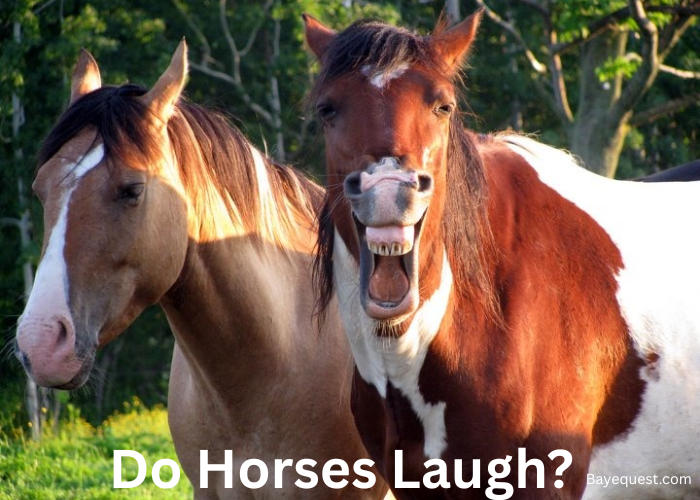
Horses are highly expressive animals. They communicate with each other and with us through body language, sounds, and subtle facial cues. From flicking their ears to swishing their tails, every gesture carries meaning.
But can they laugh – like we read in storybooks and regularly watch in viral social media memes?
In this article, we’ll dive deep into the science and myths surrounding the old adage. By the end, you’ll have a clearer understanding of how to read your horse’s emotions without needing to imagine a punchline.
Do Horses Laugh?: Key Takeaway
Horses don’t laugh the way humans do. They don’t chuckle, giggle, or find things “funny” in the same sense we do. However, they do express joy and playfulness in other ways, such as energetic bucking, soft nickers, or relaxed body language, all of which reveal their emotional state without requiring a laugh.
Can Horses Laugh?
No. Despite what some viral photos or funny memes may suggest, horses don’t actually laugh in the way humans do.
From a scientific standpoint, laughter is tied to specific brain functions and vocal structures. Unfortunately, horses lack the vocal and neurological mechanisms needed to generate laughter-like sounds.
Instead, their communication system has evolved in different ways, relying on body language, facial expressions, and distinct vocalizations, such as neighs and whinnies.
Why Do People Think Horses Laugh?
Despite the scientific evidence that horses don’t actually laugh, many people still believe they do – and it’s easy to see why.
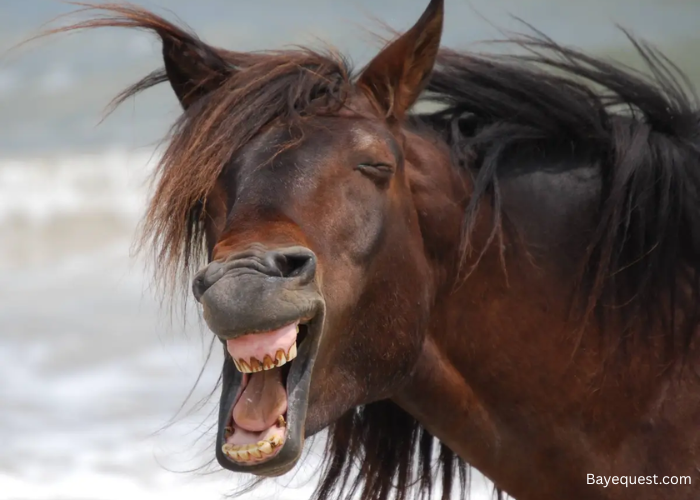
A horse’s facial expressions, especially the famous Flehmen response, can look uncannily like a wide grin or hearty chuckle. When captured in photos or videos, these moments are often shared online as proof of a “laughing horse.”
Add a funny caption or a well-timed sound effect, and suddenly the image takes on a human-like quality that spreads quickly across social media.
Pop culture has also fueled this belief. From animated films to comedic commercials, horses are often depicted with exaggerated smiles or human-like expressions of laughter.
These portrayals reinforce the idea that horses share our sense of humor, even though in reality, they’re simply using their own communication tools.
The more we see horses “laughing” in cartoons or memes, the more natural it feels to assume they can do it in real life.
Finally, horses laugh based on personal experience. Many horse owners tell stories of their animals acting mischievous – stealing a hat, nudging someone at just the right moment, or curling their lips in a way that looks almost staged.
It’s natural for us to interpret these moments as intentional humor because, as humans, we seek out connections that mirror our own emotions.
This tendency to attribute human traits to animals is called anthropomorphism, and it often leads us to believe that our horses laugh when, in fact, they’re simply naturally responding to their environment.
Fun and Playful Horse Behaviors That Look Like Laughter
If you’ve mistakenly thought your horse was laughing before, it’s likely that your four-legged friend was engaging in one of the following fun or playful acts;
Play-fighting
Young horses, especially foals and yearlings, often nip, rear, or chase each other in what looks like a mock battle. Their ears flick back and forth, their heads bob, and sometimes their mouths open in a way that resembles a grin.
To humans, this can appear almost like two horses sharing a laugh, but it’s really practice for social and survival skills.
Rolling on the ground
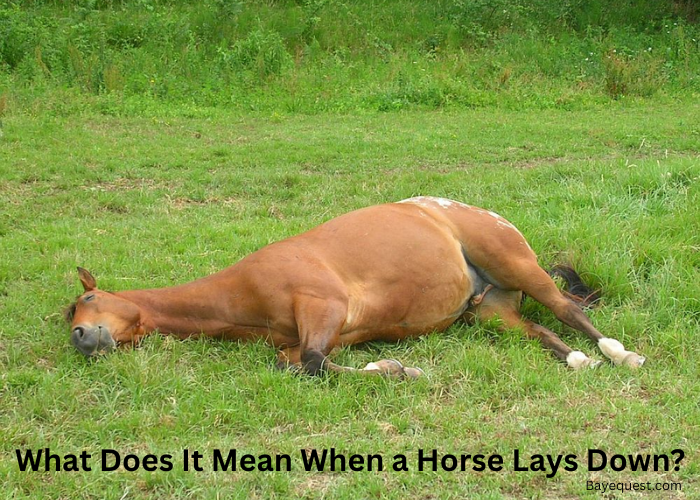
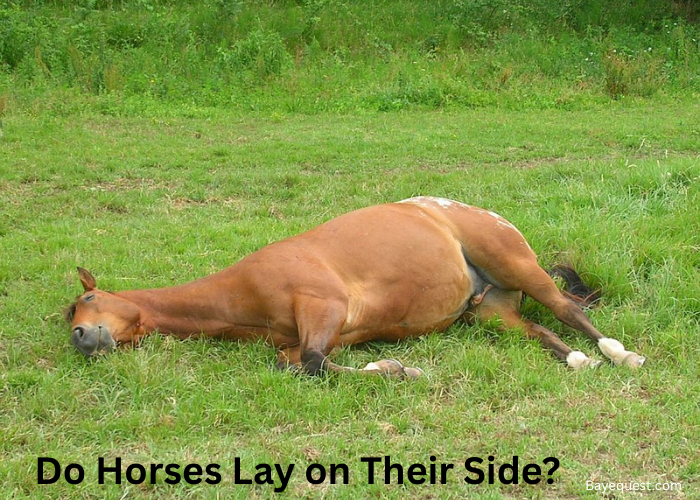
Horses love to drop down, roll side to side, and shake off the dust afterward. Watching a horse do this with legs flailing in the air can look like it’s laughing uncontrollably.
In truth, rolling helps them scratch an itch, shed loose hair, or simply enjoy the comfort of the earth beneath them.
Head tossing and playful movement
A horse turned out into a field after being stalled may run, buck, and toss its head in a way that seems like gleeful laughter.
These actions are expressions of freedom and pent-up energy rather than humor, but they still highlight the happiness of the moment.
Do Horses Have a Sense of Humor?
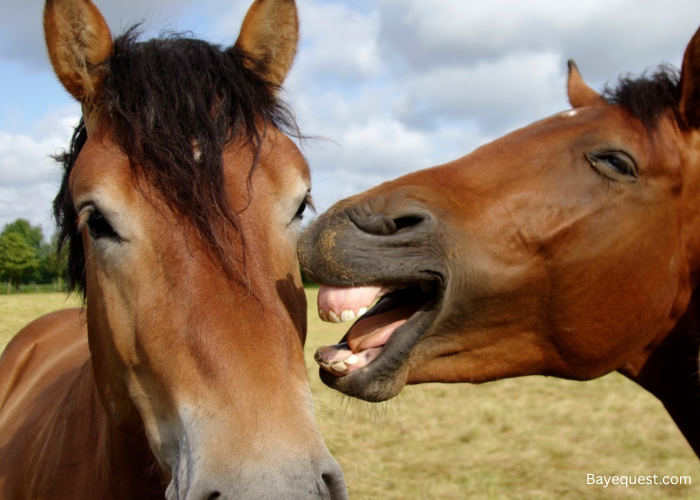
Surprisingly, yes! While horses don’t laugh or tell jokes, many equine experts believe they do have a sense of humor – just not in the human sense.
Horses are intelligent, curious animals with complex social behaviors, and they often engage in playful actions that appear to be designed purely for enjoyment.
If you’ve ever seen a horse snatch a hat off someone’s head, nudge a tool out of a groom’s hand, or repeatedly open a stall latch after learning how, you’ve witnessed their mischievous streak in action.
These behaviors suggest that horses enjoy play and novelty, which are key elements of what we interpret as “humor.”
Their playful side often comes out most strongly when they feel safe, relaxed, and bonded with the people or horses around them.
A happy horse might tease a stablemate, gently tug at your sleeve, or invent games with objects in the paddock. Such antics aren’t random – they’re signs of curiosity, creativity, and a desire for interaction.
In social groups, younger horses, in particular, often test boundaries and engage in playful challenges, suggesting that humor-like behavior may play a role in learning and bonding.
It’s important, though, to remember that horses’ “humor” is rooted in instinct and communication rather than in an understanding of jokes or irony. What we perceive as funny may simply be a horse exploring its environment, seeking attention, or engaging in social behaviors.
Still, their ability to play and “joke around” shows emotional depth and intelligence far beyond simple survival instincts.
How Horses Communicate Without Laughter
Even though horses don’t laugh, they are far from silent or expressionless. By learning their unique signals, we can appreciate that they don’t need laughter to bond. They already have a rich communication system of their own.
The following are the three main ways horses communicate;
Body language
Every movement from your horse carries meaning if you know how to interpret it. A swishing tail, a pawing hoof, or a weight shift all carry specific messages.
For example, a horse that pins its ears back is warning others to give it space, while one that pricks its ears forward is showing curiosity or alertness.
Similarly, a horse that rolls on the ground isn’t laughing. It’s scratching its back, relaxing, or enjoying a moment of freedom.
Related read: How to Read a Horse’s Body Language.
Facial expressions
Facial expressions like the Flehmen response, bared teeth, or drooping lips are not signs of humor but of scent detection, aggression, or relaxation.
Meanwhile, subtle changes around the eyes and nostrils often point to a state of stress, fear, or discomfort.
Herd interactions
Horses form complex social hierarchies and maintain order through small but powerful herd signals. For example, a dominant horse may move another out of its way with a glance or a flick of the tail. Meanwhile, mutual grooming enhances trust and strengthens social bonds.
These behaviors replace the need for laughter as a bonding tool. Instead, they demonstrate that horses utilize touch, presence, and respect to establish relationships.
Horse Facial Expressions Explained
To truly understand what’s going on when a horse appears to be “smiling” or “laughing,” we need to look at the unique facial expressions horses use – and what they actually mean.
The Flehmen response
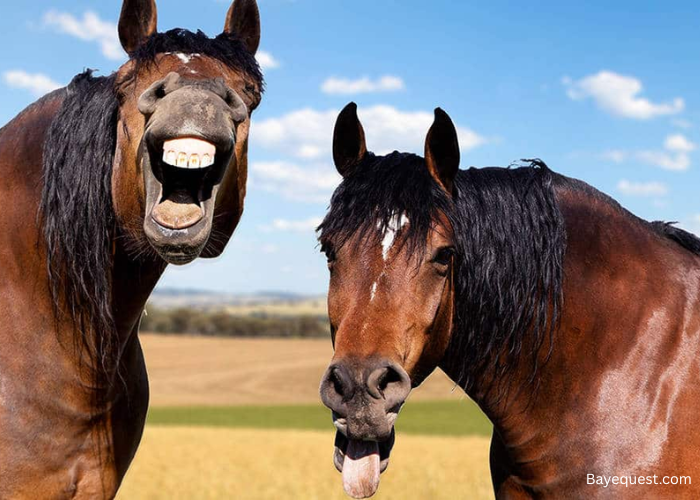
The most famous of these expressions is the Flehmen response. When a horse lifts its upper lip, wrinkles its nose, and holds this pose for several seconds, it creates an almost comical image. To humans, it appears to be laughter.
In reality, the horse is opening up its nasal passages to allow scents to reach the vomeronasal organ, also called Jacobson’s organ, which sits on the roof of the mouth.
This organ helps horses process pheromones and other complex smells, particularly when investigating new environments, strange objects, or the scent of other horses.
Far from being a joke, it’s a highly practical behavior linked to survival and reproduction.
Other facial expressions
Aside from the Flehmen response, horses use other facial cues that humans sometimes misinterpret. These include;
- Bared teeth: When a horse bares its teeth, it isn’t laughing – it’s usually showing aggression, dominance, or irritation. A pinned-back ear, wrinkled nostrils, and bared teeth often precede a bite or a warning to another horse to keep its distance.
- Relaxed mouth: A relaxed mouth with a soft, drooping lower lip may look like a sleepy smile, but it’s actually a sign of comfort or dozing.
- Ear signals: Ears pricked forward indicate curiosity or attention, while ears flattened against the head signal anger or discomfort.
- Eye signals: Wide, tense eyes may reveal fear, whereas soft, half-closed eyes are a sign of relaxation.
These subtle expressions are far more accurate indicators of a horse’s mood than any behavior that resembles human laughter. Understanding them is critical because misinterpretation can lead to safety risks or miscommunication.
Horse Sounds and Vocalizations
Besides facial expressions, horses have a wide range of vocalizations that serve specific purposes. Each sound communicates something unique, whether it’s calling to a herd mate, signaling excitement, or expressing discomfort.
Understanding these sounds can help owners interpret what their horses are really saying – for appropriate response.
The neigh or whinny
One of the most recognizable sounds is the neigh or whinny. This high-pitched call carries over long distances and is often used to locate other horses. For example,a horse separated from its herd may neigh to announce its presence, while another answers back to reassure it.
While emotional, neigh sounds aren’t laughter. They’re more like a phone call across the pasture.
The nicker
The nicker is a soft, low vibration often used in friendly situations. Mares nicker to their foals, and horses nicker to their owners when expecting food or attention.
Many owners describe nickering as the closest sound to a “horse laugh” because of its warm, pleasant tone. But nickering isn’t amusement – it’s a greeting or a sign of affection.
Snorts and blows,
Sometimes mistaken for a chuckle, a snort is a short burst of air through the nostrils that usually indicates alertness or a mild startle. Meanwhile, a blow is a stronger exhale that clears the nasal passages.
Interestingly, recent studies suggest that certain snorts may indicate relaxation and positive emotions, particularly when a horse is at rest in a safe environment. Still, neither sound is laughter. They’re practical signals, not expressions of humor.
Interesting read: Hilarious Horse Jokes and Puns.
FAQs
Do horses smile?
Horses don’t smile the way humans do, but certain behaviors may look like a grin. The most common example is the Flehmen response, where a horse curls back its upper lip to better analyze scents. While it looks amusing to us, it’s actually part of their sensory system, not a sign of humor.
Do horses understand human laughter?
Horses are highly perceptive and can recognize the tone of your voice and your body language, but there’s no evidence that they understand human laughter as we do. What they do respond to is your emotional state. Calm, happy tones and relaxed posture often make horses feel more at ease.
Can horses recognize when humans are happy?
Yes, studies show that horses can read human facial expressions and emotional cues. They may respond differently when you’re calm and smiling versus when you’re tense or upset. This sensitivity helps strengthen the bond between horses and their owners.
Which animals actually laugh?
Some animals, such as chimpanzees, gorillas, dogs, and even rats, have been shown to produce laughter-like sounds, especially during play. Horses, however, are not on that list. Instead, they express joy through body language, movement, and vocalizations like nickers and whinnies.
Can a Horse Laugh? Conclusion
The short answer is no – not in the way humans do. Horses don’t giggle at jokes or burst into laughter during play.
What we often interpret as a smile or laugh is usually the Flehmen response, a fascinating behavior tied to scent detection rather than humor.
Instead of laughter, horses rely on body language, vocalizations, and subtle cues to express themselves. Understanding these signals helps us appreciate horses for what they are.