



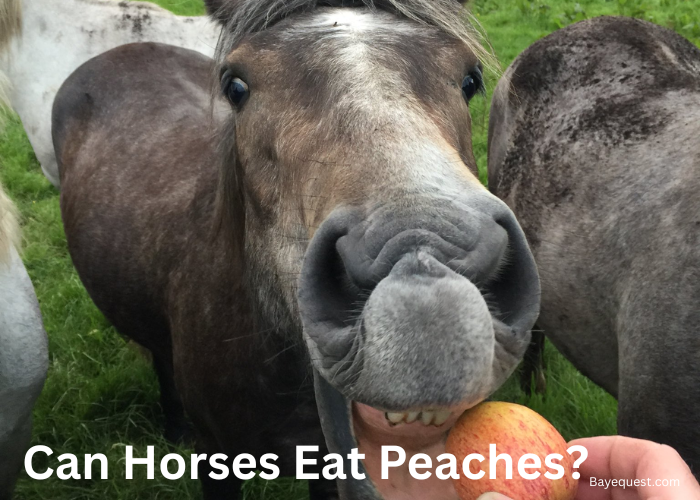
Peaches smell like summer… but for horses, they come with a catch that can turn a “cute treat moment” into a panic call.
Yes, horses can eat peaches—but only the soft flesh. The pit, leaves, and stems are the real danger, and one careless bite can create a choking risk or a toxic situation fast.
In this guide, you’ll learn the safe way to feed peaches, how many slices is too many, what to do if a pit gets swallowed, and the safer fruit swaps that give the same “sweet reward” without the drama.
Can Horses Eat Peaches? Key Takeaway
Yes, horses can eat peaches safely. But only the soft fruit flesh, and in small amounts. The pits, leaves, and stems are toxic because they contain cyanide compounds. So, they must always be removed. Fresh, ripe peaches make a tasty occasional treat, offering plenty of vitamins and vital hydration.
Nutritional Value of Peaches for Horses
When fed in moderation, peaches can offer a small but pleasant nutritional boost for your horse. The soft, juicy flesh is rich in vitamins, minerals, and antioxidants, which support overall wellness.
The fruits contain notable amounts of vitamin A, which supports vision, immune health, and skin integrity. They also provide vitamin C, a natural antioxidant that helps combat oxidative stress.
While horses can produce their own vitamin C, extra antioxidants from fresh fruit can still be beneficial. The fruit’s trace levels of vitamin E further aid in cell protection and immune function.
Another advantage is their potassium content. Dietary potassium is an essential electrolyte that helps maintain fluid balance, nerve function, and muscle performance.
This makes a peach slice or two a refreshing summer treat, particularly for horses that sweat heavily.
The fruit’s natural fiber content promotes smoother gut movement, ensuring optimal digestive health.
Despite these positives, peaches should still be seen as occasional extras, not staples. Their sugar content is relatively high compared to pasture grasses.
Excessive sugar can lead to issues like weight gain, insulin resistance, or laminitis in sensitive horses.
That’s why portion control is crucial. Think of peaches the same way you’d think of candy for humans: fine once in a while, but not every day.
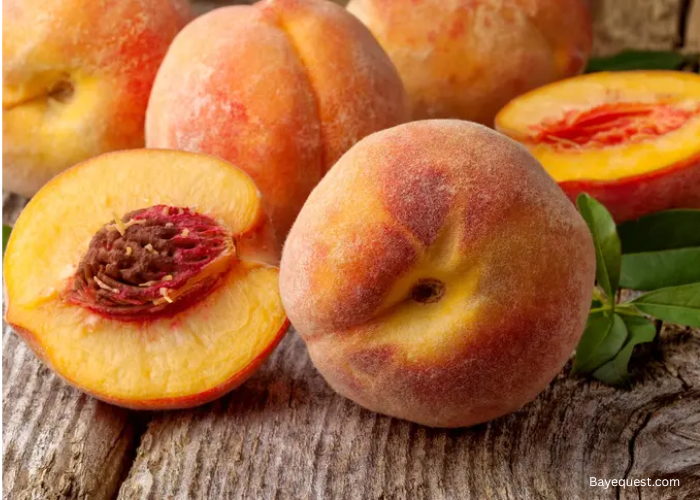
Are Peaches Safe for Horses?
Yes, the fleshy part of the fruit, when served in moderation, is safe for horses. The sweetness and soft texture often make them a quick favorite among horses. But it’s not a treat to offer carelessly.
Every part of the peach plant, except the fruit’s flesh, poses a serious health risk if eaten. So while the juicy part is safe, the pit, leaves, and stems are a definite no-go.
The biggest danger comes from the pit. Peach pits contain compounds that can release cyanide when broken down in the digestive system.
Cyanide is highly toxic to horses and can interfere with oxygen transport in the blood. Even a single large pit could be hazardous, depending on the horse’s size and sensitivity.
In addition, the hard, smooth pit also poses a choking hazard, especially for greedy eaters who tend to gulp treats whole.
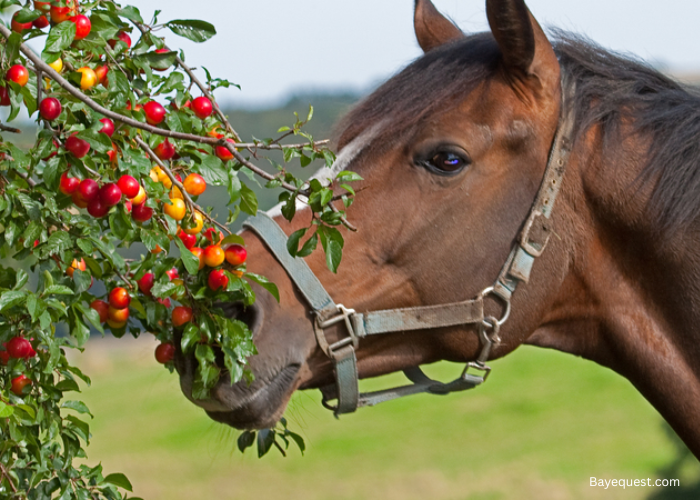
It’s not just the pit you need to worry about, though. The leaves and stems of peach trees can also contain cyanogenic compounds, particularly when wilted or damaged.
Therefore, horses grazing near peach trees or eating fallen branches are at risk of poisoning.
Symptoms of cyanide toxicity can appear rapidly and may include difficulty breathing, anxiety, muscle tremors, and in severe cases, collapse.
As for the peach flesh itself, it’s non-toxic and safe when fed correctly. It contains natural sugars, vitamins A and C, and a bit of fiber, all of which can be beneficial in small doses.
However, like most fruits, it’s not meant to replace regular forage. Too much can upset the delicate microbial balance in your horse’s gut, leading to gas, bloating, or mild colic.
In short, peaches aren’t inherently bad for horses. But the details matter. Always remove the pit, avoid any contact with leaves or stems, and serve only small portions occasionally.
When handled carefully, a few fresh peach slices can be a safe and enjoyable treat that adds a bit of variety to your horse’s diet.
How to Safely Feed Peaches to Horses
If you decide to let your horse enjoy a peach, the key is preparation and moderation. Here’s how to feed peaches safely and confidently.
Choose fresh, ripe peaches
Always start with fresh, ripe peaches. Avoid canned, preserved, or sweetened fruit.
They often contain added sugars or syrups that can upset your horse’s digestive system. The fresher and more natural the fruit, the better.
Wash thoroughly
Before feeding, wash the peach thoroughly to remove any dirt, pesticides, or transport residues.
Horses are sensitive to chemicals, and even small traces of pesticides can cause irritation or digestive issues. If possible, opt for organic fruit to minimize risk.
Remove the pit completely
This is the most important step. The peach pit is dangerous for two reasons. First, it’s a choking hazard; two, it contains amygdalin, a compound that releases cyanide when digested.
Even a small fragment can be toxic if swallowed. Carefully slice around the pit and discard it safely so your horse can’t access it later.
Slice into small pieces
Cut the peach into bite-sized slices or small chunks. This helps prevent choking, especially for horses that tend to gulp down treats.
Moreover, smaller pieces are easier to chew and digest. Avoid feeding large halves or whole peaches, even without the pit.
Offer in small quantities
Peaches should remain an occasional treat, not part of the daily feed. So, a few slices once or twice a week is plenty.
Overfeeding can upset the gut’s natural bacteria balance, leading to mild colic, gas, or loose manure.
Observe for reactions
After introducing peaches for the first time, watch your horse closely for any signs of discomfort, bloating, or unusual behavior.
Some horses may have mild sensitivities to new foods, even safe ones. You can offer a little more next time if all goes well.

How Many Peaches Can a Horse Eat?
When it comes to feeding peaches, less is definitely more. While the fruit flesh is safe, it should only ever be given in small quantities.
A good rule of thumb is to offer no more than a few slices at a time, or about half a small peach for an average-sized adult horse (around 450–500 kg).
That may not sound like much, but it’s plenty to satisfy their curiosity and provide a little sweetness without upsetting their digestive balance. Ponies, minis, or horses prone to metabolic issues should get even less.
Note that peaches, like other fruits, fall into the “treat” category of a horse’s diet. Treats in total should never exceed 10% of daily caloric intake, and ideally should make up much less.
Overdoing it can lead to problems such as weight gain, insulin spikes, or even laminitis in susceptible horses.
Frequency also matters. Offering peach slices once or twice a week is a safe and reasonable limit. Daily feeding is unnecessary and increases the risk of sugar overload.
The Dangers of Feeding Peaches to Horses
While a peach slice or two can be a fun, fruity treat, not every part of the peach is safe. Understanding these dangers is the key to keeping your horse safe.
Cyanide poisoning from pits, leaves, and stems
The biggest danger associated with peaches is cyanide toxicity. The peach pit, along with the tree’s leaves and stems, contains amygdalin.
Unfortunately, amygdalin is a natural compound that breaks down into hydrogen cyanide when chewed or digested.
Cyanide prevents the body from using oxygen properly, which can lead to respiratory distress and even death in severe cases.
A horse would need to consume a significant amount for severe poisoning. However, it only takes one large pit or a few leaves to cause mild to moderate toxicity, especially in smaller horses or ponies.
Common signs of cyanide poisoning include anxiety, muscle tremors, heavy breathing, weakness, and a sudden loss of coordination.
If you suspect your horse has eaten a pit or peach leaves, call your veterinarian immediately.
Choking hazards
Beyond toxicity, the pit is also a serious choking risk. Its hard, smooth surface makes it easy for a horse to swallow whole, potentially blocking the esophagus.
This can cause distress, coughing, drooling, or even an emergency situation requiring veterinary intervention.
Similarly, large chunks of peach flesh can be a risk for horses that don’t chew thoroughly. That’s why slicing into small pieces is so important.
Digestive upset from excess sugar
Peaches contain a relatively high level of natural sugar. While that sweetness is what makes them so appealing, too much can disrupt the balance of good bacteria in a horse’s gut.
Thus, overfeeding peaches may lead to bloating, gas, loose manure, or mild colic, especially in horses not used to sugary treats.
For horses with insulin resistance, laminitis, or Cushing’s disease, even small amounts of sugar can cause complications. These horses should avoid peaches altogether.
Mold and pesticide risks
Moldy, overripe, or unwashed peaches are another hidden threat. Mold can cause digestive irritation.
Meanwhile, pesticide residues may trigger allergic reactions or toxicity over time. Always choose clean, fresh fruit and store it properly to avoid spoilage.
In short, the peach flesh is the only safe part. Everything else carries potential danger. Proper preparation and restraint go a long way in ensuring that peaches remain a fun, safe, and healthy occasional treat for your horse.
What to Do If a Horse Accidentally Eats a Peach Pit
Accidents happen, especially with curious horses that love to explore food with their mouths. If your horse accidentally swallows a peach pit, do not panic, but act quickly and decisively.
Here’s what to do:
Remove access and check for remaining fruit
If you catch your horse in the act, immediately remove any remaining peaches to prevent further ingestion. Check the area for dropped fruit, pits, or branches, and keep other horses away until you’ve cleared everything.
Watch closely for choking signs
Right after swallowing, the biggest immediate risk is choking. Observe your horse for distress signals, such as coughing, gagging, drooling, extending the neck, or repeatedly trying to swallow.
If you see these signs, call your veterinarian right away. Do not attempt to dislodge the pit yourself. Improper handling could cause injury.
Be alert for toxicity symptoms
Even if choking doesn’t occur, monitor your horse for signs of cyanide poisoning, which can develop within minutes to hours. Early symptoms include:
- Rapid or labored breathing
- Anxiety or restlessness
- Bright red gums
- Muscle tremors or weakness
- Unsteady movement or collapse
If you notice any of these, contact your vet immediately and describe what happened.
Veterinary treatment
Your veterinarian may recommend bringing the horse in or coming to your farm to provide emergency care.
Common treatments include activated charcoal (to absorb toxins), IV fluids, and supportive oxygen therapy if breathing is affected. Prompt attention usually leads to a full recovery if only one pit was eaten.
Prevention for the future
Keep peaches and other stone fruits well out of reach. Dispose of pits securely so curious horses can’t find them in compost or feed areas.
Alternatives to Peaches for Horses
If you’d rather skip the risks that come with peaches, there are plenty of safe and tasty alternatives your horse will love just as much. The following are the five top recommendations;
1. Apples (Seed-Free)
Apples are a classic horse treat for a reason. They’re crunchy, juicy, and packed with vitamins A and C.
Just make sure to remove the seeds and core, since apple seeds contain trace amounts of cyanide. Sliced or chopped apples make perfect, bite-sized snacks.
Here’s how to feed apples to horses in the best way.
2. Watermelon
Few things are more refreshing on a hot day than a piece of cool watermelon. Horses can safely eat both the red flesh and the rind (as long as it’s washed and seed-free).
It’s hydrating and naturally low in calories, making it an excellent summer treat.
3. Bananas
Rich in potassium and easily digestible, bananas are a soft, nutrient-dense snack most horses adore. You can even feed them with the peel on (after washing), or mash them into feed for a tasty mix-in.
Read also: Can Horses Eat Banana Peels?
4. Pears
Like peaches, pears are sweet and juicy. But their pits contain smaller amounts of toxins and are easier to remove. Just cut them into slices, discard the core and seeds, and serve.
5. Berries
Strawberries, blueberries, and raspberries are safe, antioxidant-rich options that can be fed in small handfuls. They’re especially fun for training rewards or as part of a fruit medley on special occasions.
If your horse enjoys variety, rotate between these fruits rather than sticking to one type. You can even mix in carrot or beet slices for some crunch and color.
By offering safer alternatives, you can give your horse the joy of fruity treats without the potential hazards of peaches.
FAQs
Can horses eat peach skins?
Yes, horses can safely eat peach skins as long as the fruit has been thoroughly washed to remove dirt and pesticide residues. The skin contains fiber and nutrients just like the flesh. So, there’s no need to peel it. Just remember to remove the pit before feeding.
Can horses eat canned or dried peaches?
No, it’s best to avoid canned or dried peaches. These products often contain added sugars, syrups, or preservatives that can upset a horse’s digestive system and raise their blood sugar levels. Fresh peaches are the only safe form to offer.
Are white peaches safer than yellow peaches?
Nutritionally, white and yellow peaches are nearly identical. So, both are safe for horses when the pit is removed. The main difference is taste. White peaches are usually sweeter, so it’s even more important to feed them sparingly.
Can horses eat peach leaves or branches?
Absolutely not. Peach leaves, stems, and branches are toxic. They contain cyanogenic compounds that release cyanide when chewed or digested. Never let horses graze near peach trees, especially if branches or leaves have fallen.
Are peach-flavored treats safe for horses?
Commercial peach-flavored horse treats are generally safe. They use artificial or natural flavoring rather than actual peach pits or plant material. Still, check the ingredients for added sugars and feed them in moderation like any other treat.
Summary: Should Horses Eat Peaches?
The short answer is yes. With sufficient care, horses can eat a few peach slices occasionally.
The soft, juicy flesh of a ripe peach is a refreshing, vitamin-rich treat that most horses enjoy. It offers hydration, natural sweetness, and a touch of nutritional value, making it a fun occasional reward.
However, every other part of the peach, including the pit, leaves, and stems, is off-limits due to the risk of cyanide poisoning.