


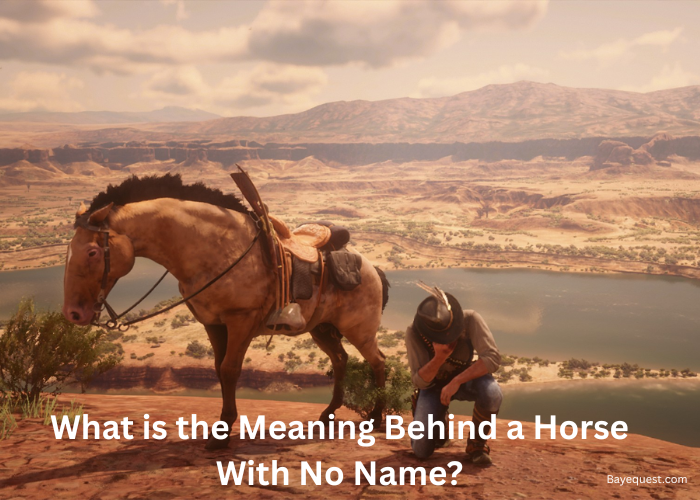
Released in the early 1970s, “A Horse with No Name” became the song that introduced America to the world. Its calm sound and desert images helped it top charts worldwide.
Yet decades later, listeners still debate what the horse, the desert, and the strange lyrics truly mean. Is it about freedom, nature, drugs, or self-discovery?
Read the full blog to uncover the story, meaning, and facts behind this timeless song.
What is the Meaning Behind a Horse with No Name? Key Takeaway
The song is widely seen as a story about freedom, self-discovery, and finding peace in nature. Although songwriter Dewey Bunnell has explained what inspired the song, its lyrics remain open to interpretation. That is why listeners continue to find their own meaning more than 50 years later.
Who Wrote “A Horse with No Name”?
“A Horse with No Name” was written by Dewey Bunnell, one of the founding members of the folk rock band America. He wrote the song when he was just 19 years old while living in London.
Bunnell later explained that he wanted to capture the quiet beauty and mystery of the desert. He drew on childhood memories of time spent in the deserts of Arizona and New Mexico.
The song was recorded by America and released in late 1971 on the band’s self-titled debut album. It quickly gained attention for its calm acoustic sound, vivid imagery, and Bunnell’s distinctive vocals.
Although the song was first released in Europe, it reached a much wider audience after its release in the United States in early 1972.
“A Horse with No Name” became America’s breakthrough hit. It climbed to No. 1 on the Billboard Hot 100, where it replaced Neil Young’s “Heart of Gold” at the top of the chart. The song also performed well internationally, helping establish America as one of the leading folk rock bands of the 1970s.
More than 50 years later, “A Horse with No Name” remains America’s signature song. Its simple lyrics, memorable melody, and open-ended meaning continue to attract new listeners.
What is the Meaning Behind “A Horse with No Name”?
The meaning behind this horse song has been debated since its release. Its lyrics never give one clear answer, which is one reason it has remained popular for decades.
Many listeners see it as a story about leaving behind the noise of everyday life and finding peace in nature.
At its heart, the song is often viewed as a journey of self-discovery. The unnamed traveler crosses a vast desert with only a horse for company.
As the journey continues, the outside world begins to fade away. Without distractions, the traveler has time to think, grow, and better understand himself.
The desert also represents escaping society. It is a place far from crowded cities, busy schedules, and outside expectations. Instead of chasing success or trying to fit in, the traveler experiences life at a slower pace. This creates a sense of calm that many people long for.
Another major theme is freedom. There are no roads, rules, or deadlines in the desert. The rider is free to explore without pressure or judgment. That freedom allows him to experience the world simply and naturally.
The song also highlights the value of solitude. Being alone is not shown as something lonely or frightening. Instead, it becomes an opportunity for quiet thought. In the stillness of the desert, the traveler reflects on life and notices details that are often missed in a busy world.
Many fans believe the song encourages reflection. Rather than giving direct answers, it invites listeners to think about their own lives and what truly matters. Each person may find a different meaning in the journey.
Finally, simplicity ties all of these ideas together. The story contains very few characters, a quiet setting, and simple language. That simplicity leaves room for personal interpretation, allowing listeners to connect with the song in their own way.
It is this openness that has helped “A Horse with No Name” remain meaningful to generations of fans.
Why Doesn’t the Horse Have a Name?
One of the biggest questions listeners ask is why the horse never receives a name. Dewey Bunnell has never given a single, definite answer, which has led to many different interpretations over the years.
The missing name has become one of the song’s most memorable features.
One popular theory is that the horse is meant to be an anonymous companion rather than a specific animal. Throughout the journey, the horse quietly carries the traveler across the desert without asking for recognition.
Because it has no name, the focus remains on the journey rather than on the horse’s identity.
Another common interpretation is that the horse represents freedom from labels. Names often come with expectations, history, or social identity.
By leaving the horse unnamed, the song suggests a world where those labels no longer matter. In the desert, the traveler is free from many of the pressures and roles that shape everyday life.
Some listeners also believe the horse serves as a universal symbol. Since it has no name, anyone can imagine their own meaning.
To one person, it may represent hope. To another, it could symbolize guidance, strength, or a trusted friend.
The lack of a name makes the story more personal by inviting each listener to fill in the blanks.
Others see the unnamed horse as a way of removing identity altogether. The desert strips away distractions and status, leaving only the essentials.
In that setting, names become less important than the journey itself.
Bunnell has suggested that the song was written to capture the beauty and mystery of the desert rather than to tell a literal story. He once explained that the horse was simply “a vehicle to get into the desert.”
That simple description supports the idea that the horse is not the true subject of the song.
Instead, it serves as a guide that carries the listener into a place of reflection, freedom, and discovery.
What Does the Desert Symbolize?
The desert is one of the most powerful symbols in the song. It is much more than the setting of the song.
For many listeners, the desert represents a place where people can leave behind distractions and focus on what truly matters. Its endless landscape evokes both challenge and peace, making it the perfect backdrop for the song’s deeper meaning.
One common interpretation is isolation. The traveler is surrounded by miles of empty land, with no crowds, traffic, or noise.
While isolation is often seen as lonely, the song presents it differently. Being alone gives the traveler space to slow down and experience the world without outside pressure.
The desert also symbolizes mental clarity. In everyday life, it is easy to become distracted by work, technology, and constant demands.
The quiet desert removes those distractions. As the journey continues, the traveler seems to gain a clearer view of life, almost as if the silence helps clear the mind.
Many people see the desert as a place of personal growth. Crossing such a harsh environment requires patience, courage, and determination.
The journey becomes a test of character rather than a simple trip across the land. By facing the unknown, the traveler grows stronger and gains a deeper understanding of himself.
Another theme is escaping modern life. The desert offers a complete break from busy cities and daily routines.
There are no schedules to follow or expectations to meet. Instead, the traveler experiences a slower, simpler way of living.
That contrast is one reason the song continues to connect with people who feel overwhelmed by modern life.
Finally, the desert can be seen as a spiritual journey. Throughout history, deserts have often symbolized places of reflection, transformation, and renewal.
Although the song never mentions religion, many listeners believe the journey represents an inner search for meaning and peace.
By the end, the desert is no longer just a physical place. It becomes a symbol of the quiet space where people discover themselves and reconnect with what is truly important.
What Does the Horse Represent?
Although the song never explains exactly what the horse represents, many listeners believe it carries a deeper meaning.
Rather than being just an animal, the horse can be seen as a symbol that supports the traveler throughout the journey. Because the song leaves its meaning open, different people connect with it in different ways.
One interpretation is survival. Crossing a vast desert would be nearly impossible without a reliable companion.
The horse helps the traveler move through a harsh environment where food, water, and shelter are scarce. In this sense, it represents the strength and endurance needed to keep going, even when life becomes difficult.
The horse may also symbolize guidance. It leads the traveler through unfamiliar land without speaking a single word.
Instead of giving directions, it provides steady support. Many listeners see this as a reminder that guidance does not always come from other people.
Sometimes it comes from instinct, experience, or trusting the path ahead.
Another common interpretation is inner strength. As the journey continues, the horse remains calm and dependable despite the desert’s challenges.
It can be viewed as a reflection of the resilience that exists within every person. The horse reminds the traveler to stay steady, even when the road ahead is uncertain.
The horse also represents nature. Unlike the busy world left behind, it belongs to the natural landscape of the desert. It moves in harmony with its surroundings and asks for very little.
This reflects the song’s idea that peace comes from reconnecting with nature.
Finally, the horse symbolizes companionship. Although the traveler spends much of the journey alone, he is never completely isolated.
The horse provides quiet company without conversation or judgment. That silent partnership suggests that true companionship is not always about words.
Sometimes, simply having a trusted presence beside you is enough to make even the longest journey feel less lonely.
Did the Song Have a Hidden Meaning?
Many listeners believe the song has a hidden meaning. Its strange lyrics and desert setting have led to many fan theories.
Since the song does not explain every detail, people have sought their own answers.
One common theory is that the song is about drugs. Some fans think the desert stands for a dreamlike state of mind. Others believe the horse may be a symbol for heroin.
This idea became so popular that some radio stations were said to have avoided the song. They feared it may support drug use.
Another theory attributes a spiritual meaning to the song. In this view, the desert is a place of peace and change.
The traveler leaves the busy world behind and begins a quiet search for meaning. The horse acts as a guide on this inner journey.
Some listeners also see a psychological meaning. They believe the desert may stand for the human mind. The empty land gives the traveler space to think. As he moves away from people and noise, he begins to understand himself better.
However, songwriter Dewey Bunnell has said the song had a much simpler meaning. He drew ideas from his childhood memories of the deserts in Arizona and New Mexico. He wanted to show the beauty, heat, freedom, and silence of the desert.
Bunnell has also said the horse was mainly a means of taking the listener into that setting. It was not meant to have one fixed meaning.
So, the song may not have a secret message at all. Its power comes from the way it leaves room for thought. Each listener can find a personal meaning while still enjoying Bunnell’s simple story about nature, peace, and escape.
What Did Dewey Bunnell Say the Song Means?
While fans have created many theories about the song, Bunnell has said its meaning is much simpler. He has explained that he wanted to capture the beauty, mystery, and peace of the desert rather than hide a secret message in the lyrics.
One source of inspiration came from the artwork of Salvador Dalí. Bunnell admired Dalí’s dreamlike paintings and wanted to create a song that painted pictures in the listener’s mind.
Instead of telling a clear story, he chose simple words and vivid images that allowed people to imagine their own journey through the desert.
Bunnell also drew from his childhood memories of Arizona and New Mexico. Although he was living in England when he wrote the song, he often thought about the wide-open deserts of the American Southwest.
He remembered the heat, the dry landscape, and the quiet feeling that came with being far away from cities. Those memories became the foundation for the song’s setting.
Another goal was to write about nature. Bunnell has said he wanted people to appreciate the beauty of the natural world.
The desert may seem empty at first, but he believed it had its own life and character. The song encourages listeners to slow down and notice the world around them instead of rushing through it.
Bunnell has also explained that the horse was simply a means of getting into the desert. It was not meant to stand for drugs or another hidden idea. The horse helped tell the story, but the real focus was the journey itself.
His comments show that the song is more about nature, peace, and a fresh view of the world.
Why Was “A Horse with No Name” Controversial?
Not many songs reach the top of the charts while also confusing critics, dividing listeners, and drawing criticism from radio stations. Yet that is exactly what happened with “A Horse with No Name.”
Long before people agreed on what the song meant, they were arguing about how it sounded and what it was trying to say.
One of the first controversies came from comparisons to Neil Young. Many listeners thought Dewey Bunnell’s voice sounded almost identical to Young’s.
The song’s soft acoustic style also reminded people of his music. Some critics even accused America of copying Neil Young’s sound to gain attention.
While the comparisons helped the song get noticed, they also sparked debate about whether the band had its own identity.
The song also faced criticism over its lyrics. Some listeners believed it contained hidden drug references.
The strange images, the lonely desert, and the dreamlike mood led many people to think it described a drug trip. One theory even claimed the horse was a symbol for heroin.
Because of these rumors, a few radio stations reportedly refused to play the song, fearing it encouraged drug use.
Much of the controversy came from public misunderstanding. Fans searched for hidden messages, while critics tried to explain every line.
However, Dewey Bunnell repeatedly said the beauty and peace of the desert inspired the song. He explained that it was about nature, not drugs or secret symbols.
Even with that explanation, the debate never fully ended. The lyrics leave plenty of room for interpretation, and that has kept the conversation alive for decades.
What some people saw as a drug story, others viewed as a journey of self-discovery or a simple escape into nature. Ironically, the mystery that caused so much confusion also helped make “A Horse with No Name” one of the most talked-about songs of its time.
Is “A Horse with No Name” About Drugs?
No. Songwriter Dewey Bunnell has repeatedly said that “A Horse with No Name” is not about drugs. He explained that the song was inspired by the beauty, silence, and freedom of the desert, drawing on memories of Arizona and New Mexico.
Even so, many listeners believed the song had a hidden drug message. Its dreamlike lyrics, unusual imagery, and lines about the desert led some fans to see it as a metaphor for a drug experience. One popular theory even claimed the horse symbolized heroin.
The misconception has lasted because the lyrics are open to interpretation. Since the song never explains its meaning directly, people continue to read their own ideas into it.
Bunnell’s explanation has remained the same, but the mystery surrounding the lyrics keeps the debate alive.
Why Has the Song Stayed Popular?
More than 50 years after its release, this song continues to attract new listeners. While many songs fade with time, this one has remained popular across generations.
Its lasting appeal comes from a mix of memorable music, meaningful lyrics, and wide exposure in popular culture.
One reason is its timeless lyrics. The song avoids specific events or trends, so it never feels tied to one period in history.
Instead, it explores ideas like freedom, peace, and self-discovery. These themes are just as meaningful today as they were in the early 1970s.
Another reason is its open interpretation. The lyrics never explain exactly what the horse or the desert represents. This allows each listener to find a personal meaning.
Some hear a story about nature, while others see a journey of growth or inner peace. That freedom of interpretation keeps people talking about the song year after year.
Its relaxed acoustic sound has also helped it stand the test of time. The gentle guitar, simple melody, and calm rhythm create a peaceful mood that is easy to enjoy.
Unlike many songs that rely on changing musical trends, “A Horse with No Name” has a natural sound that still feels fresh.
The song has also made a lasting cultural impact. It became America’s first No. 1 hit and remains the band’s best-known song.
Over the years, it has introduced new audiences to folk rock and inspired many artists and musicians.
Its popularity has grown even more through its use in films, television shows, and video games.
It has appeared in productions such as Breaking Bad, BoJack Horseman, The Simpsons, Friends, and Grand Theft Auto: San Andreas. Each new appearance introduces the song to another generation of listeners.
Together, these qualities have helped “A Horse with No Name” remain a classic.
Interesting Facts About “A Horse with No Name”
- The song was recorded in London, even though it describes the American desert.
- The song gave America its first big success and introduced the band to a wider audience.
- It topped the Billboard Hot 100 in 1972 and stayed there for three weeks.
- Many listeners thought Neil Young sang it because Dewey Bunnell’s voice sounded similar.
- Fans have linked the song to drugs, spirituality, nature, and self-discovery.
- More than 50 years later, it remains America’s best-known track.
What is the Meaning Behind a Horse with No Name? Conclusion
Whether you see “A Horse with No Name” as a song about freedom, nature, or finding yourself, its meaning is yours to explore.
Dewey Bunnell has shared what inspired the song, but its simple words leave room for many ideas. That is why people still listen to it and talk about it more than 50 years later.