


12 Wild Horse Breeds Around the World (and the Only One That’s Truly Wild)
On March 1, 2026, the Bureau of Land Management (BLM) estimated that 61,523 horses were roaming public land in the American West. Not one of them is a wild animal in the scientific sense.
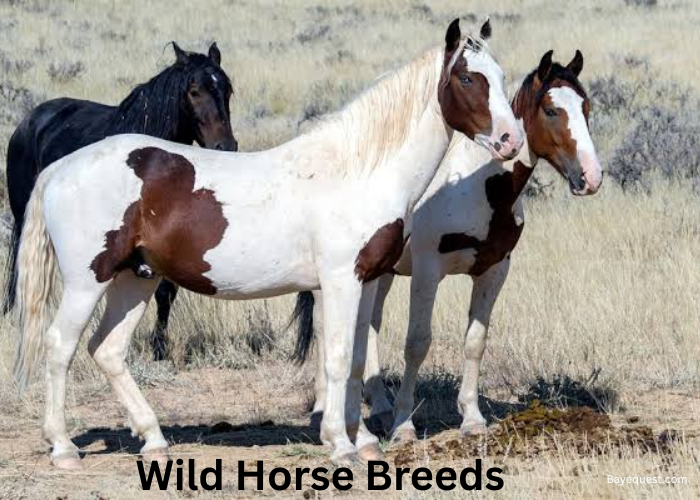
That surprises a lot of horse fans. It also explains why so many lists of wild horse breeds get the basics wrong.
A truly wild horse comes from a line that people never domesticated. A feral horse descends from domestic horses that escaped or were turned loose, then learned to live on their own.
There is a third group too. Some “primitive” breeds live free on moors and marshes, but people still own them.
Why does the label matter? It decides how a herd gets managed.
A wild species gets protected as wildlife and bred back from the brink, while a feral herd is often counted, rounded up and rehomed to protect the land it lives on.
So we sorted every horse on this list into one of those three groups. Each entry shows its status, where it lives and the latest dated head count we could find.
When a popular number can’t be traced to a real source, we say so. The law muddies things a little, since the US legally calls its mustangs “wild.” We’ll get to that.
Here is the whole list at a glance:
| Horse | Status | Where | Latest count |
| Przewalski’s horse | Wild | Mongolia, China, Kazakhstan | About 1,900 worldwide |
| Mustang | Feral | Western US | 61,523 on BLM land (2026) |
| Brumby | Feral | Australia | About 400,000 (2011) |
| Chincoteague pony | Feral | Assateague Island, MD/VA | About 150 adults cap in VA |
| Banker horse | Feral | Outer Banks, NC | A few hundred |
| Sable Island horse | Feral | Nova Scotia, Canada | About 420 (2024) |
| Kaimanawa horse | Feral | New Zealand | Over 600 (2025) |
| Namib Desert horse | Feral | Namibia | 89-149 (1993-2005 counts) |
| Konik | Domestic, semi-feral | Poland and European reserves | Herds vary by reserve |
| Sorraia | Domestic | Portugal | Under 200 (2007) |
| Camargue horse | Domestic, semi-feral | Southern France | Owned herds (manades) |
| Exmoor pony | Domestic, near-feral herds | Southwest England | Rare (RBST Priority) |
1. Przewalski’s Horse: The Last True Wild Horse
Status: Wild (Endangered) | Where: Mongolia, China, Kazakhstan | Size: 4.3-5 ft at the shoulder, 550-800 lb
In 1969, researchers spotted a Przewalski’s horse in Mongolia’s Gobi Desert. It was the last one anyone saw in the wild.
For roughly two decades after that, the species survived only in zoos. Every one of the roughly 1,900 alive today descends from just 14 founders caught between 1910 and 1960, according to Smithsonian’s National Zoo.
Mongolians call it the takhi.
It looks different from a domestic horse up close. It is short and stocky, with a dun coat, a pale muzzle and a stiff mane that stands straight up.
It is different inside too. Przewalski’s horses carry 66 chromosomes, while domestic horses carry 64.
Zoos began sending horses back to China in 1985 and to Mongolia in the early 1990s, starting with Hustai National Park and the Great Gobi B reserve.
Five populations now live wild again in the two countries, and the IUCN moved the species from “extinct in the wild” to Endangered in 2011.
Life on the steppe is still harsh. In Mongolia’s Great Gobi B reserve, an extreme winter in 2022-2023 killed about 180 horses, and the herd stood at around 300 in the International Takhi Group’s 2025 report.
The newest chapter started in June 2024. Seven horses flew from Prague and Berlin to central Kazakhstan, the first there in about 200 years, with about 40 planned over five years.
There is one twist. A 2018 study in Science found that these horses descend from herds kept by the Botai people about 5,500 years ago.
Some scientists say that makes them feral. The Smithsonian’s view is that the Botai may have only tamed their horses, not domesticated them.
The verdict: it is still the best claim anyone has to a living wild horse, and the only one on this list.
2. Mustang: America’s Legally Wild, Biologically Feral Horse
Status: Feral (legally “wild” in the US) | Where: 10 western states | Size: about 14-15 hands, 800-880 lb
Nevada alone holds 37,426 of the BLM’s 61,523 wild horses, about 61% of the total. That makes a single state the mustang capital of America.
The word comes from the Spanish mestengo, meaning an animal with no owner. Spanish explorers brought the first horses to the Americas, and some escaped or were traded across the West.
Later, ranch horses, cavalry mounts and even draft horses joined the herds. Genetic work shows most Great Basin mustangs carry this mixed ancestry.
A few herds kept more Spanish blood. Blood tests found strong Spanish markers in the Pryor Mountain, Cerbat and some Sulphur Springs horses, and the dun-colored Kiger mustangs of Oregon also tested as Spanish-type.
The Pryor Mountain herd is a good example. Its range on the Montana-Wyoming line was set aside in 1968, and the BLM manages it for 90 to 120 horses in colors from bay and black to dun, grulla, roan and palomino.
The law is where “wild” comes from. The 1971 Wild Free-Roaming Horses and Burros Act calls them “living symbols of the historic and pioneer spirit of the West.”
Today’s numbers explain the fight over roundups. The BLM estimated 85,466 horses and burros on March 1, 2026, more than three times its target of 25,592.
Without predators to thin them, the BLM says herds can grow up to 20% a year. Another 58,025 animals already live in off-range holding pastures and corrals.
You don’t need a ranch to see them. The Pryor Mountains in Montana, the Virginia Range near Reno and Theodore Roosevelt National Park in North Dakota all have herds you can spot from a road or trail.
Best for: first-time wild horse watchers in the US who want big herds on open land.
3. Brumby: Australia’s Feral Horse and Its Fiercest Fight
Status: Feral | Where: Australia | Population: about 400,000 nationally (2011 estimate)
You may have read that Australia has a million wild horses. We couldn’t trace that figure to any count.
The last national assessment, from 2011, put the number at about 400,000, according to an Australian Senate committee report. That is still the largest feral horse population of any country.
Brumbies descend from horses that escaped or were let go by early settlers. Over two centuries they spread from the outback to the high country of the Australian Alps.
The Alps are where the fight is hottest. Brumbies are part of local heritage, made famous by The Man from Snowy River, but they also trample fragile alpine bogs and streams.
New South Wales started aerial shooting in Kosciuszko National Park in late 2023. Since then, 6,686 horses have been removed, 6,041 of them by shooting.
The latest survey, from October and November 2025, estimates 6,476 to 16,411 horses in the park. The best single estimate is 10,309.
That is higher than the 2024 survey’s range of 2,131 to 5,639, and rehoming groups have questioned the gap. The government still says numbers have fallen overall since 2022.
The law sets a target of 3,000 horses in set retention areas by June 30, 2027. Those groups have asked for a pause in shooting and an independent review of the survey method.
Quick comparison vs the mustang: the brumby population is far bigger, but Australia has no national law like the US 1971 Act. States and parks set the rules, and in New South Wales that law is the 2018 Kosciuszko Wild Horse Heritage Act.
4. Chincoteague Pony: The Swimmers of Assateague Island
Status: Feral | Where: Assateague Island, Maryland and Virginia | Herd cap: about 150 adults in Virginia
Did a Spanish shipwreck really put ponies on Assateague Island? It is the favorite local legend, but the National Park Service says no records confirm it.
The likelier story is less romantic. In the late 1600s, mainland owners turned horses loose on barrier islands to avoid fencing laws and livestock taxes.
Today there are two herds, split by a fence at the state line. The Park Service manages the Maryland herd and uses birth control to keep it near a long-standing target of 80 to 100 horses.
The Chincoteague Volunteer Fire Company owns the Virginia herd. A federal permit caps it at about 150 adults.
That cap is the reason for the famous Pony Swim. Each July, “saltwater cowboys” guide the herd across the channel, and foals are auctioned to raise money and keep numbers down.
The swim marked its 100th anniversary on July 30, 2025. It has been canceled only four times: 1942, 1943, 2020 and 2021.
Marguerite Henry’s 1947 book Misty of Chincoteague made these ponies famous with American kids.
If you go, stay back. The Park Service says visitors get kicked, bitten and knocked down every year.
If you want the classic photo, go to the Maryland side, where horses often walk the beach and campgrounds.
5. Banker Horse: Spanish Blood on the Outer Banks
Status: Feral | Where: Outer Banks, North Carolina | Population: a few hundred across several herds
The Banker horses of North Carolina have some of the clearest Spanish roots on the East Coast. At Shackleford Banks, the Park Service says genetic research shows Spanish ancestry.
Those horses group with old Spanish-type breeds such as the Venezuelan Criollo, the Paso Fino and the Marsh Tacky. That fits the idea that Spanish-era horses reached these islands centuries ago.
“Banker” covers several separate herds:
- Corolla: 101 horses at an early-2023 count, down from 110 a year earlier. The Corolla Wild Horse Fund manages them with a reversible birth-control dart and supports a target of 110 to 130.
- Shackleford Banks: more than 100 horses on Cape Lookout National Seashore.
- Ocracoke: a small herd penned since 1959, after a new highway brought traffic. The Park Service cares for them on a 188-acre pasture.
Ocracoke shows how fast a herd can shrink. It once held about 300 horses, but only 17 lived there in 2015, and managers brought in new stallions to widen the gene pool.
All of these herds are small, so genetics matter. Managers have to balance island grazing against the risk of inbreeding.
Best for: anyone who wants to see free-roaming horses on a beach trip. Corolla runs guided 4×4 tours, and Shackleford is a short ferry ride from the mainland.
6. Sable Island Horse: Canada’s Hands-Off Herd
Status: Feral, fully unmanaged | Where: Sable Island, Nova Scotia | Population: about 420 (2024)
What happens when people simply leave a herd alone? Sable Island has been running that test since 1961.
Horses reached this remote sandbar in the Atlantic in the 1700s. Parks Canada says a Boston merchant named Thomas Hancock shipped them there, using horses taken from deported Acadian settlers.
Since 1961, no human interference has been allowed. There is no feeding, no vet care and no birth control.
The result is a population that swings with the weather. Parks Canada counted a record 591 horses in 2022, about 420 in 2024, and as few as 138 back in 2004.
Hard winters cause most of those drops. It is natural selection with no safety net.
Without people stepping in, the horses sort themselves the way free-roaming herds always do. They live in family bands, usually led by one stallion, and bands in feral herds range from 3 to 35 horses.
Sable Island became a national park reserve in 2013, and Parks Canada protects the horses as part of the island’s wildlife. Visits are possible but limited and depend on the weather.
The verdict: the purest example of a feral herd living by nature’s rules, and one of the hardest to visit.
7. Kaimanawa Horse: New Zealand’s Rehomed Wild Herd
Status: Feral | Where: central North Island, New Zealand | Size: 12.2-15 hands
Kaimanawa horses nearly disappeared before they became a problem of plenty. Their numbers fell to about 174 by 1979 as farms and forestry took their land.
New Zealand protected them in 1981. By 1994 the herd had grown to about 1,576.
They were first reported in the Kaimanawa Range in 1876. Their ancestors were domestic horses that escaped or were released, with Exmoor, Welsh pony and later Arabian blood reported in the mix.
Today they live mostly on the Waiouru Military Training Area. The Department of Conservation keeps the herd near 300 to protect a fragile area of native plants called the Moawhango Ecological Zone.
That target is hard to hold. In March 2025, the department said its aerial survey found more than double the recommended 300, and more than 250 horses needed new homes before the autumn muster.
A muster is a roundup, and New Zealand has held them since 1993. Rescue groups try to rehome every horse that comes off the range.
The herd has been growing fast. A 2024 count found 530 horses, and the department has trialed birth control on some mares since 2022.
Quick comparison vs the mustang: New Zealand rounds up and rehomes almost every year to hold a fixed cap, while US herds sit at more than three times the BLM’s target.
8. Namib Desert Horse: Survivors of a War-Time Mystery
Status: Feral | Where: Namib-Naukluft Park, Namibia | Population: roughly 90-150 (historic counts)
How do horses survive in one of the driest deserts on Earth? At Garub, in southern Namibia, they depend on a single man-made water point.
Nobody knows for sure where they came from. The most likely story points to World War I, when military horses and horses from a nearby stud farm at Kubub were scattered around 1915.
Other theories include a wrecked cargo ship and a German baron’s lost herd. Genetic tests haven’t settled it.
A 2001 genetic study found one of the lowest levels of genetic variation ever recorded in a horse population. The horses look like lean riding horses, which fits a past as cavalry or racing stock.
That water point nearly failed them once. Garub was a refueling stop for steam trains until 1977, and when the pumping stopped, horses died of thirst until a mining company installed tanks and a trough in 1980.
Life is still hard here. Counts between 1993 and 2005 ranged from 89 to 149 horses, and spotted hyenas prey on foals.
Their range became part of Namib-Naukluft Park in 1986. We found no current official count, so treat any exact number online with care.
The verdict: Africa’s best-known feral herd, and the most fragile one on this list.
9. Konik: The Tarpan Look-Alike Grazing Europe’s Wetlands
Status: Domestic breed, often semi-feral | Where: Poland, Netherlands, UK and other reserves | Size: 12.3-13.3 hands
You will often read that the Konik is a living descendant of the tarpan, Europe’s lost wild horse. Genetic studies say otherwise.
First, the tarpan. The last confirmed wild one was killed in Ukraine in 1879, and the last captive one died in 1909.
A 2021 study of a preserved tarpan found it was a hybrid, with about two-thirds domestic horse ancestry. So even the tarpan may not have been fully wild by the end.
The Konik story starts in 1923, when Polish scientist Tadeusz Vetulani named the small mouse-gray farm horses of southeastern Poland. He believed they kept tarpan traits.
In 1936 he set up a reserve in Białowieża Forest to let them live wild. The Heck brothers in Germany ran their own “breed back” project in the 1930s, producing the Heck horse.
DNA work shows Koniks carry the same mitochondrial and Y-chromosome lines as other domestic horses. They look primitive, but they are domestic stock.
That hasn’t stopped them from becoming Europe’s favorite rewilding grazer. At the Oostvaardersplassen reserve in the Netherlands, 20 Koniks released in 1983 grew to 1,150 by 2011, and about 30% died in the hard winter of 2012-2013.
Skip it if you want a true wild horse. Go see one if you want to watch horses shape a wetland.
10. Sorraia: Portugal’s Rare Primitive Horse
Status: Domestic breed, critically endangered | Where: Portugal, plus small herds elsewhere | Size: 14.1-14.3 hands
Every living Sorraia descends from just 12 horses gathered in the 1930s. That is a tiny gene pool for a whole breed.
Portuguese zoologist Ruy d’Andrade first saw these horses in 1920 near the Sorraia River. In 1937 he started a herd with five stallions and seven mares.
Sorraias are dun or grullo, often with a dark stripe down the back and zebra-like stripes on the legs. Those markings made d’Andrade think he had found a living link to Iberia’s ancient wild horses.
Genetics hasn’t proved that. Studies disagree on how the breed relates to wild horses, and no one has compared it with tarpan DNA.
There is an American angle. Some US mustangs share mitochondrial DNA patterns with the Sorraia, and breeders now gather “Sorraia-type” mustangs to preserve them.
Fewer than 200 Sorraias were alive in 2007, with only about 80 breeding mares. The breed is listed as critically endangered, and with so few founders, breeders have to plan every pairing carefully to limit inbreeding.
The verdict: a living piece of Iberian horse history, though not a proven wild horse.
11. Camargue Horse: The White Horses of the Rhône Delta
Status: Semi-feral, privately owned | Where: Camargue, southern France | Size: about 135-150 cm (13.1-14.3 hands)
Every Camargue horse is born dark. Foals arrive black or brown and slowly turn white over several years.
These horses live in the marshes of the Rhône delta in small herds called manades. They graze freely, but they are not ownerless.
Local cowboys called gardians manage each herd, check the horses each year and ride them to work the region’s black bulls.
France formally recognized the breed and opened a stud book in 1978. To be registered, a foal must be born outdoors and seen nursing from a registered mare.
That rule keeps the semi-wild lifestyle at the heart of the breed. The horses are small and tough, at about 135 to 150 cm and 350 to 500 kg (770 to 1,100 lb).
Underneath the white hair, the skin is black. It is the same pattern you see in gray horses of other breeds, just on a horse that spends its life standing in salt marsh.
Best for: travelers who want the “white horses in the marsh” scene. Many ranches in the Camargue offer rides on these horses.
12. Exmoor Pony: Britain’s Moorland Survivor
Status: Domestic breed, some herds near-feral | Where: Exmoor, southwest England | Size: about 12.2-12.3 hands
The Exmoor pony nearly vanished during World War II. Many were stolen and sold for meat during the war years.
A small group of breeders rebuilt the herds. Today some Exmoors still live in a near-feral state on the moor, but most are privately owned.
The breed has a few built-in survival tools. It has a mealy, pale muzzle and “toad eyes,” a ring of raised flesh around each eye that helps shed rain.
Some fans claim the Exmoor descends straight from Britain’s prehistoric wild ponies. DNA studies have not settled that, and its Y chromosome matches most domestic horses.
The breed is still rare. The UK’s Rare Breeds Survival Trust lists it as “Priority,” its highest level of concern, and The Livestock Conservancy lists it as critical in North America.
A 2013 study also found one of the highest inbreeding levels of any horse breed. A small, closed breeding pool after the war years is part of the reason.
Best for: walkers in England who want to spot free-living ponies on open moorland.
Those 12 horses cover the full range, from one truly wild species to owned ponies on a moor. Below, we answer the questions people ask most.
FAQ
What is the only true wild horse?
Przewalski’s horse is the only living horse generally considered truly wild, meaning its line was never domesticated. It was extinct in the wild by the end of the 1960s and returned through zoo breeding. A 2018 study linked it to horses kept by the Botai people, which sparked a debate, but the Smithsonian still treats it as a wild species. See item 1 above for the full story.
How many wild horses are in the US?
The BLM estimated 61,523 wild horses on public land on March 1, 2026, plus 23,943 burros. Nevada held about 61% of the horses. That count covers BLM land only. It leaves out herds elsewhere, such as Assateague and the Outer Banks, and the 53,773 horses in BLM off-range holding as of May 2026.
Are mustangs wild or feral?
Biologically, mustangs are feral. They descend from domestic horses brought by Spanish explorers and later settlers, ranchers and the cavalry. Legally, the 1971 Wild Free-Roaming Horses and Burros Act calls them wild and protects them on public land. Both labels are correct, depending on whether you mean science or law.
Why are wild horses rounded up?
Wild horse herds have few natural predators, so they can grow up to 20% a year and double in 4 to 5 years, according to the BLM. In March 2026, US herds stood at more than three times the BLM’s target. Roundups, birth control and adoption are the main tools used to keep herds in line with available food and water.
Can you adopt a wild horse?
Yes. The BLM still runs standard adoptions, and its event notices list fees from $125 for untrained animals. You normally receive legal title about one year after adoption. The $1,000 Adoption Incentive Program is paused, with no payment for animals titled after March 3, 2025. In New Zealand, Kaimanawa horses are rehomed after each muster.
Wild Horse Breeds: Conclusion
Wild horse breeds have lived in many parts of the world for hundreds of years. From American mustangs to Australian brumbies, each has a story to tell.
But Przewalski’s horse is the only one widely seen as truly wild. These horses deserve care and protection for years to come.